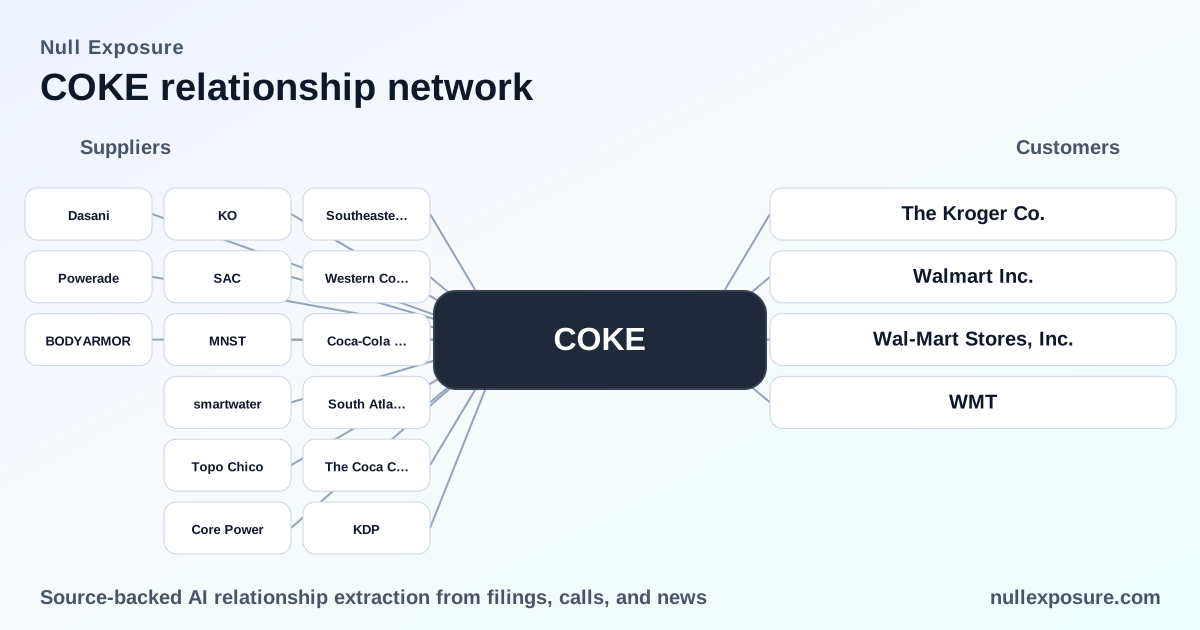
Coca‑Cola Consolidated (COKE): supplier map and what it means for investors
Coca‑Cola Consolidated (COKE) operates as the largest independent Coca‑Cola bottler in the U.S., monetizing through manufacturing, distribution and retail execution of branded non‑alcoholic beverages across 14 states and DC; revenue derives from sales of finished beverages, contract manufacturing for partner brands, and long‑dated distribution rights tied to sub‑bottling economics. The company’s supplier relationships are structural — they anchor production capacity, packaging supply and the pricing of core inputs — and therefore directly influence margins and capital intensity. For a quick dive into supplier exposure and risk signals, visit https://nullexposure.com/.
Why this supplier map matters to investors
- Bottlers live and die by input continuity (packaging, concentrate, cans) and by distribution rights that are often long‑dated; disruptions or concentration here translate into margin and volume risk.
- COKE’s model is a hybrid: asset‑intensive manufacturing plus long‑term brand licenses that create predictable cash flow but also contractual rigidities (pricing pass‑throughs, sub‑bottling fees, purchase obligations).
A complete rundown of relationships in the record Below I cover every supplier and partner referenced in the available materials, with a short plain‑English summary and the source.
-
Southeastern Container
COKE is a shareholder in Southeastern Container and is obligated to purchase at least 80% of its plastic bottle requirements for designated territories from this cooperative; purchases from Southeastern were $142.2 million in 2024 and are expected to remain material. Source: FY2024 Form 10‑K (filed Dec 2024) and related disclosures in the 2024 filing. -
Western Container
Western Container is the other manufacturing cooperative co‑owned with other Coca‑Cola bottlers from which COKE purchases all plastic bottles used in its manufacturing plants. Source: FY2024 Form 10‑K (filed Dec 2024). -
Coca‑Cola Bottlers Sales & Services Company LLC (CCBSS)
COKE is a member of CCBSS, an entity formed to provide procurement and other services intended to improve efficiency and competitiveness across the bottling system. Source: FY2024 Form 10‑K (filed Dec 2024). -
South Atlantic Canners, Inc. (SAC)
COKE is a shareholder of SAC, a manufacturing cooperative in Bishopville, SC, and utilizes a portion of SAC’s production capacity; the company has an annual obligation to purchase finished product from SAC estimated at $1.30 billion in aggregate and approximately $135 million expected in FY2025. Source: FY2024 Form 10‑K (filed Dec 2024) and constraint disclosures. -
The Coca‑Cola Company (KO)
COKE has comprehensive beverage agreements giving it rights to distribute, promote, market and sell The Coca‑Cola Company’s products in its territories; the company also sources concentrates and other inputs under incidence‑based pricing arrangements. Source: FY2024 Form 10‑K and multiple press releases (GlobeNewswire, 2025–2026). -
Keurig Dr Pepper Inc. (KDP)
COKE distributes products for Keurig Dr Pepper alongside Coca‑Cola brands, reflecting diversification in partner brands carried in its territories. Source: MarketScreener news (March 2026). -
Monster Energy Company / Monster / Monster Energy / Monster (MNST)
COKE distributes Monster Energy products, and Monster is repeatedly named among brands that contributed to volume growth in 2025, indicating a significant distribution partnership. Source: GlobeNewswire press releases and MarketScreener (2025–2026). -
smartwater
smartwater is one of the still‑beverage brands sold and listed among growth contributors for the company’s Still category in 2025 results. Source: GlobeNewswire press release (July 24, 2025). -
Topo Chico
Topo Chico is part of the premium sparkling/water portfolio that COKE makes and distributes, and it was cited as a driver of Still category growth in 2025. Source: GlobeNewswire press release (July 24, 2025). -
Core Power
Core Power is a partner brand in COKE’s portfolio that achieved volume growth in the fourth quarter of 2025, per company reporting. Source: GlobeNewswire press release (Feb 18, 2026). -
Dasani
Dasani is a key bottled water brand in COKE’s lineup and was cited among the brands contributing to volume growth in late‑2025 reporting. Source: GlobeNewswire (Feb 18, 2026). -
Powerade
Powerade is a sports‑drink brand in COKE’s distribution mix and was listed as volume growth contributor in Q4 2025 results. Source: GlobeNewswire (Feb 18, 2026). -
BODYARMOR
BODYARMOR is among the still and sports beverage brands COKE distributes, and it posted volume growth in late‑2025 commentary. Source: GlobeNewswire (Feb 18, 2026).
Constraints and what they reveal about the operating model
- Long‑dated contract economics are baked into the business. Company disclosures describe acquisition‑related sub‑bottling payments that extend through the life of distribution assets — generally 40 years — indicating durable obligations and long contract tails. This is a company‑level signal drawn from the 10‑K disclosure on acquisition‑related payments (FY2024 filing).
- Pricing of core inputs is usage‑sensitive and linked to The Coca‑Cola Company. An incidence‑based pricing agreement with The Coca‑Cola Company establishes concentrate and certain still beverage prices by reference to incidence rates, sales, channels and package mix — a usage‑based cost dynamic that ties COKE’s cost of goods sold to volume and mix. Source: FY2024 Form 10‑K.
- Packaging supply is concentrated and material. The company purchases all plastic bottles from the two cooperatives it co‑owns; Southeastern is explicitly material with $142.2 million of purchases in 2024. This concentration creates operational leverage and supplier concentration risk. Source: FY2024 Form 10‑K and constraint disclosure.
- Manufacturing and purchase obligations are large and committed. The SAC obligation is quantified in the filings—an estimated $1.30 billion obligation (with roughly $135 million expected in FY2025), which underscores substantial committed spend in the manufacturing segment. Source: FY2024 Form 10‑K and constraint disclosure.
- Role mix: manufacturer, licensee, and distributor. The relationships span manufacturing cooperatives (packaging and can supply), long‑term licensing/distribution rights with The Coca‑Cola Company, and third‑party brand distribution (e.g., Monster, KDP), reflecting complex contracting posture that combines fixed obligations and variable, usage‑linked costs.
Investment implications and what to watch next
- Margin sensitivity to volume and mix is explicit. Because concentrate and some still beverage pricing are incidence‑based, improvements or declines in channel mix or package mix flow through quickly to COGS. Monitor quarterly volume mix and incidence inputs when modeling margins. For a deeper supplier risk profile, see https://nullexposure.com/.
- Packaging concentration is a potential single‑point risk. A disruption at Southeastern or Western Container would be immediately operationally meaningful; investors should track supplier capital plans, cooperative governance and any public notices from those entities.
- Committed manufacturing spend reduces flexibility but supports capacity. The SAC purchase obligation reduces short‑term flexibility but secures production capacity; movements in aluminum and PET pricing will amplify P&L impact because of these commitments.
Final read for operators and active managers
- Operators should treat supplier relationships as strategic assets: negotiate governance in cooperatives, monitor incidence pricing mechanics with KO, and hedge exposure to key commodity inputs where possible. Active managers should focus on volume/mix signals, supplier concentration disclosures, and any changes to long‑dated sub‑bottling or acquisition‑related payment schedules. Explore additional supplier analytics at https://nullexposure.com/ to integrate these signals into risk models.
Key takeaway: Coca‑Cola Consolidated’s supplier ecosystem is intentionally concentrated and contractually entrenched — that structure delivers scale and distribution exclusivity but transfers meaningful input and contractual risk to the P&L and balance sheet.