Columbus Acquisition Corp (COLA): supplier relationships, contract posture, and investor implications
Columbus Acquisition Corp is a NASDAQ-listed SPAC that sources a target in technology and consumer sectors and monetizes by completing a business combination that converts trust-account cash into a public operating company ownership stake. The company’s economics depend on the size of the trust account, the terms negotiated with a target, and the sponsor arrangements that fund its operating costs. For investors and operators evaluating supplier exposure, Columbus is still in a pre-combination operating posture where recurring administrative arrangements and legal advisors shape near-term cash burn and deal execution capacity. Learn more about the platform at https://nullexposure.com/.
What Columbus does and how its supplier posture affects value
Columbus is a classic SPAC: it raised proceeds (about $60 million placed into a trust) to secure a public listing and now spends management time and cash identifying and negotiating with a target that satisfies NASDAQ value thresholds. Monetization is binary and event-driven — value is realized through a completed business combination that transfers trust-account capital into an operating company while sponsor economics and post-deal equity ownership drive long-term returns.
Operationally, the company already contracts for recurring services. An Administrative Services Agreement obligates Columbus to pay its sponsor $10,000 per month for office space, utilities and secretarial/admin support, which signals a subscription-like recurring cost profile and a service-provider relationship rather than heavy capital expenditure. Geographically, management prioritizes Asia (APAC) initially, while leaving North America as an active area of pursuit — a two-region focus that shapes target sourcing and cross-border diligence burden. Finally, the trust-account size imposes a deal-sizing constraint: NASDAQ rules require target(s) collectively to represent at least 80% of the trust balance, which pushes Columbus toward mid-sized deals consistent with a $10m–$100m spend band profile.
The relationships found in public reporting
Below I cover every supplier/relationship reference uncovered in the results set.
-
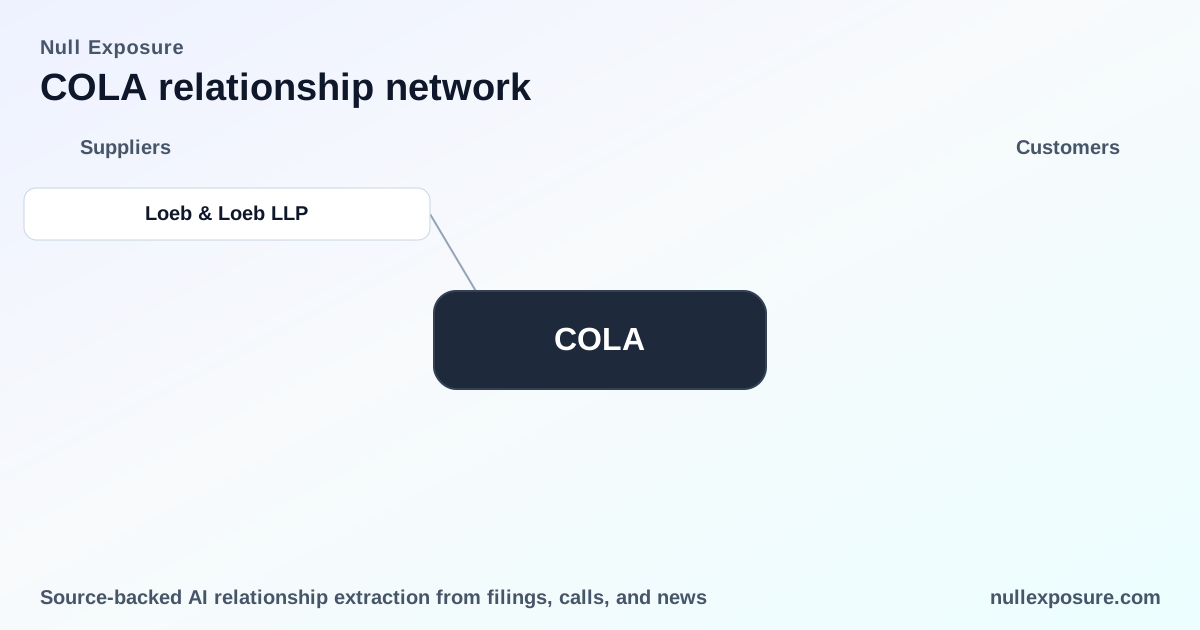
Loeb & Loeb LLP — acting as legal advisor to Columbus on a proposed business combination with WISeKey; reported in a GlobeNewswire release carried by The Manila Times on December 30, 2025. Loeb & Loeb is providing deal-side legal counsel for the confidential draft registration statement (Form F-4) tied to the proposed combination, a standard role that supports regulatory filings and transaction documentation. Source: Manila Times / GlobeNewswire, December 30, 2025.
-
Loeb & Loeb LLP — the same advisory engagement is also republished by StockTitan in March 2026. Multiple wire outlets list Loeb & Loeb as Columbus’s legal advisor in connection with the draft F-4 filing, confirming the firm’s central role in the transaction process. Source: StockTitan republishing GlobeNewswire, first seen March 2026.
Why these supplier links matter for investors and operators
Legal counsel and recurring administrative services are not glamorous, but they are operationally critical for a SPAC in the pre-combination phase. Having a recognized law firm in place reduces execution risk on regulatory filings and accelerates timeline certainty, both of which materially affect the probability and timing of monetization events for public shareholders.
At the same time, the administrative fee structure tells a different story: the company carries predictable, low-to-moderate monthly cash obligations that erode runway until a deal closes. The $10,000 monthly sponsor fee is not transformational to valuation alone, but it signals a subscription-like, vendor-driven cost base and points to the sponsor as a primary service provider and counterparty — a potential concentration of operational dependence.
Constraints and what they imply for the operating model
The public constraint excerpts create several company-level signals about Columbus’s operating and contracting posture:
-
Contracting posture: subscription/administrative obligations to the sponsor create predictable, recurring cash outflows (the $10k monthly fee) and position the sponsor as a service-provider to the SPAC rather than a passive backer.
-
Concentration and criticality: the trust-account funding model (approximately $60 million) mandates that any initial business combination meet NASDAQ thresholds (targets must equal at least 80% of the trust balance), which concentrates M&A activity into a limited set of transactions and increases the criticality of successful target selection.
-
Geography and go-to-market: management’s initial focus on Asia (APAC) with continued priority for North America imposes cross-border diligence requirements and shapes legal, tax and execution complexity — an implicit signal that targets will include non-U.S. domicile or operations.
-
Maturity and stage: Columbus is in a prospect stage; its sole business activity since IPO has been identifying acquisition candidates. That translates to shorter operating history as a public company and a valuation profile tied to transaction risk rather than recurring revenue.
-
Spend profile: trust funding and NASDAQ thresholds indicate deal economics in the $10M–$100M band, with the trust-account scale pushing towards the upper end of that range for a qualifying initial business combination.
None of these constraints are tied to a specific supplier unless explicitly named in an excerpt; they function as company-level operating signals that should guide diligence and partner selection.
Practical implications and short-term watchlist
- Legal representation is in place. Loeb & Loeb’s engagement shortens regulatory timelines and reduces transaction execution risk; monitor the Form F-4 process and filings for timing updates.
- Cash drag is finite but real. Administrative fees and sponsor services will continue to consume cash until a combination closes; assess redemptions in the trust account and potential sponsor capital contributions.
- Target size and geography are binding. Expect diligence complexity from APAC targets and a requirement that the combined deal size satisfy the 80% trust-account threshold; this constrains the candidate universe and affects timeline and break fees.
If you want a concise supplier-risk briefing for COLA or comparable SPACs, visit https://nullexposure.com/ for tailored exposure reports.
Conclusion — what investors and partners should do now
For investors, Columbus offers a classic SPAC risk/reward profile: execution on a suitable combination unlocks value, but the path depends on deal sourcing in APAC/NA, legal and administrative efficiency, and the sponsor’s operational role. For operators and potential targets, understanding the sponsor’s administrative commitments and the legal timeline is essential before engaging.
Track the F-4 filing, redemption activity, and any fee or sponsor-capital changes as immediate indicators of transaction viability. For a deeper review of supplier exposure across SPACs and to request a custom relationship map, visit https://nullexposure.com/.
Key takeaway: Columbus is transaction-driven with focused administrative dependencies; confirming legal counsel and monitoring trust-account dynamics are the highest-value near-term activities for evaluating supplier and execution risk.