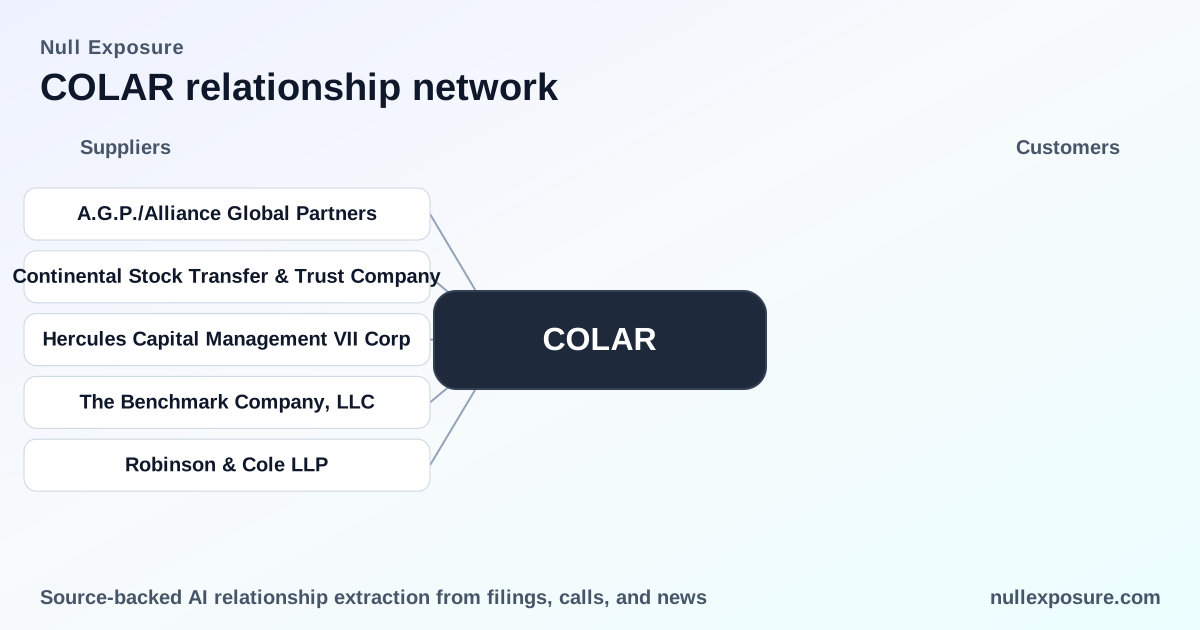
Columbus Acquisition Corp Rights (COLAR): Who the SPAC actually relies on and why it matters to investors
Columbus Acquisition Corp (COLAR) operates as a SPAC rights instrument tied to an IPO vehicle that collects capital into a trust and monetizes through transaction execution and secondary trading of its securities (ordinary shares and rights). Revenue and value creation are driven by the proceeds held in trust, sponsor service fees, and the outcome of a business combination; until a deal is closed, the company’s economics are service‑driven and dependent on a handful of transaction counterparties and professional advisors. For direct research or bespoke supplier intelligence on COLAR, visit https://nullexposure.com/ for full access to the sourcing and relationship detail.
How Columbus runs the business and where cash flows come from
COLAR is a classic SPAC setup: proceeds from its IPO were deposited into a trust for public shareholders while the sponsor retained economic upside through founder shares and ongoing service arrangements. Monetization occurs only when a qualifying business combination is completed or when rights/warrants are exercised or traded; in the interim, operating cash requirements are small but concentrated around trustee, audit, legal and sponsor administrative contracts. The firm also pays a recurring administrative fee to its sponsor for office and support services, creating a predictable, modest cash outflow before a transaction closes.
The relationships that actually enable the IPO and upkeep
Below I list every supplier relationship captured in the sourced reporting and filings. Each entry is a concise, investor‑oriented description with the source cited in the narrative.
A.G.P./Alliance Global Partners
A.G.P./Alliance Global Partners acted as the sole book‑running manager for the IPO, meaning it led underwriting and distribution responsibilities for the offering. This placement was disclosed in press coverage of the company’s March 2025 offering and closes the public capital‑raising loop. (Reported in a Columbus announcement summarized by the Chronicle Journal, March 13, 2025.)
The Benchmark Company, LLC
The Benchmark Company served as a co‑manager on the offering, giving COLAR additional distribution capacity and underwriting support alongside the book‑runner. The co‑manager role reduces single‑party underwriting concentration but still leaves primary control with A.G.P. (Noted in the same March 2025 company announcement covered by Chronicle Journal and QuiverQuant.)
Continental Stock Transfer & Trust Company
Continental acted as the transfer agent and trustee for the SPAC trust account that holds the IPO proceeds for public shareholders, and handled the mechanics for separating units into ordinary shares and rights. This operational role is functionally critical because the trust custody and unit separation process underpin shareholder protections and redemption mechanics. (Described in the March 2025 notice reported by the Chronicle Journal.)
Robinson & Cole LLP
Robinson & Cole served as U.S. counsel to Columbus Acquisition Corp, providing the legal workstream that supports SEC filings, offering documents and regulatory compliance required to list and operate a SPAC in the U.S. market. Their engagement is cited in the transaction close notices summarizing counsel roles. (Reported via QuiverQuant’s coverage of the IPO closing.)
Hercules Capital Management VII Corp
Hercules Capital Management VII Corp is named as the sponsor of Columbus Acquisition Corp and is the party that formed the blank‑check vehicle to pursue a business combination; sponsor economics and obligations (including administrative arrangements) drive ongoing cash flows and governance incentives. This sponsorship is disclosed in the company’s transaction materials referenced in the March 2025 reporting. (Identified in the Chronicle Journal recap of the offering, March 2025.)
For deeper sourcing and to map counterparties across multiple SPACs, see https://nullexposure.com/ for full relationship context.
Contracting posture and operational constraints that define the risk profile
The company’s filings and reporting reveal several structural constraints that shape vendor risk and operating flexibility:
- Short‑term financing posture: The company acknowledged a non‑interest bearing, unsecured loan that is due at the earlier of June 30, 2025 or the closing of the IPO, which signals immediate liquidity structuring and short repayment timelines as the vehicle progresses toward a business combination. This is a company‑level disclosure describing a temporal funding obligation.
- Subscription/administrative obligations to the sponsor: The SPAC is obligated to pay the sponsor $10,000 per month for office, utilities and administrative support under an Administrative Services Agreement effective January 22, 2025—an ongoing cash flow that reduces net cash available for other uses prior to a deal.
- Service provider concentration but modest spend: The firm’s independent auditor, Marcum Asia CPAs LLP, billed $115,000 for audit and related services for the inception‑to‑FY2024 period, placing audit spend in the low six‑figure band; Continental’s role as trustee and transfer agent is operationally critical even though trustee fees are not large relative to the trust size. These specifics come from the company’s registration materials and audit fee disclosures.
- Active, transactional stage: Filings indicate these professional relationships are active and central to the IPO lifecycle (auditor since 2024; trustee holding IPO proceeds), so vendors are engaged on an ongoing, deal‑execution timetable rather than only ad hoc retainers.
Together these constraints define a business with high dependency on a short list of professional suppliers, modest absolute spend, and tight timelines for capital and contract obligations.
What investors should flag
- Counterparty criticality is high. Continental and the auditor perform non‑substitutable functions (trust custody and financial statement assurance) that are prerequisites for continued listing and eventual deal execution.
- Sponsor dependency is material. The monthly administrative fee and sponsor’s governance role concentrate economic incentives and operational control in Hercules Capital Management VII Corp.
- Cost exposure is modest but timing‑sensitive. Spend levels (audit: ~$115k) are low in absolute terms, but contractual deadlines (a short‑term loan due June 30, 2025) create execution risk if capital deployment or a business combination is delayed.
- Underwriting and distribution rest with a small banking set. With A.G.P. as book‑runner and Benchmark as co‑manager, primary market access is concentrated and tied to those firms’ ability to place secondary securities or support follow‑on transactions.
For bespoke diligence on counterparty exposure or to run a supplier risk heatmap for this SPAC, start your inquiry at https://nullexposure.com/.
Bottom line and next steps for investors
Columbus Acquisition Corp’s structure is textbook SPAC: trust‑centered capital, sponsor economics, and a small slate of professional counterparties that execute listings and maintain regulatory compliance. For investors evaluating COLAR as a supplier network or counterparty risk exercise, focus on the trustee, auditor and sponsor arrangements because those are functionally critical and set the pace for any corporate combination.
If you want a tailored supplier risk brief or to track how these professional relationships evolve after a target announcement, visit https://nullexposure.com/ to commission a deeper report or to access the primary sourcing behind this commentary.