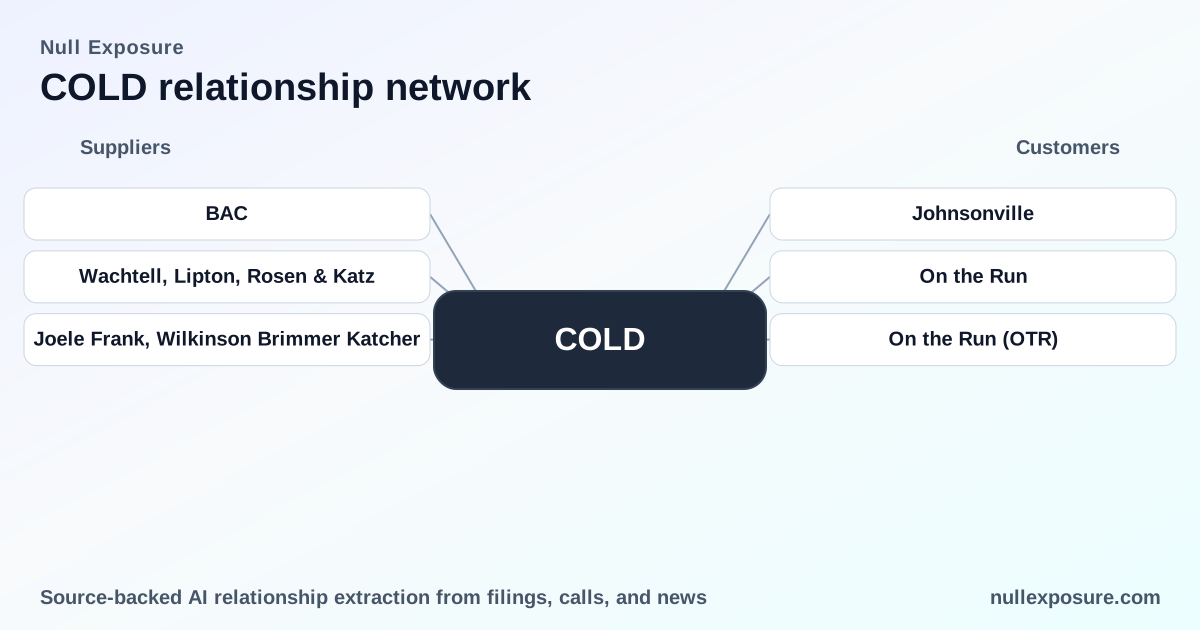
Americold (COLD): supplier relationships that underwrite a cold-storage moat
Americold operates and monetizes the world’s largest publicly traded portfolio of temperature-controlled warehouses by owning, operating, developing and leasing logistics space to food producers, retailers and third‑party logistics customers. Revenue is driven by rental and logistics fees across a capital‑intensive network; scale and location density create customer lock‑in while capital markets finance expansion and acquisitions. Market capitalization is about $3.26 billion, with trailing revenue near $2.6 billion and adjusted EBITDA around $551 million—figures that frame supplier engagement as both operationally and reputationally material.
Explore the supplier map and signals for strategic due diligence at https://nullexposure.com/.
Why supplier relationships matter for a cold-storage REIT
Americold’s asset-heavy model makes supplier relationships a direct input into uptime, safety and customer continuity. Third-party providers for finance, legal and communications are not peripheral: they shape transactions, litigation posture and shareholder messaging. For investors and operators evaluating counterparty risk, focus on the advisors and the company’s historical contracting behavior—both affect transaction execution speed, regulatory outcomes and reputation management.
If you want a snapshot of every named supplier and advisor tied to Americold in the public record, visit https://nullexposure.com/ for the underlying link map.
What the public record lists — three advisor relationships (FY2025)
Below are the discrete relationships surfaced for Americold in recent public mentions, each summarized in plain English with the source noted.
-
BofA Securities: BofA is acting as financial advisor to Americold in connection with board appointments and related corporate matters, a role that positions BofA to advise on capital strategy, financing and potential M&A execution. According to CityBiz (March 9, 2026), BofA Securities serves as Americold’s financial advisor. Source: https://www.citybiz.co/article/787133/americold-appoints-joseph-reece-and-stephen-sleigh-to-board/
-
Wachtell, Lipton, Rosen & Katz: Wachtell Lipton is serving as legal advisor to Americold, providing high‑stakes corporate and transactional counsel that typically covers governance, fiduciary issues and complex deals. CityBiz reported Wachtell, Lipton, Rosen & Katz is the legal advisor to Americold on March 9, 2026. Source: https://www.citybiz.co/article/787133/americold-appoints-joseph-reece-and-stephen-sleigh-to-board/
-
Joele Frank, Wilkinson Brimmer Katcher: Joele Frank is engaged as strategic communications advisor, handling investor relations and public messaging during governance changes or strategic announcements. CityBiz (March 9, 2026) identifies Joele Frank, Wilkinson Brimmer Katcher in this communications role. Source: https://www.citybiz.co/article/787133/americold-appoints-joseph-reece-and-stephen-sleigh-to-board/
What these relationships imply about Americold’s operating posture
-
Transaction-ready and governance-focused: The use of a major investment bank and a premier corporate law firm signals Americold is maintaining a transaction-capable posture—prepared for financings, board refreshes or M&A. That allocation of advisor capital supports faster execution and reduces legal friction in complex deals.
-
Communications discipline: Retaining a specialist PR/IR firm indicates an emphasis on managing investor sentiment and coordinating disclosure during governance events, a positive for market stability during strategic shifts.
-
Advisor concentration is limited but intentional: The named relationships are advisory, not operational vendors, which reduces day‑to‑day counterparty concentration risk but increases the criticality of each advisor during strategic episodes.
Explore how these strategic connections interact with operational supplier signals at https://nullexposure.com/.
Company-level constraints and supplier risk signals
Americold’s public evidence includes a supplier‑related litigation settlement that illuminates contracting and risk management tendencies at the firm level. The company reported being awarded a $10.0 million settlement related to a vendor previously engaged to perform automation‑related services at one facility, including $3.0 million recognized for lost profits through December 31, 2023. This line in the company’s disclosures is a direct indicator of supplier dispute resolution and a willingness to litigate or push for material remediation when vendor deliverables affect operations.
From that constraint the following operating characteristics follow as company-level signals (not tied to a named vendor in the excerpt):
-
Contracting posture: Americold enforces vendor contracts and seeks material remedies when automation or operational services fail to meet expectations; legal recourse is an available tool.
-
Criticality of certain suppliers: Automation and systems vendors are material to facility uptime; failures can generate multimillion-dollar impacts and hence merit higher governance attention.
-
Maturity and escalation paths: The firm’s ability to recover settlement proceeds indicates mature dispute management and willingness to pursue formal claims, reducing passive tolerance for underperforming critical vendors.
These are company‑level takeaways meant to inform supplier diligence and risk allocation in contracting negotiations.
What investors and operators should watch next
-
Contract terms for automation and critical systems: Future diligence should prioritize SLAs, uptime guarantees and liquidated damages for automation vendors given historic settlement outcomes. That is where operational risk translates directly into P&L.
-
Advisor engagements ahead of capital activity: Retention of BofA and Wachtell puts Americold in a strong position for financing or deal activity. Watch for filings or press releases that convert advisory roles into executed transactions.
-
Messaging cadence and reputation management: With a retained strategic communications advisor, the company will manage narratives tightly; investors should read press releases and investor presentations for timing and content changes that signal strategic moves.
Bottom line: Americold’s advisor roster and the vendor settlement signal a company that combines an asset-heavy, capital markets-financed growth model with firm contracting discipline for critical operational suppliers.
If you are mapping counterparty exposures or building a supplier diligence checklist for cold‑chain operators, start your analysis at https://nullexposure.com/.
Final takeaways and recommended actions
-
Strategic advisors are in place to execute capital markets and governance actions quickly. That reduces execution risk for financings or M&A.
-
Operational vendor risk—especially around automation—is material and contractually enforced. Ensure service-level protections and escalation paths are explicit when underwriting facility reliability.
-
Monitor filings and press coverage for conversion of advisory roles into transactions. Advisory appointments often precede material corporate actions.
For a consolidated view of Americold’s supplier network and to download the link‑level evidence used in this analysis, visit https://nullexposure.com/.