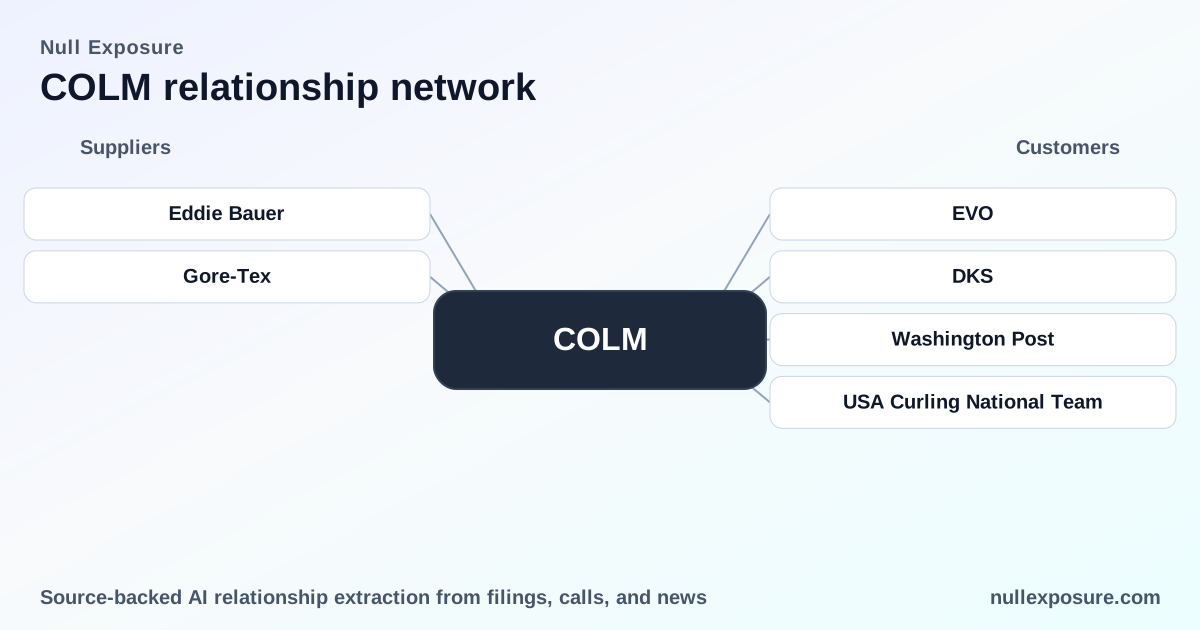
Columbia Sportswear (COLM): supplier profile and operational read for investors
Columbia Sportswear designs, sources, markets and distributes outdoor and active apparel, footwear and accessories globally and monetizes through product sales across wholesale and direct channels, supported by a lean manufacturing model that outsources finished-goods production to contract partners. With trailing twelve‑month revenue of roughly $3.4 billion and EBITDA near $293 million, Columbia’s profitability is driven by brand reach and supply‑chain efficiency rather than heavy owned manufacturing assets.
If you want a consolidated view of supplier relationships and operational constraints relevant to underwriting Columbia exposure, start here: https://nullexposure.com/
Quick investor take: what matters about Columbia’s supplier posture
Columbia operates a contract-manufacturing model with concentrated supplier exposure, where a small number of partners account for a large share of output. That structure delivers cost and working‑capital advantages but creates concentration and operational dependence that investors must price into scenario analyses. Key balance‑sheet signals—a committed revolving credit facility and multi‑year lease norms—point to a capital structure that supports working capital volatility but requires attention around covenant and maturity timing.
- Scale and margin: Revenue of roughly $3.4B with an operating margin near 10.9% and a profit margin around 5.2% shows a mid‑cycle consumer‑cyclical business with durable brand economics.
- Capital posture: An existing unsecured $500 million credit facility that matures in July 2027 provides liquidity flexibility ahead of the next refinancing window.
- Concentration risk: A small set of manufacturers drives a large share of production, especially footwear, creating a critical single‑point risk.
Explore deeper supplier analytics and scoring at https://nullexposure.com/
Supplier relationships on the record
Columbia’s public disclosures and media coverage identify long‑standing supplier ties and material technology partnerships. Below are the relationships surfaced in the latest coverage and what they imply.
Eddie Bauer — long-standing supplier connection
Columbia has acted as a supplier to Eddie Bauer for many years, reflecting operational ties in the retail and wholesale ecosystem that predate recent corporate cycles. This is referenced in an earnings call transcript dated March 9, 2026. (Source: InsiderMonkey, Q4 2025 earnings call transcript, March 9, 2026.)
Gore‑Tex — material and technology partnership dating to the 1970s
Columbia was the first outdoor brand to use Gore‑Tex fabric in 1975, indicating a longstanding material technology relationship that underpins product performance credentials in technical outerwear. This historical linkage remains part of Columbia’s product heritage. (Source: Outside Online obituary and brand history, March 2026.)
Supply‑side constraints and what they mean for operational risk
Columbia’s public disclosures articulate several persistent supplier and contract characteristics that shape risk and opportunity.
- Long‑term contracting posture: The company reports typical initial lease terms between five and ten years and operates with a committed revolving credit facility; this points to multi‑year fixed arrangements for property and liquidity, which supports continuity but concentrates maturity risk into discrete windows.
- APAC sourcing concentration: Raw materials for finished goods are primarily sourced from Asia and are purchased directly by contract manufacturers, establishing geographic concentration in APAC for upstream inputs and logistics exposure.
- Manufacturing concentration = criticality: Five of the largest contract finished‑goods manufacturers account for approximately 80% of footwear production, and the largest five account for about 30% of apparel, accessories and equipment production. That degree of concentration is an operationally critical constraint: a disruption at a top footwear supplier would materially impede product flow.
- Relationship roles: The majority of finished goods are produced by third‑party contract manufacturers; Columbia also uses cloud‑based enterprise systems via service contracts—so supplier relationships span manufacturing and services.
- Mature but flexible relationships: The company states it maintains long‑term relationships with key manufacturers but generally does not bind itself to formal long‑term volume commitments, indicating a balance of supplier loyalty and commercial flexibility.
- Active supply‑chain financing: Columbia launched a voluntary supply‑chain financing program in Q3 2024; confirmed obligations outstanding under the program were recorded in accounts payable (reported as $81,288 in the disclosure), reflecting active supplier financing and liquidity management techniques.
Each of these constraints is a company‑level signal about concentration, criticality and contractual posture rather than a characteristic of any single named partner unless that partner was explicitly referenced in source text.
Operational implications for investors and operators
- Concentration is the dominant operational risk: With most footwear output concentrated among five manufacturers, stress‑testing for factory disruption, input shortages, geopolitical escalation in APAC, or supplier financial distress is essential. Insurance of production continuity or diversified second‑source strategies will materially reduce downside.
- Liquidity and refinancing timing matter: The $500 million revolving facility maturing in July 2027 compresses the firm’s refinancing timeline; investors should monitor covenant headroom and cash conversion through seasonal cycles.
- Supplier financing elevates counterparty credit awareness: The use of third‑party supply‑chain financing increases interlinkages between Columbia and financial providers; confirmed obligations sitting in accounts payable require monitoring for changes in payment terms or program scope.
- Brand and material partnerships are strategic assets: Longstanding use of Gore‑Tex and historical supplier ties (e.g., Eddie Bauer engagement) underscore product quality channels that support pricing power and customer loyalty.
Practical recommendations
For investors: model scenarios with at least one sizable manufacturing outage and the impact on gross margin and inventory turns; incorporate a refinancing or covenant stress case around mid‑2027. For operators: prioritize supplier diversification for footwear production, negotiate contingency capacity with secondary vendors in APAC, and ensure SCF terms preserve supplier loyalty without transferring undue operational control to financial partners.
For a consolidated supplier risk view and actionable scoring to support underwriting, visit https://nullexposure.com/
Bottom line
Columbia’s brand economics are solid and supported by efficient outsourcing, but concentrated manufacturing and APAC sourcing create a critical single‑point risk that investors must underwrite explicitly. Long‑term relationships and selective supply‑chain financing provide commercial flexibility, but the upcoming financing maturity and supplier concentration deserve focused monitoring. For investors and operators seeking a vendor‑level dossier and scenario modeling templates, NullExposure has consolidated intelligence and remediation playbooks at https://nullexposure.com/
Sources referenced in text: Columbia earnings commentary and transcripts (InsiderMonkey Q4 2025 / March 9, 2026); Outside Online coverage of Columbia brand history and Gore‑Tex use (March 2026); Columbia public filings and disclosures on manufacturing, leases, the credit facility and supply‑chain financing (Company filings, FY2025–FY2026).