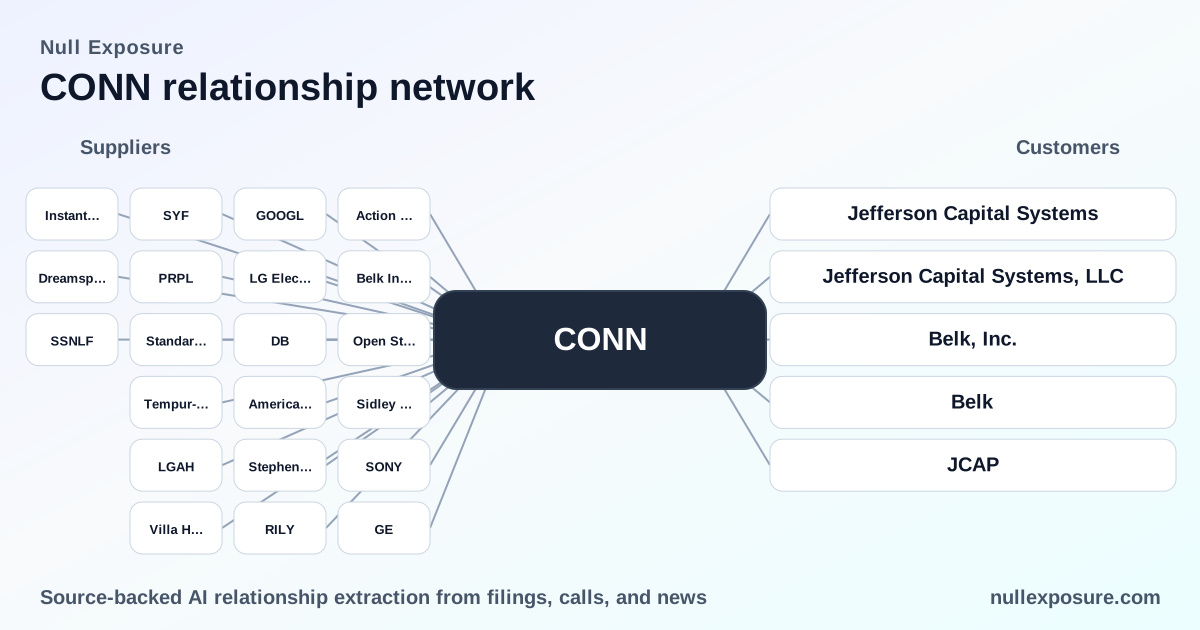
CONN supplier landscape: who gets paid when Conn’s sells — and who takes the hit now
Conn’s, Inc. operates a blended retail and consumer-finance model: the company sells consumer durables (furniture, appliances, electronics, mattresses) through its Conn’s HomePlus stores and online, and monetizes via product margin plus captive financing and lease-to-own payment programs. Recent reports and filings show the business relied heavily on vendor inventory relationships and third‑party financing partners to underwrite sales — relationships that are now central to the company’s restructuring and liquidation process. For a compact supplier risk view, start here and then explore how these supplier ties affect recovery expectations and counterparty exposure: https://nullexposure.com/
How Conn’s makes money and why supplier ties matter
Conn’s generates top-line revenue through retail sales (Revenue TTM: $1.237B) while buying a substantial portion of inventory from major appliance, electronics and furniture vendors and offering proprietary or third‑party financing to customers. The finance arm traditionally amplified gross profitability but also concentrated credit risk; the most recent public figures show negative EBITDA (-$153.18M) and negative EPS (-$3.17), signaling stress in both retail and finance operations. Supplier exposure becomes critical in liquidation because unpaid receivables and unpaid purchase obligations determine vendor recoveries and the pace of inventory liquidation.
If you want a supplier-centric credit map and exposure scoring, see the Conn’s overview at https://nullexposure.com/
The supplier roster — plain-English relationship notes (every named relationship)
-
Action Retail Construction Services LLC — Permits filed in August 2022 show Action Retail was contracted to renovate a nearly 30,000 sq. ft. Conn’s HomePlus store at an estimated cost of $1.19M, indicating a vendor relationship tied to store expansion and capital projects. Source: Jax Daily Record (Aug 2022) — https://www.jaxdailyrecord.com/news/2022/aug/19/conns-homeplus-building-out-at-regency-court/
-
Belk Inc. — Conn’s ran a “store-within-a-store” pilot with Belk called “Conn’s x Belk,” signaling a retail distribution partnership that extended Conn’s brand into department-store footprints. Source: Jax Daily Record (Aug 2022) — https://www.jaxdailyrecord.com/news/2022/aug/19/conns-homeplus-building-out-at-regency-court/
-
Open Studio Architecture of San Antonio — Listed as the architect on Conn’s retail build-out referenced above, reflecting Conn’s use of specialized design contractors for store openings. Source: Jax Daily Record (Aug 2022) — https://www.jaxdailyrecord.com/news/2022/aug/19/conns-homeplus-building-out-at-regency-court/
-
Sidley Austin LLP — Served as legal counsel for Conn’s in connection with the restructuring and disclosure statement filings during FY2025, making Sidley the debtor’s lead legal advisor on the wind-down. Source: Chapter11Cases (reporting on filings, FY2025) — https://chapter11cases.com/blogs/news/conns-unveils-liquidation-plan-following-asset-sales-estimates-low-recovery-for-unsecured-creditors
-
SONY / Sony — Appears as one of the named brand suppliers whose products were sold at Conn’s HomePlus stores; promotional materials list Sony among featured electronics inventory. Source: PR Newswire (FY2023) and ABC13 (holiday feature, FY2025) — https://www.prnewswire.com/news-releases/conns-homeplus-expands-into-atlanta-metro-301734826.html and https://abc13.com/post/christmas-shopping-deals-conns/4720719/
-
General Electric (GE) — Identified on creditor lists and in promotional inventory; GE is among the large appliance suppliers reported as unsecured creditors in the company’s bankruptcy filings. Source: Financier Worldwide (FY2024) and PR Newswire (FY2023) — https://www.financierworldwide.com/conns-homeplus-enters-bankruptcy and https://www.prnewswire.com/news-releases/conns-homeplus-expands-into-atlanta-metro-301734826.html
-
Google — Named among unsecured creditors in reporting on Conn’s bankruptcy, indicating service or platform-level supplier exposure rather than inventory. Source: Financier Worldwide (FY2024) — https://www.financierworldwide.com/conns-homeplus-enters-bankruptcy
-
LG Electronics / LG — Cited repeatedly as a brand supplier for appliances and electronics sold through Conn’s stores; LG sits on creditor lists submitted in the restructuring process. Source: PR Newswire (FY2023) and Financier Worldwide (FY2024) — https://www.prnewswire.com/news-releases/conns-homeplus-expands-into-atlanta-metro-301734826.html and https://www.financierworldwide.com/conns-homeplus-enters-bankruptcy
-
Deutsche Bank Securities Inc. — Served as a financial advisor to Conn’s alongside Stephens Inc. during the FY2023 transformative transaction process, indicating investment‑bank involvement in strategic alternatives. Source: GlobeNewswire (Dec 2023 press release, FY2023) — https://www.globenewswire.com/news-release/2023/12/18/2798177/0/en/Conn-s-Inc-Announces-Transformative-Transaction-with-W-S-Badcock-LLC.html
-
American First Financial — Conn’s described an expanded partnership with American First Financial to boost lease-to-own sales, reflecting third‑party finance distribution used to underwrite consumer purchases. Source: The Motley Fool transcript of Conn’s Q1 2023 earnings call (FY2022 commentary) — https://www.fool.com/earnings/call-transcripts/2022/06/01/conns-conn-q1-2023-earnings-call-transcript/
-
Stephens Inc. — Served as a financial advisor to Conn’s alongside Deutsche Bank Securities, positioning Stephens as an advisor on strategic transactions and potential buyers. Source: GlobeNewswire (Dec 2023 press release, FY2023) — https://www.globenewswire.com/news-release/2023/12/18/2798177/0/en/Conn-s-Inc-Announces-Transformative-Transaction-with-W-S-Badcock-LLC.html
-
B. Riley Retail Solutions — Acting as the liquidation host and remarketing partner, B. Riley is running the Conn’s liquidation process and sale events for inventory and store fixtures. Source: Financier Worldwide (FY2024) — https://www.financierworldwide.com/conns-homeplus-enters-bankruptcy
-
synchrony (Synchrony Financial) — Historically a point-of-sale finance partner referenced in earnings calls as part of Conn’s financing mix, indicating alternative credit channels to Conn’s own finance products. Source: Motley Fool transcript (FY2021) — https://www.fool.com/earnings/call-transcripts/2021/12/07/conns-conn-q3-2022-earnings-call-transcript/
-
Purple — Mattress brand listed among the product suppliers available through Conn’s promotional and store assortment. Source: PR Newswire (FY2023) — https://www.prnewswire.com/news-releases/conns-homeplus-expands-into-atlanta-metro-301734826.html
-
Standard Furniture — Named by retail coverage as one of the vendors materially affected by Conn’s and other retail bankruptcies, showing vendor pain from large debtor failures. Source: HomeNewsNow analysis (FY2025) — https://homenewsnow.com/blog/2025/07/29/conns-bankruptcy-wind-down-begins/
-
Tempur‑Pedic — Mattress supplier included in Conn’s product mix for in-store offerings and promotions. Source: PR Newswire (FY2023) — https://www.prnewswire.com/news-releases/conns-homeplus-expands-into-atlanta-metro-301734826.html
-
Villa Hill — Exclusive furniture brand listed in store assortments for Conn’s expansions in the Atlanta metro area. Source: PR Newswire (FY2023) — https://www.prnewswire.com/news-releases/conns-homeplus-expands-into-atlanta-metro-301734826.html
-
Instant Web — Appears on creditor lists tied to the bankruptcy disclosure, suggesting a services vendor relation that survived into restructuring claims. Source: Financier Worldwide (FY2024) — https://www.financierworldwide.com/conns-homeplus-enters-bankruptcy
-
Dreamspot — Mattress brand listed among the mattress offerings in store promotional materials. Source: PR Newswire (FY2023) — https://www.prnewswire.com/news-releases/conns-homeplus-expands-into-atlanta-metro-301734826.html
-
Samsung — Repeatedly identified as a major electronics and appliance supplier and as an unsecured creditor in restructuring materials. Source: PR Newswire (FY2023) and Financier Worldwide (FY2024) — https://www.prnewswire.com/news-releases/conns-homeplus-expands-into-atlanta-metro-301734826.html and https://www.financierworldwide.com/conns-homeplus-enters-bankruptcy
-
B. Riley Retail Solutions (already listed) — included on creditor/host references for liquidation activities. Source: Financier Worldwide (FY2024) — https://www.financierworldwide.com/conns-homeplus-enters-bankruptcy
What the constraints data (or lack of it) tells investors
There are no supplier‑level constraints captured in the provided constraints feed for CONN, which itself is a company-level signal: no structured constraint excerpts were identified to alter the supplier map. That absence requires investors to rely on public filings and news: the operational picture is dominated by store build-outs, brand-supplier inventory relationships, finance partners, and an active restructuring/liquidation process. Contracting posture was historically a mix of vendor supply contracts and promotional brand placements; concentration risk was meaningful because large appliance and electronics vendors (Samsung, LG, GE) appear among top unsecured creditors; criticality is high for those vendors because appliance/electronics represent core sell-through; maturity varies across relationships—from longstanding brand supply to project-level contractors.
Mid‑report action: if you need an exposure breakdown or recovery simulation for a vendor or finance counterparty, see https://nullexposure.com/
Investment implications and next steps
- Recovery expectations are vendor‑specific: large OEMs and platform/service providers (Samsung, LG, GE, Google) are on unsecured creditor lists, so unsecured recovery is likely limited after secured claims and liquidation expenses.
- Finance partners affect cash collection and default timing: arrangements with Synchrony and American First Financial shaped credit flows and will influence recoveries on receivables.
- Advisors and auction houses are controlling the pace: Stephens, Deutsche Bank and B. Riley steer sale and bid processes, which determines how quickly vendor claims convert to cash.
For investors and operators tracking counterparty exposure, the practical step is a prioritized outreach and verification of contract status and payment terms with the named suppliers and finance partners. Final note: for a vendor-level recovery model or counterparty scorecard, visit https://nullexposure.com/
This analysis consolidates public reporting and filings into an actionable supplier map; use it to prioritize vendor diligence and monitor claims activity as the Conn’s wind‑down proceeds.