Traeger Inc (COOK) — supplier relationships, operating posture, and investor implications
Traeger Inc. manufactures and markets wood-pellet grills and a portfolio of complementary consumables and accessories, monetizing primarily through hardware sales, recurring consumables (wood pellets, rubs, sauces) and accessory add‑ons. The company outsources a large portion of grill and accessory production to third‑party manufacturers in Asia while retaining vertically integrated pellet production in the U.S.; service partners handle shareholder processes and logistics. For investors, the core thesis is straightforward: revenue is driven by grill unit sales and recurring consumables, but gross profitability and continuity of supply depend on a concentrated, short‑term outsourced manufacturing base and a combination of captive and third‑party fulfillment.
Explore more supplier intelligence at https://nullexposure.com/.
Where the grills and pellets are actually made — and why that matters
Traeger’s manufacturing footprint is bifurcated. Grills and many accessories are produced by third‑party manufacturers in China, Vietnam and Taiwan, while wood pellets are produced through a vertically integrated network of five U.S. facilities, supplemented by contract manufacturers in the U.S. and Poland. This split creates contrasting risk profiles: pellets are a vertically controlled revenue stream with supply resilience, whereas grills depend on external manufacturers with shorter contracting horizons.
Traeger procures many components and finished goods on a purchase‑order basis rather than through long‑term fixed contracts. That short‑term contracting posture increases supplier flexibility but elevates execution and availability risk during demand spikes or global transport disruptions. The company also relies on a limited number of contract manufacturers for grills and accessories, which creates supplier concentration and single‑point risks: a material disruption at a primary manufacturer would have a meaningful impact on production and financial results, as Traeger itself warns in filings.
Supplier and service relationships: what to know
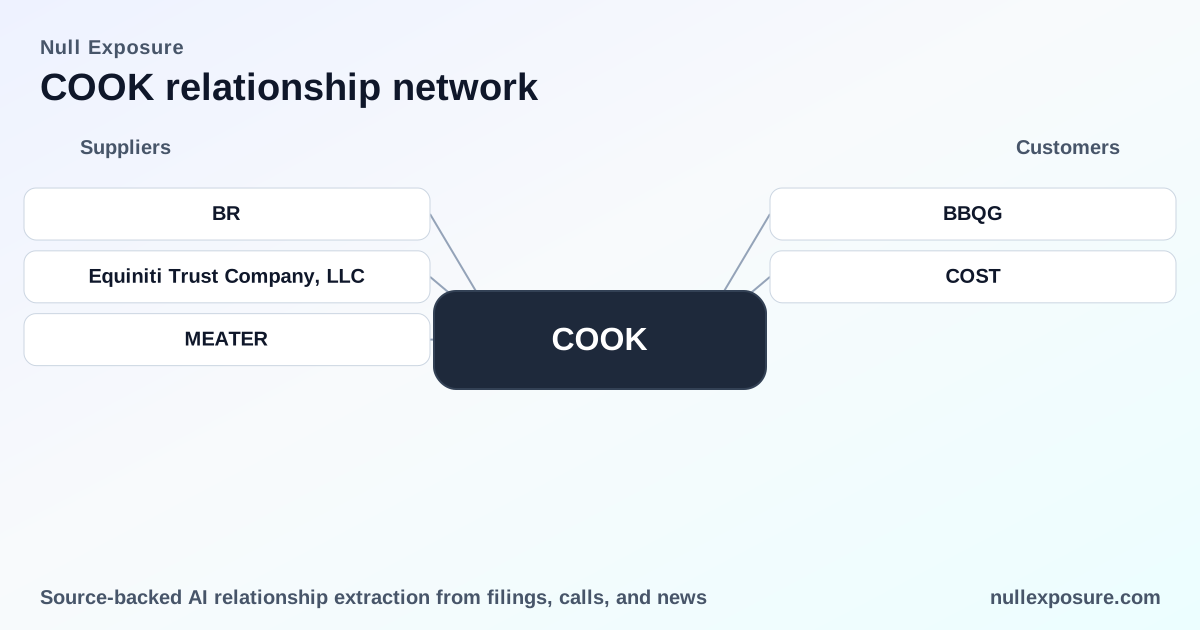
Traeger’s disclosed supplier and service relationships in recent filings and releases map to three distinct roles: vote and shareholder-service providers, and an electronics accessories partner.
Broadridge Financial Solutions, Inc.
A representative of Broadridge will act as Traeger’s inspector of election and will tabulate and certify shareholder votes for FY2026 proxy matters, an example of standard corporate governance outsourcing. This role is documented in Traeger’s FY2026 preliminary and definitive proxy statements filed through StockTitan in March 2026.
Equiniti Trust Company, LLC
Equiniti is named as Traeger’s transfer agent responsible for notifying stockholders after corporate actions (for example, the reverse stock split) are effected, reflecting a standard transfer‑agent relationship disclosed in the FY2026 proxy filings on StockTitan in March 2026.
MEATER (smart thermometer partner)
Traeger’s platform includes MEATER smart thermometers as a complementary accessory line; recent company communications for FY2025 cited a decline in MEATER sales offset by growth in Traeger‑branded accessories. Traeger lists MEATER as part of its peripherals ecosystem in FY2025 reporting and press releases on StockTitan in 2026.
How the constraints translate into operational and investment signals
The company‑level constraints derived from filings produce a concise picture of Traeger’s operating model and supplier risk profile:
- Contracting posture — short term: Traeger purchases many items on a purchase‑order basis rather than under long multi‑year fixed supply contracts. This reduces fixed overhead and gives buying flexibility but increases vulnerability to spot market shocks and shipping volatility.
- Geographic concentration — APAC manufacturing, NA pellet production: Grill and accessory manufacturing concentration in China, Vietnam and Taiwan introduces geopolitical and logistics risk; pellet production in the U.S. and some Poland sourcing supports continuity for consumables.
- Concentration and criticality — limited number of manufacturers: A small set of contract manufacturers produces a large share of grills and accessories, a structure Traeger designates as material in the event of disruption. Investors must treat primary manufacturer uptime as a critical operational lever.
- Role diversity — manufacturer, distributor, service provider: Traeger’s operating model combines outsourced manufacturing with third‑party distributors and multiple 3PLs for warehousing and fulfillment, which diffuses operational responsibility but also creates coordination risk across logistics partners.
- Maturity and stage — active relationships: Filings frame these relationships as active and operational, not nascent pilot arrangements; this indicates current reliance rather than optional future options.
These signals combine into a clear investment tradeoff: scale and margin leverage from brand and recurring pellet sales, offset by supply concentration and short‑term supplier contracting that heighten production volatility.
Key investor takeaways and risk checklist
- Positive: Vertical control of pellet production creates a recurring revenue anchor and mitigates consumable supply risk. Traeger’s brand and accessory ecosystem (including MEATER) support aftermarket margins.
- Negative: Concentrated APAC contract manufacturing and predominantly purchase‑order procurement elevate disruption risk, which the company explicitly warns could have a material adverse effect if transportation or manufacturing is interrupted.
- Governance/operations: Use of established service providers such as Broadridge and Equiniti reflects standard corporate governance and transfer‑agent outsourcing with negligible operational upside or downside beyond execution quality.
For a focused, supplier‑level diligence review and ongoing monitoring of counterparties and supply‑chain concentration, see the resources at https://nullexposure.com/.
Final read for investors
Traeger’s business model pairs attractive recurring consumable economics with outsourced hardware production that creates concentrated operational risk. Active investors should track shipment cadence from APAC manufacturers, pellet production uptime in the U.S., and accessory performance (including MEATER) for early signs of margin compression or revenue deviation. For targeted supplier intelligence and to subscribe to monitoring on Traeger and its counterparties visit https://nullexposure.com/.
If you want a tailored supplier risk brief or a monitoring setup for Traeger’s manufacturing partners and logistics providers, start at https://nullexposure.com/ and request a coverage profile.