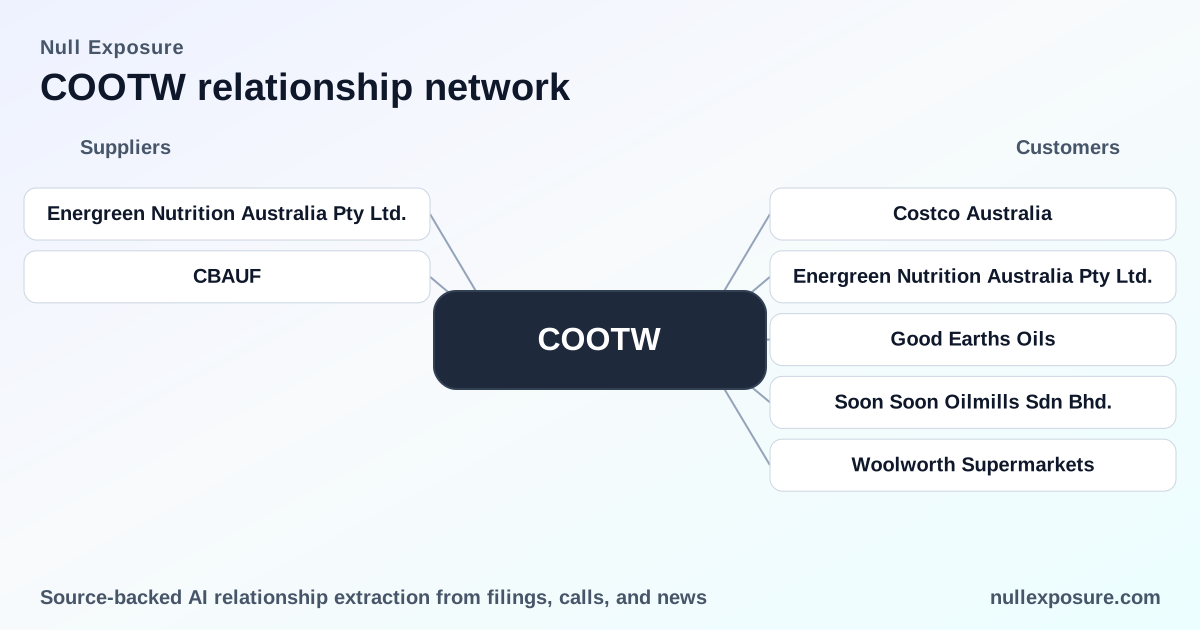
COOTW: Supplier Footprint and What It Means for Investors
Australian Oilseeds Holdings (exposed through the COOTW warrant) is an operating agribusiness that produces and processes canola and other oilseeds, monetizing through commodity sales and processing margins while funding seasonal inventory cycles with trade facilities and supplier prepayments. The warrant COOTW gives investors leveraged exposure to that cash-flow profile; assessing supplier and counterparty relationships is essential because working capital arrangements and related-party financing materially influence short-term liquidity and governance. For a quick gateway to the underlying data and supplier signals, visit https://nullexposure.com/.
What the supplier facts disclose about the business model
The FY2024 filing describes a company that runs a short-term, inventory-driven working capital model. The firm purchases seed from local farmers and holds inventory for processing and sale, using bank trade facilities and prepayments to finance procurement. Two immediate takeaways from the filing:
- Contracting posture is transactionally short-term. The 10‑K explicitly notes prepayment of seed purchases that cover roughly a six‑month window, indicating procurement is managed on a rolling, seasonal basis rather than through multi-year supply agreements. The filing states: "Prepayment of seed purchase is the upfront payment for purchasing canola seed for the next six months... and will be transferred to the Company in a less than six month period." This is a company-level operating signal in the FY2024 10‑K.
- Spend and working-capital scale sits in the low‑millions. Trade payables are reported at AUD 9,866,518, consistent with a supplier/working-capital spend band of roughly AUD 1m–10m for the period in question.
These characteristics produce a distinct risk and opportunity profile: high cadence procurement, seasonal margin leverage, and sensitivity to short-term funding availability and counterparty facilities.
Every relationship disclosed in the filing — the essentials
Below are the relationships recorded in the FY2024 filing and a plain-English interpretation of each.
Energreen Nutrition Australia Pty Ltd.
The company reports a related‑party loan owed to Energreen Nutrition Australia Pty Ltd., a business controlled by Gary Seaton, indicating intra-group or insider financing is part of the capital structure; this raises governance and repayment-priority questions for creditors and investors. Source: COOTW FY2024 10‑K (year ending June 30, 2024).
Commonwealth Bank of Australia
The company began utilizing an AUD$8 million trade facility provided by Commonwealth Bank of Australia to purchase canola oilseeds from local farmers, signifying the bank is a primary working-capital provider that underpins procurement and inventory build. Source: COOTW FY2024 10‑K (year ending June 30, 2024).
How these relationships drive risk and optionality
- Funding is bank-dependent for procurement. The AUD$8m trade facility with Commonwealth Bank is a clear enabler of seed purchases; if that facility tightened, the business would face immediate procurement pressure given the short-term prepayment model. The CBA facility is a critical operational counterparty, not a peripheral lender.
- Related-party financing concentrates credit risk and governance exposure. A loan owed to an entity controlled by a named insider (Gary Seaton) alters capital structure incentives and elevates related-party oversight as an investor consideration.
- Working-capital magnitude implies sensitivity to commodity cycles. With trade payables near AUD 9.87m, the firm’s payables and prepayments are large relative to its reported gross profit; cash-conversion timing is a primary value-driver.
Practical implications for investors and operators
For portfolio managers and procurement/operations leads, the filing dictates concrete monitoring points and tactical moves:
- Monitor the CBA facility terms and covenants. The AUD$8m trade line is operationally critical; changes in pricing, collateral requirements, or tenor will transmit immediately to procurement and margin realization. Confirm renewal mechanics and margin calls with the bank. (See the FY2024 10‑K disclosure.)
- Scrutinize related‑party loan economics and priority. Establish clarity on interest rates, repayment schedule, and whether the related-party loan is subordinated or senior to bank debt; these details affect recovery scenarios and governance risk. (See COOTW FY2024 10‑K.)
- Stress-test seasonal working-capital cycles. Because seed prepayments cover roughly six months and payables are material, run scenario analyses for delayed receivables, compressed margins, or a reduction in the trade facility to quantify liquidity runway.
If you want a consolidated view of supplier signals across filings and to track changes to these relationships over time, explore our platform at https://nullexposure.com/.
Key decisions for operators
Operators should prioritize negotiating either slightly longer procurement terms to reduce rollover exposure or securing committed seasonal lines that mirror the six-month procurement cycle. Second, formalize related‑party transaction approvals and public disclosure to reduce governance risk and investor friction.
- Strengthen contingency liquidity: establish alternative short-term facilities or supplier finance options.
- Improve disclosure and governance: formalize terms and publish statutory confirmations for related‑party lending to align with investor expectations.
Bottom line and recommended next steps
COOTW’s supplier disclosures paint a company that runs a short-duration, seasonally driven working-capital model financed by a principal bank trade facility and supplemented with related-party loans. For investors, the material questions are funding durability and governance oversight; for operators, the levers are procurement tenor and diversified short-term financing. For a structured, up-to-date analysis of these relationships and how they evolve quarter-to-quarter, visit https://nullexposure.com/. For direct access to the underlying filings that informed this note, go to https://nullexposure.com/.
Bold takeaway: the AUD$8m trade facility and related‑party loan are the two principal counterparty vectors that determine near‑term liquidity and governance risk for the company.