Assessing ConocoPhillips’ supplier footprint: what investors need to know
ConocoPhillips operates as an upstream E&P company that monetizes hydrocarbons through exploration, production and sales of oil and gas; it also secures logistics and midstream capacity via long-term throughput and take‑or‑pay arrangements that underpin financing and operational continuity. The company’s supplier posture is large-scale, contractually entrenched and geographically broad, with multi‑year commitments that create both predictable cashflow needs and concentrated counterparty exposures.
If you want a consolidated supplier intelligence view for due diligence or portfolio monitoring, start at https://nullexposure.com/.
Why supplier relationships matter for COP investors
ConocoPhillips’ supplier relationships are not peripheral procurement line items — they are operational levers. Long‑term pipeline and terminal agreements, take‑or‑pay commitments and multi‑billion dollar purchase obligations shape free cash flow timing, capital allocation and downside exposure. The 2024 Form 10‑K makes these characteristics explicit: the company disclosed significant fixed and determinable payment profiles and large contractual obligations that roll over several years. Understanding the counterparties named in filings is therefore a direct input into counterparty credit and operational risk assessments.
Explore tailored supplier risk reports at https://nullexposure.com/.
What the filings name (the direct relationships)
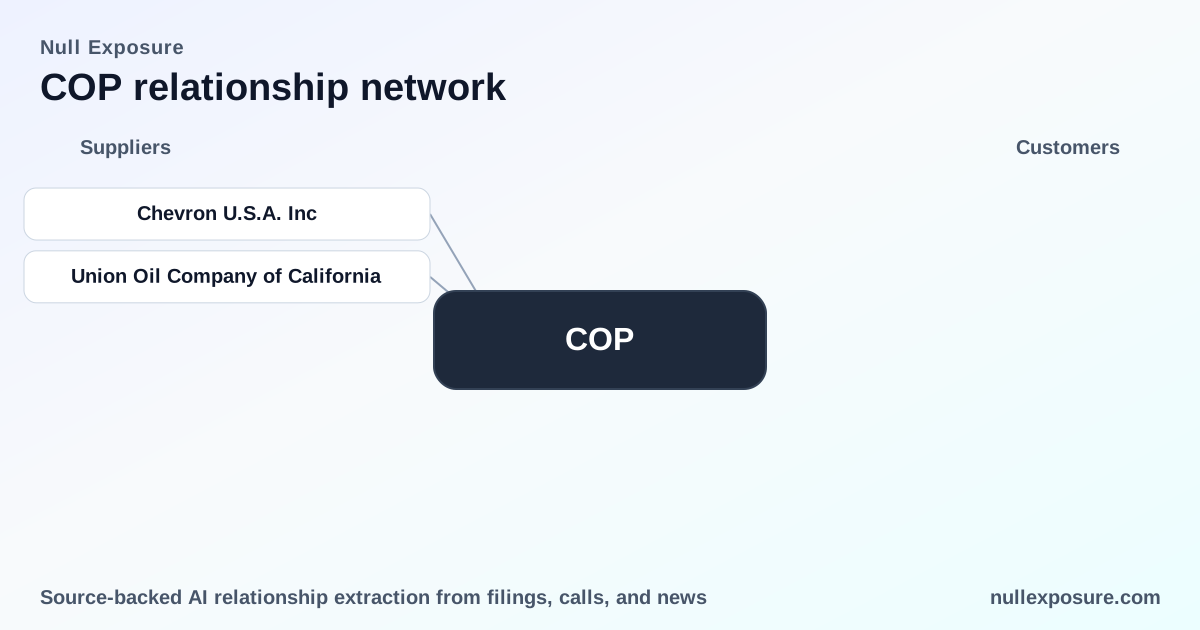
The FY2024 10‑K mentions two named entities in the supplier context. Each is listed below with a concise investor‑grade description and the source.
Chevron U.S.A. Inc
ConocoPhillips’ FY2024 10‑K lists Chevron U.S.A. Inc among named counterparties; the filing cites the entity by name but does not provide extended context beyond the mention. According to the company’s FY2024 Form 10‑K, Chevron U.S.A. Inc is referenced in the supplier/partner list for that period. (Source: ConocoPhillips 2024 Form 10‑K, FY2024.)
Union Oil Company of California
The same 10‑K lists Union Oil Company of California alongside Chevron in the referenced passage; again, the filing records the name without a detailed narrative on contract structure or dollar amounts tied specifically to this entity. (Source: ConocoPhillips 2024 Form 10‑K, FY2024.)
How to read these mentions: limited detail, but meaningful context
The two named relationships above are terse in the filing, but the surrounding disclosures give clear company‑level signals that raise the informational value of those mentions:
- Long‑term contracting posture is explicit. The 10‑K discloses throughput and take‑or‑pay agreements tied to financing arrangements and lists fixed future payments from 2025 through 2030 and beyond — culminating in $10.3 billion listed for 2030 and after. This signals that supplier agreements are often multi‑decade and contractually rigid. (Source: ConocoPhillips 2024 Form 10‑K, contractual obligations disclosure.)
- Large procurement scale. The company reports approximately $31.6 billion of contractual obligations for goods and services as of December 31, 2024, with $7.5 billion expected to be fulfilled in 2025, indicating material procurement spend that drives working capital and cashflow timing. (Source: ConocoPhillips 2024 Form 10‑K, contractual obligations.)
- Geographic breadth in purchasing. Purchases tied to the Marathon Oil acquisition expanded activity in the U.S. Lower 48 and in Africa (notably Equatorial Guinea), showing regional diversification of counterparty exposure rather than a single‑market reliance. (Source: ConocoPhillips 2024 Form 10‑K, acquisition disclosures.)
- Dual relationship roles. ConocoPhillips operates both as a buyer and as a customer of service providers: the 10‑K discusses purchases and also terminal/pipeline use agreements and engagements of third‑party cybersecurity consultants, indicating operational reliance on specialized service firms and logistics counterparties. (Source: ConocoPhillips 2024 Form 10‑K, various sections.)
- Maturity and criticality. The existence of long tenor payment schedules, take‑or‑pay language and terminal/pipeline capacity arrangements signals mature, mission‑critical contracts that are not easily re‑priced or replaced on short notice. (Source: ConocoPhillips 2024 Form 10‑K, contractual obligations and throughput agreement disclosures.)
Implications for investors and operators
- Counterparty credit risk matters. When contracts are long term and economically significant, a supplier’s financial stress can create operational drag or force substitution at materially higher cost; investors should prioritize counterparties with solid credit profiles and adequate capacity to fulfill long tenors.
- Concentration is both geographic and contractual. While purchases span regions following the Marathon acquisition, the prominence of large pipeline/terminal agreements and the $31.6 billion obligation pool imply concentration by contract type and spend band rather than by a single supplier name in the public filing.
- Operational continuity depends on logistics partners. Throughput and regasification arrangements such as those cited for Golden Pass infrastructure mean logistics counterparties are functionally critical to production monetization. (Source: ConocoPhillips 2024 Form 10‑K, terminal and pipeline agreements excerpt.)
- Cybersecurity and advisory providers are strategic. The company’s documented use of third‑party cybersecurity consultants and incident response specialists elevates non‑commodity service providers into critical‑service status that can influence outage recovery and reputational risk. (Source: ConocoPhillips 2024 Form 10‑K, cybersecurity disclosures.)
If you are conducting vendor due diligence or counterparty screening for ConocoPhillips exposure, get the structured supply‑chain intelligence at https://nullexposure.com/.
Practical monitoring checklist for investors
- Track updates to the contractual obligations table each quarter and flag changes in the long‑tail payments beyond 2030.
- Monitor key logistics counterparties for credit rating actions and volume commitments (terminals, pipelines).
- Review acquisition disclosures for new regional supplier concentrations after large M&A events.
- Include cybersecurity and incident response provider arrangements as part of operational resilience scoring, not just as IT line items.
Bottom line
ConocoPhillips runs a scale‑driven, contract‑intensive supplier model: long‑dated throughput and take‑or‑pay commitments create predictability but also lock the company into material future cashflows and counterparty dependencies. The FY2024 10‑K names Chevron U.S.A. Inc and Union Oil Company of California among referenced counterparties, but the real insight for investors is in the company‑level constraints — multi‑billion dollar obligations, long tenors and geographically diversified purchasing — which together define the supplier risk surface. Continue monitoring filings and counterparty credit signals and use targeted supplier intelligence for active positions.
For a full supplier relationship and risk profile tailored to portfolio needs, start at https://nullexposure.com/.