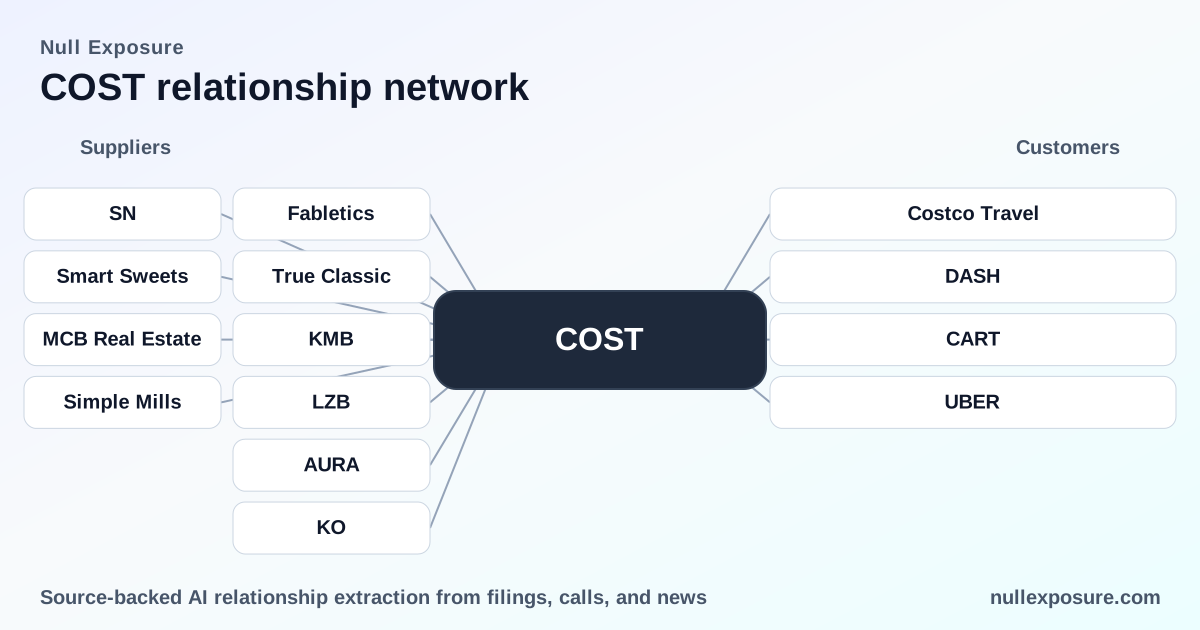
Costco (COST) Supplier Relationships: How partners plug into a high-volume membership engine
Costco operates a membership-first, high-velocity retail model that monetizes through recurring membership fees plus razor-thin retail margins on extremely large volumes. The company sources product directly from suppliers, routes inventory through depots and cross-docks into warehouses, and supplements in-warehouse sales with e-commerce and targeted marketing programs that extract additional value from supplier partnerships. For investors and operators, supplier relationships are both a revenue lever for manufacturers and a critical operational input for Costco’s member value proposition.
Explore supplier coverage and relationship signals at https://nullexposure.com/.
Quick takeaways
- Costco is a buyer with direct, high-volume supplier contracts and operates significant logistics capability (depots, cross-docking, drop-ship).
- Supplier set mixes national brands and category disruptors, supporting both everyday staples (Coca‑Cola, Kimberly‑Clark) and nonfood premium rollouts (La‑Z‑Boy, Fabletics).
- Marketing and omnichannel mechanics matter: Costco runs targeted ad amplification for suppliers and enables vendor drop-ship for e-commerce sales.
What management disclosures and reporting reveal about Costco’s operating posture
Management commentary and public reporting present three clear, company-level signals about how Costco engages suppliers: buyer, manufacturer relationships, and service provider logistics. Management stated on the 2025 Q4 earnings call that “We buy most of our merchandise directly from suppliers and route it to cross-docking consolidation points (depots) or directly to our warehouses,” which confirms a centralized purchasing and logistics posture supporting scale purchasing power. The same call noted that Costco maintains “direct relationships with many producers of brand-name merchandise,” signaling preferred, often long-term supplier engagement. Finally, Costco described e-commerce fulfillment as a mixed model—moving merchandise through its own depots and logistics operations as well as via drop-ship and other delivery arrangements—which positions the company as a logistics service provider in addition to a retailer.
These operating characteristics create low per-unit retail margins but high supplier negotiating leverage, while also obligating suppliers to meet tight logistics, packaging, and scale requirements to access Costco’s member base.
Management-named partners and what they mean for investors
Costco’s disclosures and contemporaneous news coverage name a mix of large incumbents and growth brands that illuminate strategic sourcing and merchandising priorities.
Fabletics
Costco’s 2025 Q4 earnings call lists Fabletics among “new high-quality national brand partnerships” across nonfood categories, indicating the company is actively expanding apparel offerings through national-brand deals. (Costco 2025 Q4 earnings call, March 2026)
True Classic
True Classic was also cited on the same call as a new national brand partner, showing Costco’s willingness to add direct-to-consumer apparel brands to its in-warehouse assortments. (Costco 2025 Q4 earnings call, March 2026)
Aura
Management named Aura among recently added national brands in nonfood categories, reflecting expansion into household or personal-tech adjacent brands that complement Costco’s home goods assortment. (Costco 2025 Q4 earnings call, March 2026)
La‑Z‑Boy (LZB)
La‑Z‑Boy was highlighted as a new national brand partner on the earnings call, pointing to Costco’s continued investment in large-ticket furniture categories where in-warehouse display and food-court foot traffic matter. (Costco 2025 Q4 earnings call, March 2026)
Kimberly‑Clark (KMB)
Costco described a recent targeted marketing program with Kimberly‑Clark—executing MVM (member value marketing) amplification campaigns on third‑party websites—demonstrating that Costco leverages its membership data to deliver paid advertising lift for suppliers. (Costco 2025 Q4 earnings call, March 2026)
Coca‑Cola (KO)
Management reported completing the rollout of Coca‑Cola to all food courts worldwide, underscoring the long-standing, category-defining vendor relationships that support Costco’s food-court economics and member experience. (Costco 2025 Q4 earnings call, March 2026)
SharkNinja (SN)
A StockTitan news release in March 2026 noted SharkNinja’s PowerDetect UV Reveal robot vacuum is available online at SharkNinja.com, Amazon and Costco, signaling Costco’s role as a national sales channel for premium consumer electronics. (StockTitan news, March 2026)
Smart Sweets
A Simply Wall St item reported that Costco partnered with Smart Sweets to roll out an exclusive Sweet Fish product nationwide across U.S. warehouses, illustrating Costco’s use of product exclusives to refresh member value and drive category interest. (Simply Wall St news, March 2026)
MCB Real Estate
A CityBiz announcement covering the VIVA White Oak development named Costco Wholesale as the first anchor tenant at the new center in Montgomery County, Maryland—confirming Costco’s continued expansion and strategic role as a real-estate anchor. (CityBiz, March 2026)
Simple Mills
An industry report in Prepared Foods noted Simple Mills’ retail presence includes major retailers such as Whole Foods, Target, Walmart—and Costco—showing that emerging packaged-food brands use Costco to scale mainstream distribution. (Prepared Foods, March 2026)
How these relationships shape risk and upside for investors
- Concentration and criticality: Costco’s supplier list combines massive incumbents (Coca‑Cola, Kimberly‑Clark) that provide stable, high-turn volume with more selective exclusives (Smart Sweets) and rollouts (Fabletics, La‑Z‑Boy) that drive incremental traffic and margin mix. This mix reduces single-supplier revenue concentration risk while increasing merchandising execution risk around assortment choices.
- Contracting posture: The company’s buyer role and direct producer relationships create strong negotiating leverage and exacting operational requirements for suppliers—favorable for Costco’s margins and challenging for smaller manufacturers that cannot meet scale or logistics demands.
- Channel and marketing upside: Costco’s willingness to run targeted amplification campaigns and host product exclusives means suppliers can buy distribution and promotional reach, but supplier ROI hinges on supply-chain capability and packaging/price discipline.
- Maturity and stability: Large, long-term vendors like Coca‑Cola provide stability; new partners provide optionality. The company’s logistics posture—depots, cross-docking, drop-ship—reduces fulfillment friction but raises supplier compliance requirements.
If you want a structured supplier risk scorecard or to map these relationships to vendor concentration metrics, start your analysis at https://nullexposure.com/.
Practical advice for suppliers and operators considering Costco
Suppliers should treat Costco as a high-volume buyer with rigorous logistics and merchandising standards: expect to demonstrate scale, efficient packaging for pallets, and willingness to participate in joint marketing programs. Use exclusives or food-court rollouts to gain rapid national exposure, but account for the working-capital and margin dynamics of large purchase orders and promotional programs. Costco’s mixed fulfillment model also means suppliers can access e-commerce reach via drop-ship or depot consolidation, but must align on data and timing expectations.
For operators evaluating Costco relationships, focus on supply-chain readiness, margin discipline, and the marketing lift available through Costco’s member-facing channels.
Learn more about supplier exposures and strategic implications at https://nullexposure.com/.
Costco’s supplier list confirms a deliberate strategy: combine trusted, global brands that stabilize sales with select growth partners that renew the assortment and drive member engagement. That dual approach preserves the membership economics investors prize while giving suppliers a powerful distribution partner—provided they can meet Costco’s scale and operational demands. For deeper supplier-level intelligence and portfolio mapping, visit https://nullexposure.com/.