Corpay (CPAY): Sponsorships and FX Partnerships That Extend a Payments Platform
Corpay operates an enterprise payments and foreign-exchange platform that monetizes through transaction fees, FX spreads and subscription/processing services to corporate clients. The business combines high-margin payments processing with cross-border FX capabilities, then amplifies market reach through sponsorship and commercial partnerships that are principally marketing and client-acquisition channels for its Corpay Cross‑Border product. Investors should view these supplier relationships as demand-generation levers rather than primary profit centers for a company with >$4.5B in trailing revenue. For deeper supplier intelligence and relationship tracking, visit Null Exposure.
How Corpay makes money and why partnerships matter
Corpay is an operationally profitable payments infrastructure company: Revenue TTM stands at $4.53B with Profit Margin ~23.6% and Operating Margin ~57.1%, signaling strong unit economics in core processing and FX activities. The company’s monetization mix is the familiar payments stack — service and processing fees, FX spreads captured on cross-border flows, and value-added enterprise services sold as contractual agreements to treasury and accounts-payable teams.
That structure produces a clear contracting posture: enterprise B2B engagements with recurring billing and transaction-linked economics, which makes client relationships sticky and revenue relatively predictable. High institutional ownership (97.33%) and a low beta (0.819) reinforce that the market treats Corpay like a mature cash‑flow generator rather than an early-stage fintech gamble. These company-level signals, combined with steady revenue and strong margins, explain why marketing partnerships — sports sponsorships and commercial naming rights — are logical incremental investments to broaden awareness among global corporate treasuries.
For supplier and partner diligence, explore more on Null Exposure for mapping and signals.
What the listed supplier relationships are and why they matter
Below I cover every relationship surfaced in the results and what each relationship implies in plain English.
-
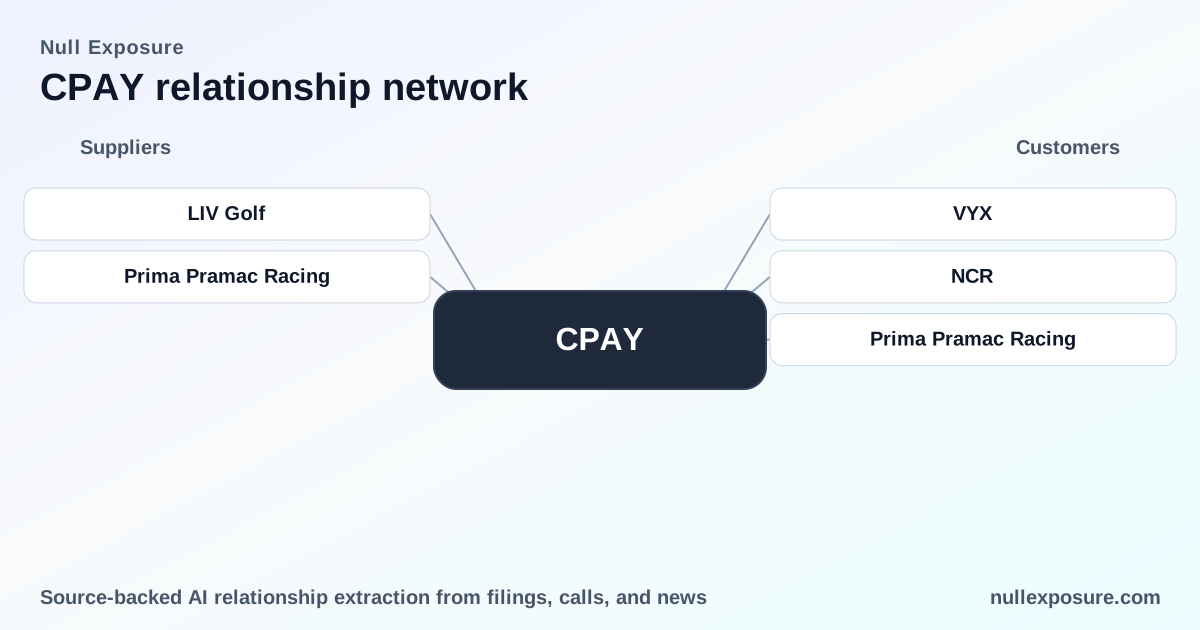
LIV Golf — Corpay Cross‑Border extended an exclusive partnership with LIV Golf. According to a Finviz report published March 9, 2026, Corpay has strengthened a commercial tie to LIV Golf, using the sports platform to raise global awareness of its cross‑border FX product and target international corporate treasurers and sponsors. (Finviz news, 2026-03-09: https://finviz.com/news/302290/corpay-inc-cpay-a-bull-case-theory)
-
Prima Pramac Racing — Corpay Cross‑Border was named the official commercial FX partner of Prima Pramac Racing. A Finviz item from March 9, 2026 notes Corpay’s choice of motorsports sponsorship to showcase FX solutions to a global, high‑visibility audience and to align the brand with fast-moving, cross-border commerce. (Finviz news, 2026-03-09: https://finviz.com/news/302290/corpay-inc-cpay-a-bull-case-theory)
Both relationships are marketing-oriented supplier ties executed through Corpay Cross‑Border, aimed at brand salience and pipeline growth rather than direct large-basket transactional contracts. The cited coverage is contemporaneous to March 9, 2026 and frames these partnerships as promotional extensions of Corpay’s commercial FX offering.
Why these supplier tie‑ins are strategically sensible
Corpay’s core value proposition is operational scale in payments and foreign exchange. Sponsorships in global sports and motorsport serve three strategic functions:
- Customer acquisition: Sponsorships put Corpay in front of multinational CFOs and treasury teams who are frequent attendees and partners of global sporting events.
- Product differentiation: Positioning Corpay Cross‑Border alongside high‑profile, international brands signals capability in real-time, multi-currency movement and global settlement.
- Low absolute cost of incremental revenue: Relative to Corpay’s scale—$4.53B revenue and market cap north of $21.7B—these deals are marketing investments expected to drive high-margin transaction flow over time rather than immediate top-line lift.
These are deliberate, top-funnel supplier relationships: productive for brand and pipeline but not substitutes for enterprise sales or regulatory compliance investments.
Operational constraints and company-level signals investors should weigh
Absent relationship-specific constraints in the report, several company-level characteristics define Corpay’s operating posture:
- Contracting posture: Enterprise contracts and transaction-based billing support recurring and sticky cash flows. Corpay’s margins and revenue profile reflect an emphasis on scale and platform leverage.
- Concentration and criticality: The service is critical to clients’ payables and receivables functions; however, sponsorships represent non-critical, demand-generation relationships. Core risk remains client retention and platform resilience rather than sponsorship execution.
- Maturity and profitability: High operating margin and a 29.1% return on equity indicate a mature, cash-generative business that invests in growth channels such as brand partnerships.
- Regulatory and FX exposure: Cross-border FX services expose Corpay to compliance and currency risk; investors should monitor regulatory filings and disclosures for changes to compliance spend and margin pressure.
Key takeaway: Corpay’s supplier relationships should be evaluated as marketing and distribution channels layered on an already profitable enterprise payments business.
Risks and what to watch next
Investors and operators evaluating CPAY supplier relationships need to focus on a few measurable items:
- Customer penetration from partnerships: Track whether partnerships convert into measurable enterprise deals rather than only brand impressions.
- Cost of customer acquisition vs. lifetime value: Sponsorships must be judged against incremental transaction flow and margin contribution.
- Regulatory developments in cross-border payments: Shifts in AML/KYC or FX regulation can increase operating costs and reduce spreads.
- Competitive offers in FX and payment rails: Maintain vigilance on pricing pressure and technological alternatives that undercut spreads or processing fees.
These are practical, actionable risk vectors that affect how supplier tie‑ins translate into P&L outcomes.
Bottom line and next step for relationship intelligence
Corpay’s recent supplier activity—sports and motorsport partnerships—fits a scale-and-acquisition play layered on a high-margin payments and FX platform. For investors, these deals are positive for brand exposure but should be valued as incremental marketing initiatives rather than core revenue drivers. Operators assessing vendor posture should prioritize contract performance, conversion metrics from sponsorships, and compliance resilience.
For a deeper look at how supplier relationships influence enterprise value and to map partner economics across firms, visit Null Exposure. If you want ongoing, structured updates on CPAY relationships and comparable supplier signals, check Null Exposure for tailored coverage and alerts.