Coupang (CPNG) — supplier relationships and what they mean for investors
Coupang operates as South Korea’s dominant e-commerce platform, monetizing through product sales, marketplace fees, and vertically integrated logistics and fulfillment services that support faster delivery. The company converts scale into margin via fulfillment revenue and merchant services while shouldering large contractual commitments in logistics and third‑party vendor relationships; investors should judge Coupang by its network effects, fulfillment capital intensity, and supplier risk profile. For a deeper supplier-risk view and supplier relationship maps, visit https://nullexposure.com/.
The quick thesis: how Coupang makes money and why suppliers matter
Coupang’s economics derive from three pillars: consumer GMV through its app and marketplace, monetization of logistics and fulfillment, and value-added services to merchants. The firm generates roughly $34.5 billion in annual revenue with a large gross-profit pool but compressed operating margins, driven by investments in last‑mile fulfillment and contractual obligations to partners and landlords. Supplier dynamics — from tens of thousands of SMEs to large branded vendors and outsourced cybersecurity firms — directly influence operating continuity, working capital, and brand risk.
What the supplier footprint looks like in practice
Coupang’s supplier base is highly mixed and structurally important. Company disclosures show over 75% of merchants in Korea are small and medium enterprises that rely on Coupang’s fulfillment and distribution, while the company also trades with large multinational suppliers for branded goods and vendor-managed inventory. Contract signals from filings indicate a mix of long‑term commitments (multi‑year leases and financing arrangements) and licensing-type agreements for specific product ranges. This combination creates a dual dynamic:
- Concentration and criticality: Large suppliers and branded relationships carry outsized operational impact when terms change, while SMEs underpin scale and GMV growth.
- Contracting posture: Coupang takes on multi‑year commitments through leases and supplier minimum guarantees, locking in capacity and cost structures that are critical to service levels.
- Maturity and spend profile: Disclosures show significant contractual commitments — total minimum commitments were disclosed at approximately $1.4 billion within 12 months as of December 31, 2024 — underscoring meaningful short‑term cash requirements.
These signals come from Coupang’s public filings through FY2024 and related press coverage; they translate into a supplier risk profile that is capital‑intensive and operationally interdependent. If you want a live map of these supplier connections, see https://nullexposure.com/.
Why an external cyber forensics engagement is material now
A recent public disclosure and press coverage documented Coupang’s immediate engagement of external cybersecurity firms following a data-security incident. These supplier engagements are operationally strategic: the choice and scope of cybersecurity vendors affect remediation timelines, regulatory exposure, and customer trust.
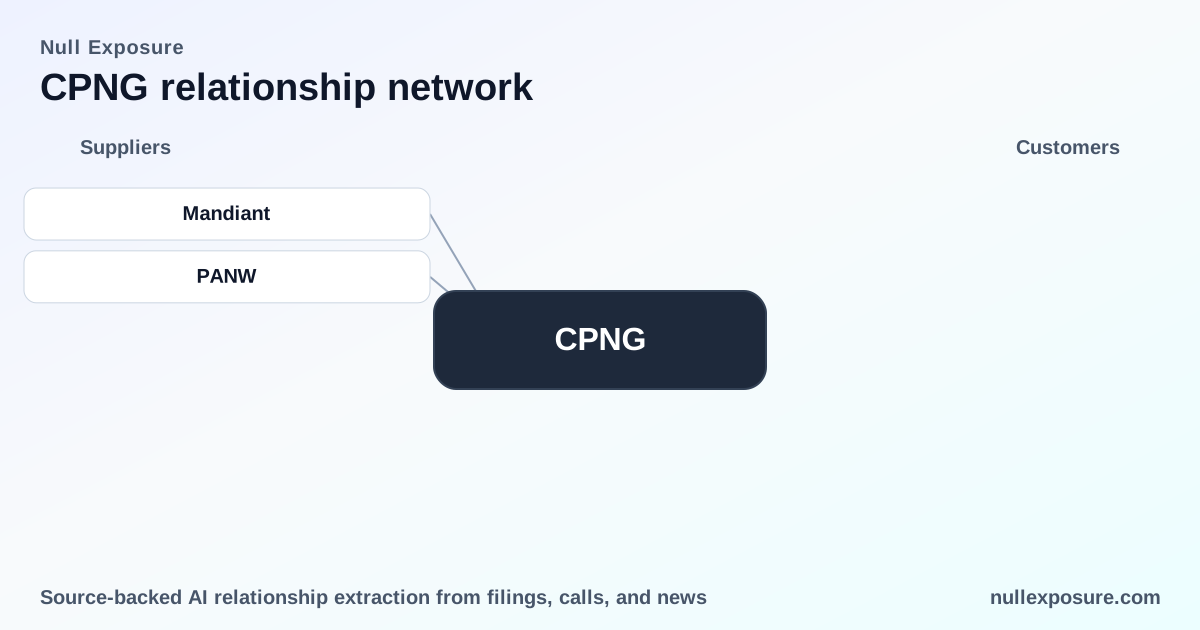
- Mandiant: Coupang retained Mandiant to perform a forensic review and remediation after the security incident, reflecting reliance on specialist security consultancies to restore operations and evidence trails. This action was reported in The Globe and Mail on March 9, 2026, during coverage of Coupang’s earnings call and data-security response.
- Palo Alto Networks (PANW): Coupang also engaged Palo Alto Networks to assist with the forensic review and remediation, an engagement that signals investment in enterprise-grade security tooling and vendor-managed incident response, as reported by The Globe and Mail on March 9, 2026.
Both vendor relationships are short‑term and tactical in nature but carry outsized reputational and regulatory consequences; using recognized cybersecurity suppliers reduces the risk of prolonged service disruption and demonstrates a posture of rapid remediation.
Each named supplier relationship in the public results
Mandiant — Coupang brought in Mandiant to conduct a forensic review and remediation following a data-security breach, signaling reliance on specialized incident-response expertise during FY2026. According to The Globe and Mail’s March 9, 2026 coverage of Coupang’s earnings call, Mandiant was part of the company’s immediate remediation team.
Palo Alto Networks (PANW) — Coupang engaged Palo Alto Networks to support forensic review and remediation work in FY2026, indicating investment in enterprise security platforms alongside external consultancy. The Globe and Mail reported the engagement during the March 9, 2026 earnings‑call coverage.
Operational constraints that shape supplier strategy
Coupang’s public disclosures surface several company-level constraints that define how the business contracts and manages suppliers:
- Long-term contracting posture: Filings reference multi‑year lease terms (2–10 years) and financing arrangements that create durable fixed-cost commitments, which influence supplier selection and negotiation leverage.
- Licensing arrangements: The company uses licensing constructs for certain product ranges with minimum guarantees and limited cancellation rights, suggesting sticky revenue and cost obligations in segments that are brand-sensitive.
- Counterparty mix: A strategic reliance on SMEs for marketplace depth coexists with supply relationships with large multinationals; this reduces single-source operational exposure but introduces complexity in payment terms and quality control.
- Spend maturity and scale: Contractual commitments above the $100 million band and $1.4 billion in near-term minimum commitments reflect material short-term cash flow obligations that creditors and suppliers will monitor.
These constraints are company-level signals observed in Coupang’s public disclosures through FY2024 and related investor materials; they shape bargaining power, supplier risk transfer, and cash conversion dynamics.
What investors and operators should watch next
- Counterparty concentration risk: Track shifts toward or away from large-brand suppliers and monitor accounts payable trends; improvements in payment terms can be a sign of stronger supplier relationships, while sudden increases in payables can signal stress.
- Contract runway on logistics and leases: Multi‑year lease commitments create inflexibility; investors should monitor lease activation and capex cadence to estimate future fixed‑cost pressure.
- Remediation effectiveness after security incidents: The choice of Mandiant and Palo Alto Networks signals a proactive response; investors should evaluate remediation timelines, regulatory filings, and customer churn data to judge the long‑term impact on brand and GMV.
- SME health and marketplace liquidity: Given that SMEs are the backbone of Coupang’s merchant base, measures of merchant retention and fulfilment uptake are leading indicators of revenue durability.
If you need a supplier-risk scorecard tailored to Coupang’s actual counterparties, start here: https://nullexposure.com/.
Final takeaway and next steps
Coupang’s supplier landscape is a study in scale and complexity: SME-driven marketplace volume paired with large enterprise suppliers and multi‑year fulfillment commitments creates both resilience and concentrated points of failure. Recent engagements with cybersecurity specialists are a clear response to an operational shock and reduce tail risk, but they do not erase the structural capital intensity of Coupang’s model. For investors and operators, the priority is monitoring counterparty payment dynamics, lease and contract roll‑forward, and remediation disclosures tied to cybersecurity incidents.
For a granular supplier map and to convert these signals into actionable due‑diligence, visit https://nullexposure.com/. If you want a custom supplier risk assessment for Coupang or competitor benchmarking, check our resources at https://nullexposure.com/ and request a tailored report.