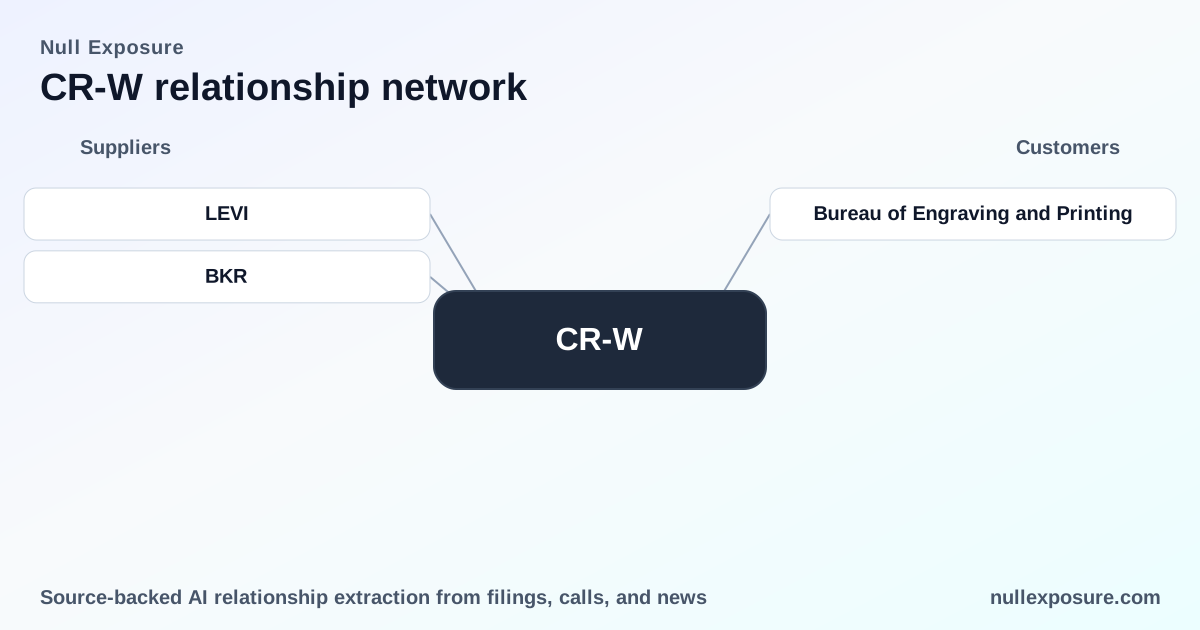
CR-W supplier profile: what investors should know about Crane’s external links and strategic exposures
Crane (ticker shown here as CR-W in supplier lists) is a diversified manufacturer that generates revenue by selling engineered industrial products, spare parts and aftermarket services across multiple end markets and by growing via targeted acquisitions. The company monetizes through steady product sales and recurring service revenue, with strategic M&A used to add niche technology and expand addressable markets. For investors assessing supplier and partner risk, the most relevant signals are legacy industrial relationships, occasional government-facing supply lines, and recent portfolio expansion through asset purchases. Explore deeper supplier intelligence at https://nullexposure.com/ to validate counterparty exposure and contractual posture.
Quick, investor-oriented takeaways you can act on now
- Acquisitions drive inorganic revenue growth and change supplier risk quickly. The purchase of an oil- and sensor-focused product line expands end-market exposure and shifts supplier and procurement dynamics.
- Legacy supplies create low-volatility cash flows but introduce concentration in niche components. Historical ties to government production lines imply durable, if specialized, supplier relationships.
- Operational maturity with targeted M&A implies predictable execution but elevated integration risk. Watch supplier contracts and warranty liabilities after acquisitions for margin pressure.
A mid-cycle deep-dive into CR-W’s supplier relationships and how they affect revenue and operational risk is recommended: review contract terms and concentration metrics at https://nullexposure.com/.
The relationships that matter to CR-W investors
Levi Strauss & Co.
Crane historically used denim clippings from Levi Strauss as a raw input in the production of specialized paper used by the U.S. Bureau of Engraving and Printing, indicating a legacy upstream relationship between an apparel mill and a niche industrial paper producer. This connection reflects Crane’s capability to integrate unconventional suppliers into mission-critical manufacturing processes for government customers. According to a Coin World article covering historical production practices (March 2026), Levi’s denim scraps were used until about the 1990s in Crane’s currency-paper manufacturing.
Baker Hughes (Precision Sensors & Instrumentation product line)
Crane acquired Baker Hughes’ Precision Sensors & Instrumentation (PSI) product line for approximately $1.15 billion in cash, a transaction that materially expands Crane’s instrumentation and sensing capabilities and shifts its supplier and customer mix toward energy and industrial sensing markets. This $1.15 billion purchase is a strategic bolt-on aimed at accelerating Crane’s exposure to precision instrumentation and aftermarket service revenue. A World Oil report dated June 9, 2025, described the sale and the stated cash consideration.
What these relationships reveal about CR-W’s operating model
- Contracting posture: CR-W operates with a supplier posture that blends long-term, specialized vendor relationships (as evidenced by legacy inputs to government paper production) with transaction-focused M&A-driven supplier consolidation (the Baker Hughes PSI purchase). This combination implies both durable ties and a readiness to reconfigure supplier bases through acquisitions.
- Concentration and criticality: The Levi connection is a signal of niche, critical inputs for specialized government-supply lines; while that specific input was phased out in the 1990s, the history signals capability to source unconventional vendors for mission-critical products. The PSI acquisition elevates criticality around sensor technology supply chains — now a larger portion of Crane’s product portfolio depends on high-precision components and suppliers.
- Maturity and integration risk: Crane’s model reflects an established industrial operator using M&A to add adjacent tech and product lines; this reduces greenfield development risk but increases near-term integration risk, supplier re-contracting complexity, and potential short-term margin dilution.
- Diversification as a mitigant: The mix of legacy government-related supply and newer industrial sensor assets creates natural revenue diversification across end markets (government printing, energy, industrial instrumentation), reducing single-market tail risk while concentrating certain component classes.
Actionable investor implications and risk checklist
- Supply-chain concentration: Post-acquisition, verify whether critical sensor components are single-sourced or have competitive supplier backups; single-source suppliers for PSI components would increase supply risk.
- Contract terms post-M&A: Review warranty, indemnity, and inventory carve-outs in the Baker Hughes transaction to understand potential contingent liabilities that flow to Crane and its suppliers.
- Legacy-government exposure: Even if legacy inputs (e.g., denim clippings) are historical, any remaining government-facing lines carry procurement, compliance and continuity obligations that demand robust supplier governance.
- Integration funding and cash flow: The $1.15 billion cash consideration for PSI suggests a meaningful cash outflow; track working capital cycles and supplier payment terms for signs of stress or lengthening payables.
If you want structured supplier diligence and contract-level signals for CR-W, start your focused investigation here: https://nullexposure.com/.
Constraints and company-level signals (what the records show)
The supplier relationship record for CR-W does not list formal constraints in the dataset used for this brief, which itself is a signal: no structured contractual or regulatory constraints were flagged in the supplied relationship feed. Investors should treat that absence as a prompt to perform conventional due diligence—confirmation bias must be avoided by validating supplier contracts, regulatory filings and integration disclosures. Company-level operating signals inferred from the relationship set include: mature industrial operations, exposure to government and energy end markets, and active use of M&A to acquire product lines and supplier networks.
Final view and recommended next steps
CR-W’s supplier footprint combines legacy government-oriented manufacturing competence with a deliberate shift into precision instrumentation via the Baker Hughes PSI acquisition. The combination yields diversified revenue streams with concentrated component risks and integration exposures that warrant active monitoring. Prioritize reviews of supplier concentration for precision sensors, the Baker Hughes purchase agreement for contingent liabilities, and any lingering government-procurement supply obligations.
For immediate, practical supplier intelligence and contract-level screening on CR-W, access tailored reports and verification at https://nullexposure.com/.