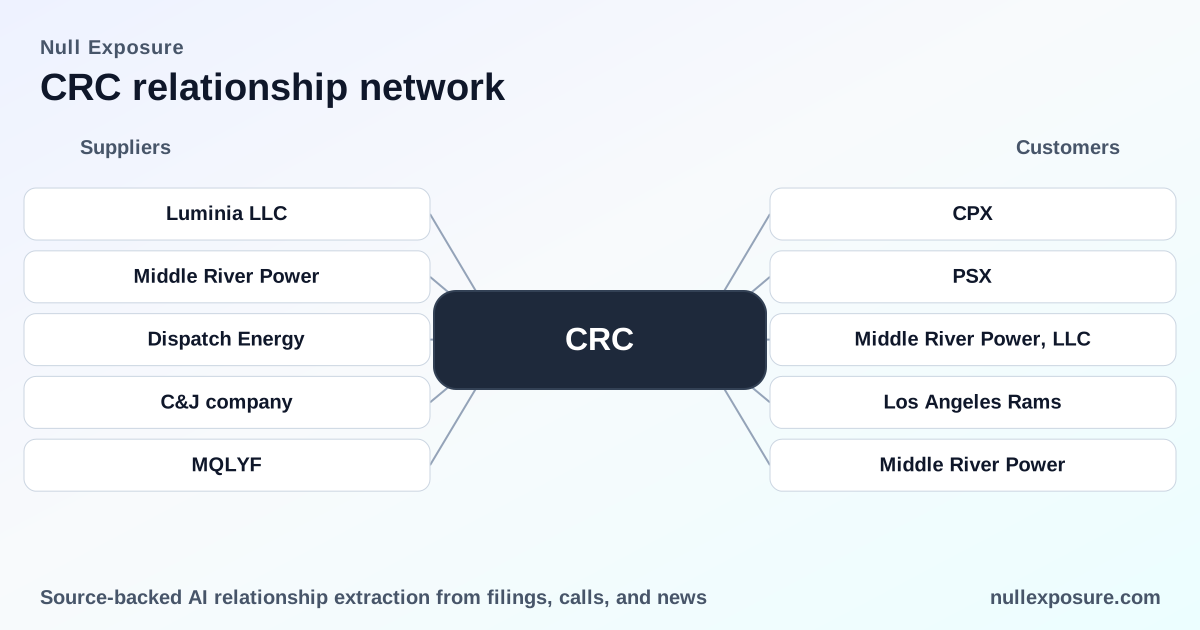
California Resources Corp (CRC): supplier map and strategic takeaways for investors
California Resources Corporation (NYSE: CRC) runs an integrated oil and gas production business concentrated in California and monetizes primarily through upstream hydrocarbon sales while increasingly building power and low‑carbon partnerships that unlock new revenue and reduce operating cost volatility. The company generates free cash flow from legacy production, uses fixed‑price and transportation commitments to stabilize margins, and is selectively contracting with distributed energy and carbon management providers as it pursues lower emissions intensity across its basins. For investors evaluating counterparty risk and supplier concentration, CRC combines traditional E&P cashflow dynamics with an active supplier strategy around decarbonization and electricity supply.
Learn more about supplier intelligence at https://nullexposure.com/.
How CRC contracts and spends — what the supplier signals say about the operating model
CRC’s public disclosures and market coverage point to a company-level operating posture characterized by longer-term commitments, material purchase obligations and a buyer role for energy inputs. The corporate record includes explicit ship‑or‑pay transport commitments and hedging or fixed‑price arrangements for fuel and power inputs; purchase obligations disclosed at year‑end total roughly $197 million nominal (present value ~$130 million), signaling meaningful baseline spend that is committed across multiple years. Those obligations translate to a contracting profile that dampens short‑term commodity exposure but creates counterparty and operational execution risk if volumes change or counterparties default.
Other company-level signals:
- Long-term contracting is explicit in CRC’s language around pipeline transportation and fixed‑price arrangements, which allocate downside volume risk into cash settlement mechanics.
- CRC acts as a buyer of electricity and natural gas for operations, and thus its supplier set includes both fuel providers and power project developers.
- The firm engages third‑party service providers and auditors in standard roles, indicating normal operational outsourcing and governance controls.
- Scale matters: confirmed purchase obligations and multi‑year commitments place CRC in the 100m+ spend band, making supplier continuity and credit quality material to operating stability.
Relationship breakdown — who CRC is working with now
Luminia LLC
Luminia negotiated project agreements to develop two large‑scale solar projects for California Resources, positioning CRC to source on‑site renewable power for operations in California. According to LeleZard (news release, March 9, 2026), Luminia finalized those project agreements as part of CRC’s distributed energy strategy.
Dispatch Energy
Dispatch Energy acquired the solar projects from Luminia and will act as the long‑term owner, builder and operator for both systems, giving CRC an operator counterparty rather than a pure developer for these assets. LeleZard reported that Dispatch Energy completed the acquisition and will serve as long‑term operator (news release, March 9, 2026).
Middle River Power
CRC announced a memorandum of understanding with Middle River Power to explore CO2 transportation and storage and to advance decarbonized power solutions near Silicon Valley, signaling potential industrial‑scale carbon management and power development collaborations. This MOU was disclosed in CRC’s fourth quarter and full‑year 2025 results and related press materials (GlobeNewswire / ManilaTimes distribution, March 2, 2026).
C&J company
CRC’s management cited C&J company as a well‑services optimization partner in its Q4 2025 earnings commentary, indicating CRC is leveraging external well‑service capabilities to drive field efficiencies and supply‑chain leverage. The mention is recorded in quarterly earnings call transcripts (InsiderMonkey and Globe and Mail press versions, March 2026).
MiQ (Methane verification and certification)
CRC has received MiQ Grade A methane certification for multiple production segments (Ventura County and San Joaquin Valley assets), demonstrating third‑party verification of methane performance and an elevated ESG compliance posture. The Grade A certification was announced across corporate releases and was covered in GlobeNewswire (Nov 18, 2025) and later communications (GlobeNewswire / ManilaTimes coverage, Feb 25, 2026).
What these relationships imply for cashflow, execution and risk
The supplier roster shows CRC is executing a two‑track supplier strategy: preserve hydrocarbon cashflow while locking in energy and decarbonization inputs through structured, long‑term deals. The solar projects (Luminia → Dispatch Energy) reduce operating power cost exposure and transfer construction and long‑term operations risk to a specialist operator — a clear move to convert capital and operational volatility into contracted, service‑oriented relationships. The Middle River Power MOU elevates CRC’s profile in CO2 transportation and storage, an area that could create new value streams but requires successful technical and regulatory execution. MiQ Grade A certifications externally validate emissions control, supporting CRC’s access to offtake partners and potentially a premium in low‑methane markets.
At the same time, material purchase obligations and ship‑or‑pay language increase counterparty and volume risk if commodity flows or power generation underperform. CRC’s role as a buyer of electricity and natural gas makes supplier continuity and creditworthiness a driver of near‑term margin stability.
Learn more about how supplier relationships change enterprise risk at https://nullexposure.com/.
Practical monitoring checklist for investors and operators
- Track construction and operational milestones for the solar projects now owned/operated by Dispatch Energy; delays change near‑term opex and capex profiles.
- Monitor any firm agreements that emerge from the Middle River Power MOU for timelines, commercialization clauses, and host‑site commitments.
- Watch ship‑or‑pay and NGL transportation commitments that expire in or soon after 2026 for renewal terms or settlement exposure.
- Use MiQ certification renewals and geographic rollouts as indicators of CRC’s operational maturity and potential market access to low‑emissions buyers.
- Evaluate counterparty credit and performance of long‑term suppliers given CRC’s confirmed purchase obligations in the 100m+ band.
Bottom line — an investor view
CRC remains a cash‑generative California E&P that is strategically transitioning parts of its supplier base from commodity exposure to contracted service relationships, with solar and carbon management partnerships representing the most consequential supplier moves. Key investment considerations are execution risk on these new projects, counterparty credit for long‑term commitments, and the company’s ability to sustain production while integrating lower‑carbon power and storage solutions.
For a deeper supplier risk profile and to map counterparties across portfolios, visit https://nullexposure.com/.