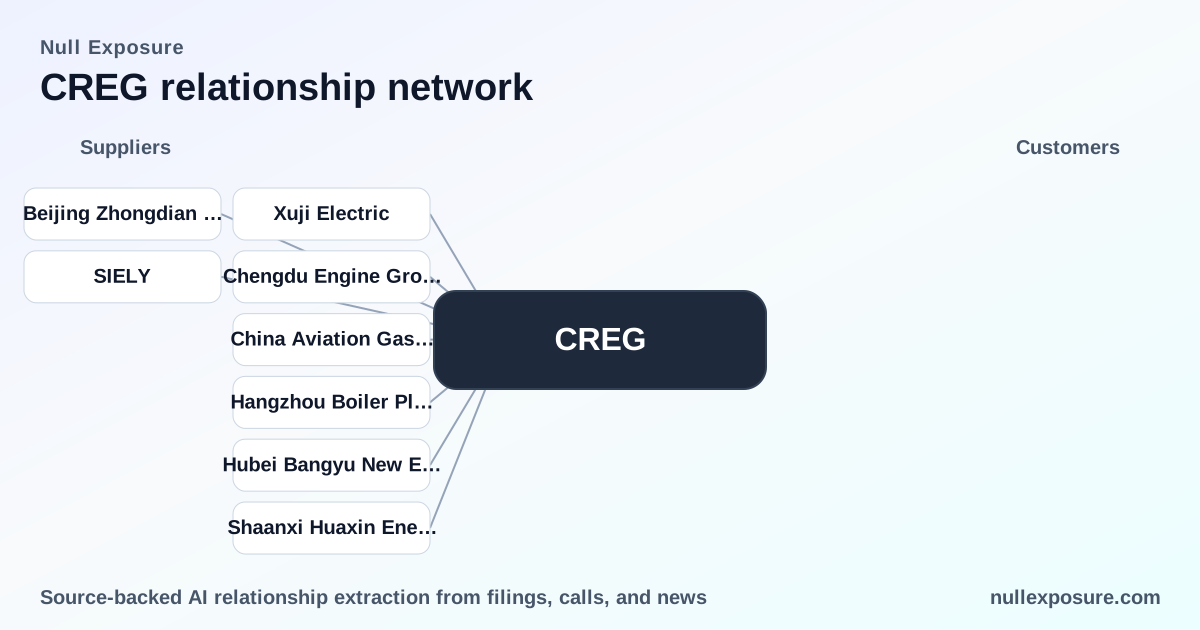
CREG’s supplier map: what investors need to know about equipment, batteries and contractor relationships
China Recycling Energy Corporation (trading as CREG) operates by developing, building and operating waste-heat-to-power and energy-recycling projects in China, monetizing through equipment sales, project development fees and ongoing energy sales from commissioned plants. The company sources major plant components through established general-contractor channels and a small set of repeat equipment suppliers, and has also executed large hardware purchases (notably energy storage batteries) that influence balance-sheet working capital and prepayments. For investors, the combination of capital-intensive procurement, concentrated contractor sourcing and meaningful prepayments is the primary commercial lever to monitor. Explore supplier risk intelligence at https://nullexposure.com/ to see the full supplier footprint.
Quick take: procurement posture and what it means for cash and execution
CREG outsources major equipment procurement to general contractors who, in turn, buy from a fairly consistent roster of Chinese heavy-equipment manufacturers and EPC firms. That structure delivers operational speed and access to proven OEMs, but it also concentrates execution risk: project delivery relies on a small pool of component suppliers and general contractors, and the balance sheet already shows large prepayments tied to hardware purchases. With negative EBITDA and modest market capitalization, the timing and reliability of supplier deliveries are material to near-term cash flow and project commissioning.
Explore supplier risk intelligence at https://nullexposure.com/ for deeper diligence on counterparties and contract terms.
How the supplier relationships are structured in practice
CREG’s 2024 Form 10‑K lists two clear patterns in supplier relationships:
- A group of long-standing heavy-equipment and turbine OEMs and boiler makers that general contractors use when procuring plant components. These suppliers are standardized industrial vendors that supply boilers, turbines, engines and electrical machinery critical to plant construction.
- Large hardware contracts for battery energy storage, with substantial prepayments recorded against those contracts, reflecting both scale and near-term cash exposure.
Those structural signals create three investor-visible implications: execution concentration—multiple projects depend on the same OEM ecosystem; cash concentration—prepayments can lock working capital; and operational criticality—delays or defects at an OEM propagate directly to plant commissioning and revenue recognition.
Supplier list and what each relationship means to CREG
Below I cover each supplier named in the company's FY2024 disclosure; each entry is a concise, plain-English summary followed by the source.
Xuji Electric
Xuji Electric is named among the established equipment suppliers from whom the company’s general contractors procure key plant components, indicating Xuji is part of CREG’s core industrial supply chain. According to CREG’s 2024 Form 10‑K (FY2024), the company maintains well-established business relationships with Xuji Electric.
Chengdu Engine Group
Chengdu Engine Group supplies engine and prime-mover equipment used in waste-heat and energy-recycling plants; it is listed as one of the repeat vendors used by CREG’s general contractors. The FY2024 10‑K confirms Chengdu Engine Group is part of the company’s regular supplier roster.
China Aviation Gas Turbine Co. Ltd
China Aviation Gas Turbine Co. Ltd is cited as a turbine supplier engaged through general-contractor procurement channels, forming part of the firm’s ecosystem for power-generation equipment. This relationship is disclosed in CREG’s FY2024 Form 10‑K.
Hangzhou Boiler Plant
Hangzhou Boiler Plant is referenced among the boiler manufacturers relied upon by general contractors for plant construction, making it part of the critical hardware supplier set. The FY2024 10‑K lists Hangzhou Boiler Plant as a well-established supplier.
Beijing Zhongdian Electric Machinery
Beijing Zhongdian Electric Machinery is included in the company’s established supplier list for electrical machinery and related plant systems, showing it is a recurring vendor for CREG projects. The FY2024 10‑K names Beijing Zhongdian as a supplier.
Shanghai Electric Group (SIELY)
Shanghai Electric Group is explicitly named and mapped to an inferred market ticker (SIELY) in the filing; it is a major industrial supplier to the general-contractor ecosystem and therefore a strategically relevant counterparty for equipment delivery. CREG’s FY2024 Form 10‑K lists Shanghai Electric Group among its well-established suppliers.
Hubei Bangyu New Energy Technology Co., Ltd.
On June 19, 2023, CREG entered a purchase agreement with Hubei Bangyu for $82.3 million (RMB 595.0 million) to buy energy storage battery systems and had made a prepayment of $67.2 million (RMB 476.0 million) as of December 31, 2023, indicating material cash exposure tied to this supplier and the APAC hardware segment. This transaction and the prepayment are disclosed in the FY2024 10‑K.
Shaanxi Huaxin Energy Engineering Co., Ltd.
Shaanxi Huaxin is engaged as a general contractor on projects under construction and is listed alongside other quality EPC firms; its role indicates CREG uses regional engineering firms for project execution. The FY2024 Form 10‑K states that CREG has engaged Shaanxi Huaxin for current construction projects.
What the constraints tell investors about company-level risk
CREG’s public disclosures surface several non-relationship-specific constraints that are meaningful when assessing supplier risk:
- Contracting posture: long-term leases and active ROU liabilities. The company records right-of-use assets and lease liabilities (total lease liabilities ~$115k), and the filings note an office lease through December 31, 2026. This shows a conservative, longer-dated tenancy posture for corporate facilities.
- Geographic concentration in APAC for hardware purchases. The large battery purchase from Hubei Bangyu is regionally concentrated and recorded as a significant prepayment, creating geographic and counterparty concentration in China for critical hardware.
- Relationship stage and maturity: active, established supplier links. The 10‑K language emphasizes “well-established business relationships” with multiple OEMs and EPCs, which signals operational maturity in supplier selection and repeat procurement.
- Segment and spend signal: hardware-heavy, material prepayments. The Bangyu transaction is explicitly in the hardware segment (energy storage batteries) and represents material spend; the prepayment magnitude is a balance-sheet exposure investors must monitor.
- Spend-band signal for leases (company-level). Recorded lease liabilities around $115k indicate non-material corporate facility spend but are consistent with long-term contractual commitments.
These constraints, taken together, indicate an operating model that is capital-intensive, reliant on repeat OEMs and EPC partners, and exposed to concentrated hardware prepayments—all factors that affect liquidity and execution risk.
Investment implications and what to watch next
- Execution risk is the key operational risk. Delays or performance issues from any of the named OEMs or EPCs will have direct consequences for project commissioning and revenue recognition.
- Prepayment exposure is material. The $67.2M prepayment to Bangyu represents locked cash; monitor progress milestones, delivery confirmations and potential warranty or acceptance clauses in future filings.
- Concentration plus modest institutional ownership. With limited institutional ownership and nearly 14% insiders, supplier failures could force management to rely on expensive short-term liquidity fixes.
- Balance-sheet fragility versus large-ticket hardware needs. Negative EBITDA and small market cap increase the strategic importance of successful hardware deliveries and timely project startups.
For detailed counterparty intelligence, contract terms and supplier-level risk scoring, visit https://nullexposure.com/ to access enhanced supplier profiles and monitoring.
Bottom line
CREG operates with an industrial supply chain of established Chinese OEMs and EPCs and has taken material hardware exposure via a large battery purchase, creating a clear vector for execution and liquidity risk. Investors should focus on delivery milestones, cash conversion from prepayments, and any new disclosures around supplier performance. If you want a deeper, contract-level view of the partner ecosystem, start your diligence at https://nullexposure.com/ — supplier structure and timing are the critical levers for CREG’s near-term valuation.