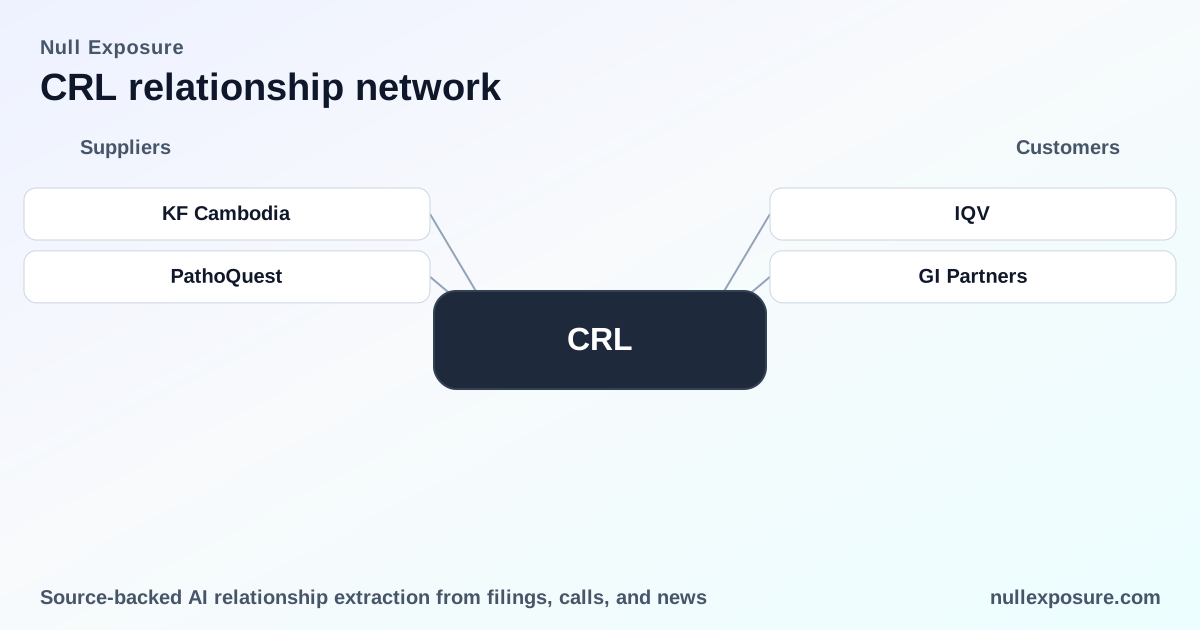
Charles River Laboratories (CRL): supplier strategy, near-term deals, and what investors should price in
Charles River monetizes a high-margin services platform by selling preclinical, clinical and manufacturing support to pharma and biotech customers while also controlling upstream supply of biological models and select lab products. The company grows revenue through service volume, selective acquisitions that fill capability gaps (non-human primate supply, NAMS sequencing and pathogen characterization), and defensive vertical integration that secures time-sensitive inputs. For investors, the critical question is whether these supplier moves reduce operational risk and expand durable revenue, or merely add integration complexity and regulatory exposure.
Explore deeper supplier intelligence at https://nullexposure.com/.
Why supplier relationships drive CRL's operating economics
CRL is a services-first business with important supplier interdependencies. Its clients buy studies and regulated services where timely access to validated biological models and analytic capabilities is a gating factor for revenue recognition. As a result, supplier relationships are not peripheral — they directly affect utilization, backlog conversion and margin stability.
- Contracting posture: CRL historically locks in clients on project schedules and milestones; suppliers therefore function as critical extension points of CRL’s delivery chain rather than spot vendors. That makes supplier continuity and control high priorities for management.
- Concentration and geography risks: The company-level disclosure about suspending shipments from Cambodia highlights geographic concentration risk in APAC for certain biological supplies, which can translate into short-term delivery gaps for U.S. clients and cost volatility in sourcing alternatives.
- Criticality and maturity: Certain suppliers supply large research models and advanced molecular services — these relationships are mission-critical and often require auditing, operational involvement, or ownership to meet regulatory and QA standards. That is consistent with the company statement that some suppliers are audited and include ownership/operational involvement.
- Integration posture: Recent and announced acquisitions suggest CRL is increasingly pursuing vertical integration to internalize scarce capabilities and de-risk supply chains rather than relying on external spot sourcing.
These operating signals should be read alongside CRL’s scale: trailing twelve‑month revenue around $4.0 billion and positive operating margin, which give it both the incentive and the capital to buy and operate strategic suppliers.
KF Cambodia — securing non-human primate (NHP) supply
CRL said the acquisition of KF has already closed and that KF has been a long-time NHP supplier in Cambodia, which will strengthen and secure our DSA supply chain. This is a classic defensive acquisition: control upstream supply for a product that is central to safety assessment services. According to CRL’s 2025 Q4 earnings call (first reported March 2026), management presented this as a closed deal intended to secure NHP sourcing for safety assessment work.
Source: remarks on the 2025 Q4 earnings call (filed March 2026).
PathoQuest — expanding pathogen sequencing and NAMS capabilities
Management confirmed a planned acquisition of PathoQuest to advance its NAMS (novel analytical and molecular services) capabilities, with the transaction expected to close within the next month. The move is targeted at expanding high-value molecular diagnostics and pathogen characterization services that support tox and biologics programs. CRL discussed this as part of the 2025 Q4 earnings call commentary (reported March 2026).
Source: remarks on the 2025 Q4 earnings call (filed March 2026).
Company-level constraints that shape supplier strategy
Three explicit constraints from the company narrative illuminate how management allocates capital and operational attention:
- APAC regional exposure (company-level signal): CRL voluntarily suspended future shipments of non-human primates from Cambodia to the U.S. until additional procedures are agreed with USFWS to ensure purpose-bred status. This is a supply-side constraint affecting APAC sourcing lanes and implies near-term sourcing interruptions and compliance costs if alternate suppliers must be engaged.
- Materiality of real estate leases (company-level signal): Management stated that none of its leases is individually material to operations, indicating low single-site facility concentration risk on the lease side; supplier concentration risk persists in biological sourcing rather than leased footprint dependence.
- Supplier role and operational involvement (company-level signal): CRL states that large research models are sourced from audited, approved suppliers, and that some suppliers involve ownership or operational involvement by Charles River — signaling an explicit strategy of partial vertical ownership to secure mission‑critical inputs and quality control.
Together these constraints paint a picture of a company that is actively trading capital for control: acquisitions like KF and PathoQuest reduce supplier fragility but increase execution and regulatory-compliance complexity.
How investors should think about risk and return
CRL is executing a defensive, capability-driven M&A strategy to lock in inputs and expand higher-margin analytical services. That strategy is compatible with its revenue base and operating scale, but it carries discrete risks:
- Regulatory and compliance risk: The Cambodia shipment suspension shows how regulatory frictions can instantly constrain supply lines and force near-term mitigation costs.
- Integration execution risk: Bringing specialized suppliers in-house or under operational control demands QA harmonization and integration capital; failure to integrate can depress margins and distract management.
- Concentration of biological inputs: Although CRL is reducing third‑party dependency via acquisitions, the supply of certain large research models remains concentrated by geography and source, which can lead to price pressure or delay if a region is restricted.
For investors focused on downside protection, the acquisitions are net positive if CRL can standardize compliance and preserve client schedules without disproportionate margin erosion.
Learn more about supplier exposures and strategic implications at https://nullexposure.com/.
Final takeaways and recommended next steps
- Acquisitions are strategic and defensive: KF secures non-human primate supply; PathoQuest adds molecular/pathogen capabilities — both moves strengthen CRL’s ability to deliver time-sensitive, regulated services.
- Company-level controls are rising but so are compliance demands: CRL is trading vendor risk for integration and regulatory workstreams.
- Monitor execution indicators: Watch post-close integration KPIs, any updates on Cambodia/USFWS outcomes, and backlog conversion rates for safety assessment and NAMS services.
If you are evaluating CRL supplier exposure or underwriting service continuity risk for portfolio companies, consult the supplier relationship intelligence available at https://nullexposure.com/ to see how these moves change the supplier risk profile in real time.