CorMedix (CRMD): Outsourced manufacturing, concentrated supply, partner-led clinical execution
CorMedix operates as a focused biopharma commercial and development company that monetizes through product sales of hospital-use therapeutics and by licensing/partnering intellectual property. The company sells DefenCath in the U.S., relies on partner networks for pivotal clinical work, and outsources manufacturing and API supply under long-term commercial arrangements. Investors should evaluate the economics of product sales against the operational risk created by single-source APIs and a supplier-dependent manufacturing model.
Visit the NullExposure research hub for supplier-risk intelligence: https://nullexposure.com/
The business model in one paragraph: where revenue and risk live
CorMedix generates revenue primarily from the commercialization of its antimicrobial catheter lock solution and related products, backed by high gross margins and a profitable FY TTM (Revenue TTM: $311.7M; Gross Profit TTM: $289.6M; Profit Margin: 52.3%). The company’s operating model is asset-light: it retains IP and commercial responsibility while contracting out drug substance and finished-dose manufacturing to third parties and leveraging licensing partners to execute regulatory or clinical milestones. This structure concentrates operational dependency outside the corporate walls — an attractive margin lever but a source of supplier and regulatory concentration risk.
What the filings and disclosures make explicit about suppliers and IP
Company disclosures convey four consistent themes that shape counterparty risk and contracting posture:
- IP licensing history and exclusivity: CorMedix’s NDA-era IP position stems from a 2008 License and Assignment Agreement with ND Partners, LLP, where ND Partners granted exclusive worldwide rights to key antimicrobial catheter lock technologies. Company filings record this 2008 arrangement as the foundation of CorMedix’s product IP and commercialization rights.
- Long-term commercial supply relationships: SEC disclosures note a master commercial supply agreement in place with a third-party manufacturer since August 2018, indicating multi-year contracting posture for finished product supply and continuity planning.
- EMEA manufacturing footprint through a named CMO: The company received FDA approval of DefenCath with finished dosage production from a European contract manufacturing organization, Rovi Pharma Industrial Services, tying a regulatory approval milestone directly to a named CMO.
- Single-source API exposure and regulatory criticality: Filings warn that CorMedix currently has one FDA-approved source for each of its two key APIs (taurolidine and heparin sodium), and that cGMP non-compliance at reagent/CMO suppliers could lead to shortages or production interruptions.
Taken together, these signals describe a mature, partner-centric contracting posture (long-term supply agreements and longstanding IP licenses) but with elevated concentration and criticality at the supplier/API level.
The named partner relationships investors need on their radar
Below I cover every relationship referenced in the supplier-scope results and what each implies for operational execution.
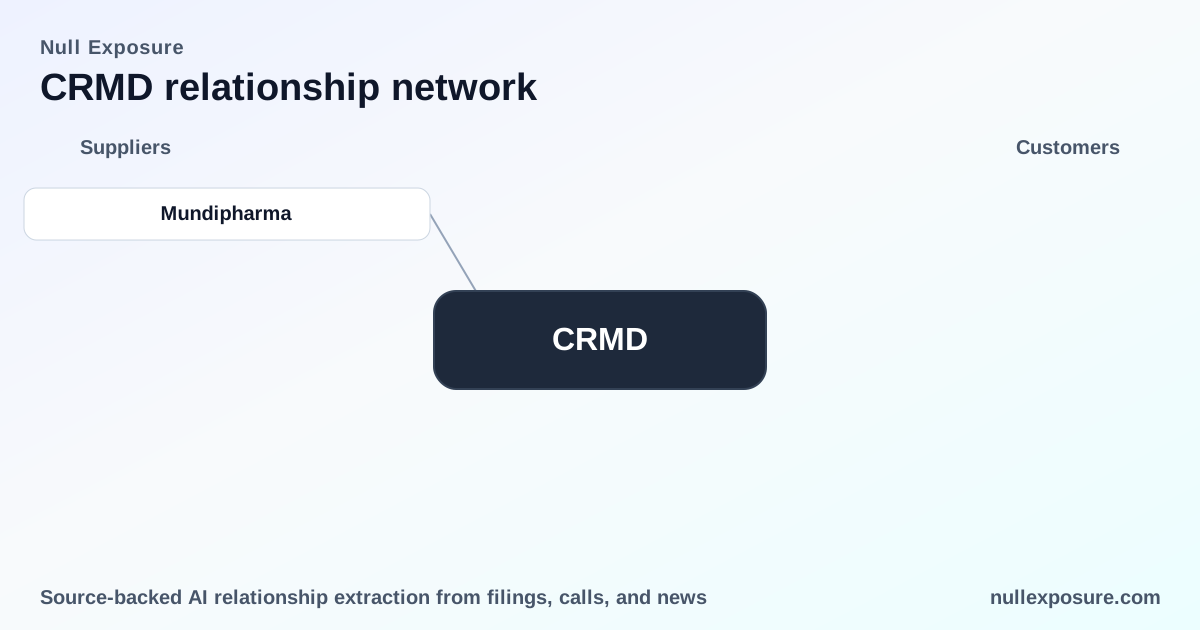
- Mundipharma — Mundipharma is operating as CorMedix’s global partner running a pivotal trial, and the company reported that all sites have completed participation and that the study is on track for a near-term database lock. This relationship signals reliance on a partner for late-stage clinical execution and regulatory timeline delivery (InsiderMonkey earnings call transcript, March 2026).
- (No additional named supplier relationships were present in the results list. The constraints and filings cited above identify ND Partners and Rovi Pharma Industrial Services as material counterparties in IP and manufacturing roles; those are discussed as company-level constraints.)
According to the Q4/FY2025–FY2026 commentary in public call materials, Mundipharma’s role is operationally central to the pivotal program’s timeline and future commercialization cadence.
How these relationships and constraints affect valuation and execution
CorMedix’s financial profile — high margins, positive EBITDA, a low trailing P/E (3.2x) and meaningful institutional ownership (≈55%) — supports a value case predicated on steady commercial roll-out and successful regulatory events. Operationally, the supplier picture imposes several implications investors should price into the equity:
- Contracting posture and maturity: long-term supply contracts (since 2018) and a 2008 IP license indicate mature, negotiated arrangements rather than ad hoc vendor relationships. That reduces short-term procurement friction but increases bargaining stick for the named suppliers.
- Concentration risk: single-source APIs for both taurolidine and heparin sodium create clear production vulnerability, and FDA oversight of CMOs raises the probability that compliance issues could interrupt supply. Filings explicitly call this out as a production risk.
- Criticality of CMOs: naming Rovi Pharma Industrial Services as the finished-dose CMO used in the FDA approval process links regulatory acceptance directly to a specific contract manufacturer, which elevates the operational leverage of that CMO in any continuity event.
- Partner dependency for clinical/regulatory milestones: Mundipharma’s stewardship of the pivotal trial demonstrates that commercial and regulatory timelines depend on external partner execution, which is a governance and program-risk vector investors must monitor closely.
If the pivotal program delivers expected data and the manufacturing chain remains compliant, the upside for product sales is clear; conversely, a supply interruption or partner-delivered clinical delay would compress the favorable valuation multiple quickly.
Explore supplier-role intelligence and contract signals for this profile: https://nullexposure.com/
Practical checklist for investors and operators
Monitor these items proactively to move from qualitative concern to actionable alerts:
- Regulatory and compliance filings from CMOs and API suppliers; audit schedules and any FDA 483 or warning letters.
- Timeline confirmations and database-lock statements from Mundipharma and CorMedix on the pivotal study. Insider call transcripts and partner disclosures will show whether timelines are firm.
- Contract renewal and alternative-sourcing clauses tied to the August 2018 master supply agreement; any termination or change-of-control language that could affect supply continuity.
- IP license health and royalty/backstop provisions stemming from the 2008 ND Partners agreement.
These are not speculative lines; they emerge from the company’s own disclosures and partner statements and will determine whether the asset-light model is a durable profit engine or a concentrated operational liability.
Final recommendation for readers: prioritize supplier and partner diligence as heavily as clinical signals in your valuation model. CorMedix’s commercial performance and its multiples will move faster from supply or partner events than from organic R&D alone. For ongoing watchlists and supplier-risk updates, return to the NullExposure research center: https://nullexposure.com/
Sources referenced in text include company SEC disclosures (historical license and supply agreements), the company’s FDA approval statement referencing Rovi Pharma Industrial Services, and an earnings/quarterly call transcript published on InsiderMonkey reporting Mundipharma’s pivotal trial status (March 2026).