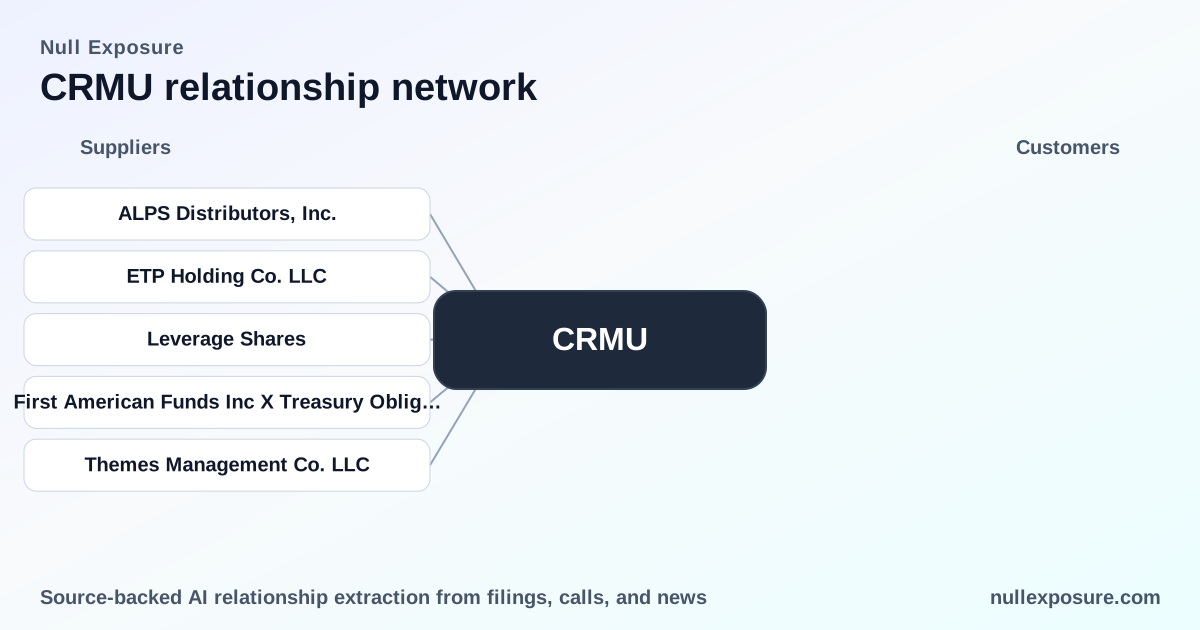
CRMU supplier map: who powers the product and what it means for investors
CRMU is structured as an issued leverage product: shares for CRMU are issued by a financial issuer and distributed under a branded wrapper, with an independent advisor responsible for primary management and short-duration cash or treasury holdings held as collateral. The issuer and brand capture fee revenue through the product’s expense structure while distributors and the advisor govern market access and investment implementation — together they determine liquidity, operational resilience, and cost-to-investor. For practitioners evaluating counterparty exposure, focus on the issuer/advisor pairing, distributor reach, and the quality of cash/treasury collateral supporting the instrument.
Explore supplier-level intelligence and supplier risk signals at https://nullexposure.com/ to map counterparty exposure across your portfolio.
How CRMU monetizes and how that shapes counterparty roles
CRMU monetizes via a classic asset-management issuance model: an issuer establishes the vehicle, a branded platform markets it, an advisor manages exposures, and distributors place product into investor hands. That structure creates distinct commercial relationships — each partner is a value gatekeeper: the issuer controls legal issuance and expense fees, the brand controls marketing and placement strategy, the advisor controls investment design and compliance, and distributors control retail/institutional access. Together these relationships determine revenue capture, distribution costs, and operational concentration risk.
- Contracting posture: Multi-party contracting is standard; legal and operational responsibility is split across issuer, brand, advisor, and distributors. That elevates the importance of contractual clarity around fee splits and liquidity provisions.
- Concentration: Presence of a small set of named partners suggests potential concentration risk for distribution and execution; single large distributors or a single primary advisor would materially affect availability and continuity.
- Criticality: Issuer and advisor roles are operationally critical — they determine legal status, compliance, and product design. Distributors are commercially critical for flows and secondary-market liquidity.
- Maturity and transparency: The public references are recent and product-focused, implying a commercially mature product with standard public disclosures; monitor issuer filings for fee schedules and NAV mechanics.
Relationship-by-relationship breakdown: direct, plain-English takeaways
ALPS Distributors, Inc. — A named distributor for CRMU; ALPS provides placement and distribution services that connect the product to brokers and platforms, influencing retail and intermediary flows. According to TradingView’s BOATS-CRMU listings (March 9, 2026), ALPS is listed as a distributor for the product.
ETP Holding Co. LLC — Identified as the formal issuer for CRMU; ETP handles legal issuance and the vehicle’s structure, capturing issuer-level fees and regulatory responsibilities. TradingView’s CRMU analysis page (March 9, 2026) explicitly identifies ETP Holding Co. LLC as the issuer of CRMU.
Leverage Shares — The product is marketed under the Leverage Shares brand, which frames investor expectations and marketing reach; brand recognition affects distribution velocity and retail uptake. TradingView and a March 2026 market summary both list Leverage Shares as the brand under which CRMU trades, with a Futunn market tracker noting trading activity for the branded product.
Themes Management Co. LLC — Listed as the primary advisor; Themes Management is responsible for implementing the product’s investment strategy and compliance with stated leverage mechanics, making it central to performance and operational controls. TradingView’s CRMU page (March 9, 2026) names Themes Management Co. LLC as the primary advisor.
First American Funds Inc X Treasury Obligations Fund — Appears in the product holdings as a short-duration treasury allocation used to back or collateralize positions, representing the cash-management sleeve that supports leverage mechanics. The CRMU holdings page on TradingView (March 9, 2026) lists First American Funds Inc X Treasury Obligations Fund among the product’s holdings.
What these relationships mean for risk and return
The supplier map reveals a classic issuer-distributor-advisor construction. Key investor implications:
- Operational risk centers on the issuer–advisor pair. The issuer holds the legal registration and expense mechanics; if the advisor changes strategy or governance, product performance and compliance follow.
- Distribution concentration affects liquidity and spreads. A dominant distributor or a limited number of distribution channels can widen execution costs during stress.
- Collateral quality is high from a cash-credit perspective. The presence of a treasury obligations fund as a holding signals conservative short-term collateral management, which reduces credit risk in normal conditions.
- Brand and marketing influence flows, not legal risk. The Leverage Shares brand drives investor demand and volume, which in turn affects fee income and secondary-market tightness.
Monitor issuer filings and advisor disclosures to validate fee allocations, hedging counterparty lists, and liquidity support agreements.
For a deeper supplier-level risk view and to map these counterparties against your holdings, visit https://nullexposure.com/.
Operational recommendations for investors and operators
Track a short list of control points quarterly:
- Confirm legal issuer documentation and expense ratio in the issuer’s filings.
- Monitor fund flows and distribution concentration by channel to identify liquidity risk.
- Validate the advisor’s compliance and risk-control disclosures, especially around leverage replication and rebalancing.
- Watch the composition and liquidity of the treasury/cash sleeve to ensure collateral remains high-quality and liquid.
These monitoring steps reduce surprise exposures and give early warning of distribution or operational stress.
Bottom line: concentrated roles, manageable collateral, watch the issuance chain
CRMU’s supplier configuration is straightforward: an issuer sets the vehicle, a recognized brand markets it, an advisor runs the strategy, and named distributors deliver the product to market; short-term treasury holdings support leverage mechanics. That structure concentrates operational responsibility in a few critical counterparties but pairs that concentration with conservative cash collateral practices. For investors and operators, the actionable priorities are contractual clarity with the issuer and advisor, ongoing monitoring of distribution concentration, and routine checks of the collateral sleeve.
If you want a supplier-focused due diligence package or counterparty exposure mapping for CRMU and similar instruments, start your assessment at https://nullexposure.com/ — our supplier intelligence is tailored for investor-grade decision making.