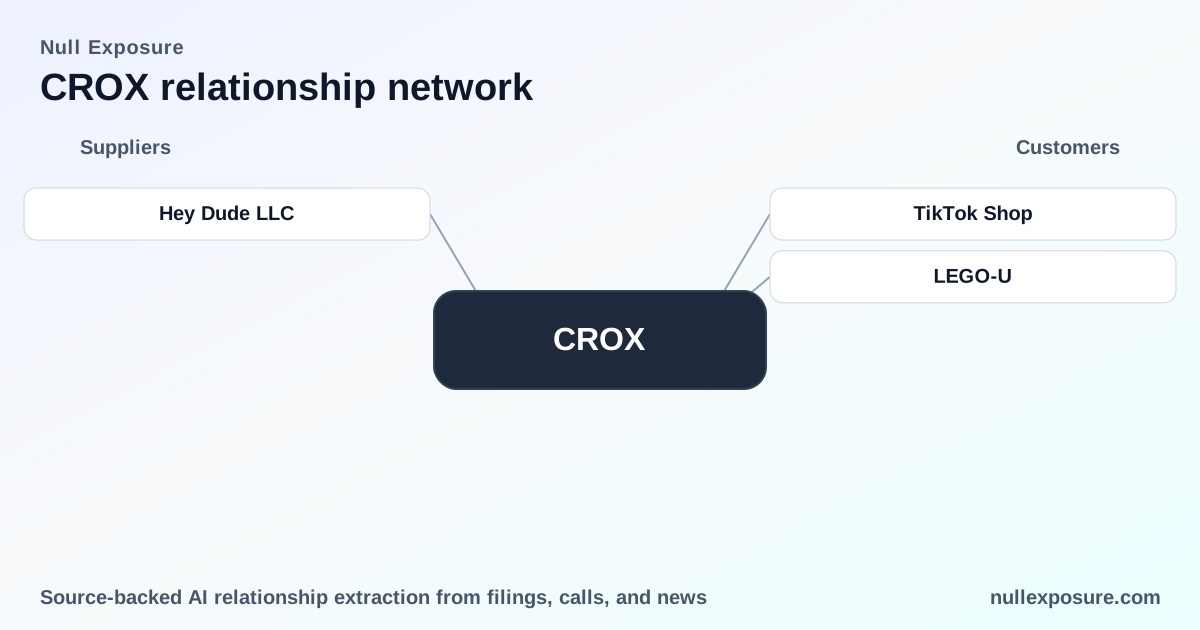
Crocs Inc (CROX) — Supplier footprint and what it means for investors
Thesis: Crocs generates revenue by designing, marketing and distributing casual footwear and accessories through a mix of wholesale, direct-to-consumer retail and licensing; the company monetizes brand strength and global distribution while outsourcing the bulk of product manufacture to third-party suppliers, which creates concentrated supplier spend and contract-led operational leverage that investors should monitor closely.
If you want an organized supplier-risk profile for portfolio diligence, start with Crocs’ public disclosures and supplier commitments at the company level and then layer in brand-specific items such as the Hey Dude reporting unit. For more supplier intelligence and relationship analysis visit https://nullexposure.com/.
How Crocs operates and where suppliers fit into the P&L
Crocs designs and markets products but relies on a globally diversified network of third‑party manufacturers for production. The company sources production primarily in Vietnam, with additional capacity in China, Indonesia, India and Mexico. Crocs’ operating model separates brand and distribution from manufacturing: the company retains control of product design, retail and distribution margins while outsourcing manufacturing costs and capital intensity.
This supplier model creates two natural financial characteristics for investors:
- High contractual commitability: Crocs reports sizable purchase commitments to manufacturers and a mix of long‑term and short‑term leases that embed fixed and contingent (revenue‑linked) rent components into operating expense.
- Concentration risk in APAC manufacturing: A substantial share of Crocs Brand production is routed through Vietnam, which increases exposure to regional disruptions even as scale reduces unit cost.
One-sentence investor view on commercial model
Crocs captures margin through brand premiuming and direct retail while leaving manufacturing scale and cost variability with third‑party producers; therefore, supplier contracts and working capital flows are decisive drivers of near‑term cash conversion and mid-cycle margin resilience.
The one supplier relationship disclosed in filings — Hey Dude LLC
Crocs’ FY2025 Form 10‑K includes a discrete mention of Hey Dude LLC in the context of an impairment. Crocs recorded impairments related to the indefinite‑lived HEYDUDE trademark and the HEYDUDE Brand reporting unit goodwill, which also impacted the company’s net deferred tax assets. According to Crocs’ Form 10‑K for the fiscal year ended December 31, 2025, the impairment reduced GAAP carrying values and affected tax asset calculations (FY2025 10‑K).
Source: Crocs Form 10‑K, fiscal year ended December 31, 2025.
What the Hey Dude disclosure means for supplier diligence
The Hey Dude impairment is a brand and goodwill accounting outcome, not a direct manufacturer contract disclosure. However, it signals integration and portfolio-management costs following acquisitions or brand investments; such outcomes can change procurement priorities, reallocate manufacturing, or change shelf‑space strategies that suppliers must absorb. Investors should treat impairment events as leading indicators of strategic rebalancing that can affect supplier volumes and payment terms. Source: Crocs Form 10‑K, FY2025.
For a deeper review of supplier exposures and strategic sourcing, consult the Crocs supplier mapping on https://nullexposure.com/.
Company-level operating constraints and what they imply for suppliers and investors
Crocs’ filings provide clear operational signals that shape supplier risk and negotiating posture:
-
Contracting posture — mixed maturities: The company carries both long‑term and short‑term contractual commitments. Crocs’ refinancing term loans mature in 2029 (with extension mechanics) and the company operates a mix of short- and long‑term leases for offices, warehouses and retail locations. These financing and lease timelines indicate a hybrid contracting posture where long-term financing coexists with flexible retail real estate exposure. Source: Crocs Form 10‑K (FY2025).
-
Usage‑based economics on retail rents: Some retail leases include contingent rents that are a percentage of revenues, aligning landlord and retail performance but also exposing store economics to sales volatility. Source: Crocs Form 10‑K (FY2025).
-
Geographic concentration in APAC manufacturing: Crocs sources the majority of Crocs Brand production in Vietnam and lists supplemental manufacturers in China, Indonesia, India and Mexico. Production share for Vietnam was approximately 45% in 2025, down from 51% in 2024 and 56% in 2023—a pattern that shows both concentration and gradual geographic adjustment. Source: Crocs Form 10‑K (FY2025).
-
Manufacturer role and spend scale: Crocs classifies third‑party manufacturers as a primary relationship role and discloses purchase commitments of $274.2 million to third‑party manufacturers as of December 31, 2025. This places supplier spend in the $100M+ band, meaning suppliers and buyers negotiate at material scales that affect leverage, lead times and contingency planning. Source: Crocs Form 10‑K (FY2025).
-
Financial maturity and liquidity context: The company had a fully drawn Term Loan B with $500.0 million outstanding and $1.0 billion of revolver commitments available at year‑end; those financing structures provide runway but also create covenant and liquidity sensitivities that influence procurement timing and capital allocation. Source: Crocs Form 10‑K (FY2025).
These are company-level signals that shape supplier criticality, negotiating leverage and resilience under stress.
Practical implications for investors and operators
- Concentration is a managed risk but still material: Vietnam accounts for a large share of production; a supplier disruption there would have a measurable impact on Crocs’ supply continuity and near‑term inventory availability. Investors should stress-test scenarios that affect APAC logistics and factory output. Source: Crocs Form 10‑K (FY2025).
- Large purchase commitments create counterparty economics: With >$274M of purchase commitments, Crocs’ manufacturing relationships are economically meaningful; suppliers that account for significant share of that total are strategically important to Crocs and have bargaining leverage tied to scale. Source: Crocs Form 10‑K (FY2025).
- Lease structure ties retail performance to cash flow variability: Percentage rents in retail leases align costs to sales but also reduce fixed-cost predictability for operations during downturns. Source: Crocs Form 10‑K (FY2025).
If you manage a portfolio with exposure to supply-chain volatility, use a supplier-risk overlay to translate these contract contours into scenario-adjusted cash-flow models. See supplier assessments and scenario tools at https://nullexposure.com/ for a practical framework.
Quick red flags and monitoring checklist
- Monitor production share by country (Vietnam % of total production) and any acceleration of geographic reallocation.
- Watch purchase‑commitment trends and any unexpected buildups or rapid declines in supplier spend.
- Track retail rent structures and same‑store sales as drivers of contingent rent expense that can swing operating leverage.
- Observe any future goodwill or trademark impairments (as with Hey Dude), which often precede operational rationalization.
Bottom line for investors
Crocs operates a brand-led, capital-light manufacturing model with concentrated APAC manufacturing exposure and material purchase commitments that create supplier-level concentration and leverage. The Hey Dude impairment is a reminder that brand portfolio moves have downstream effects on supplier volumes and working capital. Investors should prioritize supplier concentration metrics, contract maturity profiles, and the company’s financing posture when assessing operational risk.
For an actionable supplier-risk scorecard and curated relationship intelligence, visit https://nullexposure.com/ — the site provides structured supplier analysis and monitoring tools relevant for CROX diligence.