CRISPR Therapeutics: supplier relationships that shape near-term commercialization
CRISPR Therapeutics operates as a developer of gene‑editing and cell‑therapy medicines and monetizes primarily through strategic collaborations, licensing and product‑level profit sharing rather than through meaningful product revenue today. The company advances therapeutic programs in‑house while outsourcing significant manufacturing and clinical activities, then transfers commercial scale and some economics to partners — a model that trades near‑term cash conservation for partner‑led commercialization upside (notably a 60/40 CASGEVY profit split with Vertex). For a focused view of counterparty exposure and operational constraints, read on. If you track supplier and partner risk for portfolio companies, see the research tools at https://nullexposure.com/ for deeper signals.
How CRISPR’s operating model translates into supplier risk and leverage
CRISPR combines internal capabilities with extensive third‑party reliance. The company invests in its own cell‑therapy manufacturing footprint — a long‑term leased facility in Framingham intended for clinical and commercial production — while also depending on contract manufacturers, CROs and clinical sites for trial execution and regulatory compliance. Financially, CRISPR is still in an investment phase: negative EBITDA, minimal revenues and high valuation multiples indicate that partner economics and successful program commercialization will determine intrinsic value more than current product sales.
- Contracting posture: a mix of long‑term capital commitments and short‑term flexibility — a long lease for a Framingham manufacturing site (through March 2036) sits alongside a short, rolling office lease in Zug that renews quarterly.
- Outsourcing intensity: CRISPR routinely uses third‑party manufacturers and CROs for production and clinical work, increasing operational dependence on external quality systems and regulatory inspections.
- Commercial structure: the company uses licensing and profit‑share structures (for example, program economics with Vertex) to transfer development, manufacturing and commercialization responsibilities while retaining meaningful upside.
- Maturity profile: company is development‑stage commercializing one product with partner support; financials reflect heavy R&D investment and limited current revenue.
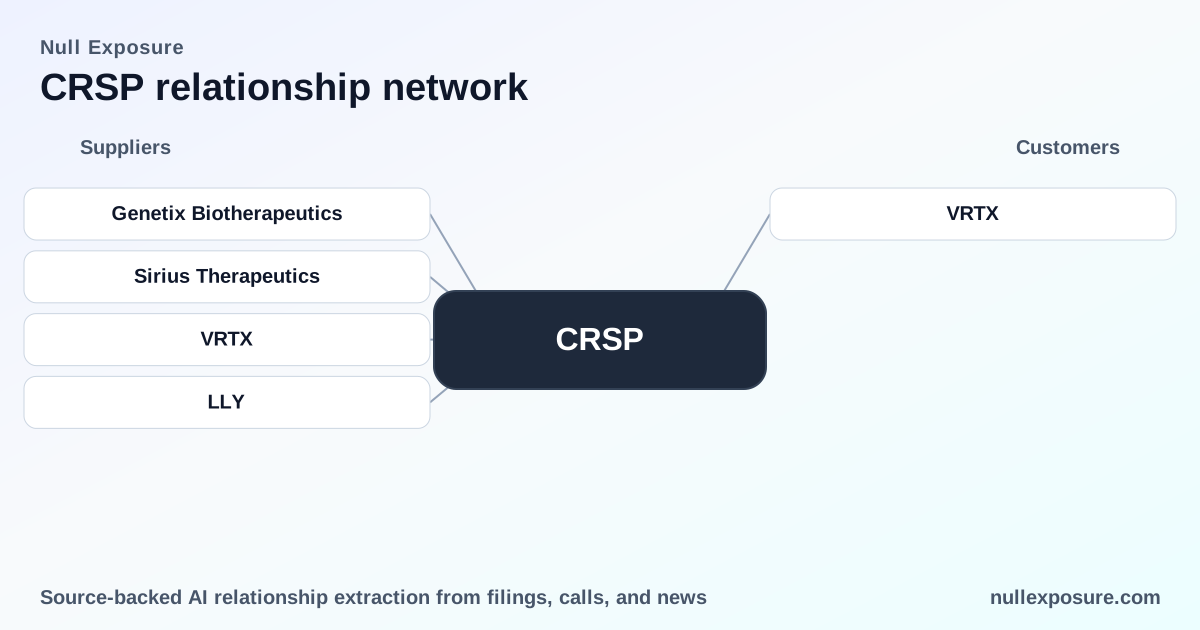
For an organized view of counterparties and what each relationship implies for execution risk, see CRISPR’s partner map below. If you need an extractor for supplier exposure across a portfolio, check https://nullexposure.com/ to get started.
Who CRISPR works with right now — concise relationship summaries
Vertex Pharmaceuticals (VRTX) — partner and commercial lead for CASGEVY
Vertex leads global development, manufacturing and commercialization of CASGEVY and shares program economics 60/40 with CRISPR, and it holds the exclusive manufacturing license for the product. According to a company business update published via GlobeNewswire in February 2026, Vertex is the manufacturer and exclusive license holder and carries lead responsibility for global development and commercialization of CASGEVY. (GlobeNewswire, Feb 12, 2026; also summarized in CRISPR’s January 2026 strategy statements.)
Eli Lilly (LLY) — clinical collaborator for oncology combination studies
Lilly provides clinical supply and a collaborative framework to evaluate CRISPR’s zugo‑cel in combination with Lilly’s pirtobrutinib in aggressive B‑cell lymphomas, increasing CRISPR’s oncology development bandwidth through an external partner. CRISPR announced a collaboration and clinical supply agreement with Lilly in a January 12, 2026 corporate release that described the planned combination evaluation. (GlobeNewswire, Jan 12, 2026.)
Genetix Biotherapeutics — referenced therapeutic comparator in disclosure
Genetix (formerly bluebird bio) is cited in CRISPR’s 2025 Form 10‑K as the developer of an alternative approved autologous lentiviral gene therapy (Zynteglo) used as a comparator in regulatory and competitive discussions. The FY2025 10‑K text references Zynteglo as an existing, FDA‑approved ex vivo lentiviral therapy, framing market and regulatory context for CRISPR’s own programs. (CRISPR Form 10‑K, FY2025.)
Sirius Therapeutics — siRNA collaborator in cardiovascular programs
CRISPR lists collaboration with Sirius Therapeutics for siRNA‑based clinical programs in cardiovascular and thromboembolic disease, indicating cross‑platform alliances beyond CRISPR’s core editing technologies. This relationship is described in CRISPR’s FY2025 Form 10‑K as part of its siRNA‑based portfolio development. (CRISPR Form 10‑K, FY2025.)
What the relationship map implies for execution and valuation
CRISPR’s counterparty mix demonstrates a deliberate operating choice: transfer capital‑intensive late‑stage development and commercialization to partners while retaining meaningful economic participation and clinical control over earlier programs. Vertex’s role as exclusive manufacturer and commercial lead for CASGEVY is the single largest supplier/partner exposure — it reduces CRISPR’s capital burden but concentrates commercial and manufacturing risk externally. The Lilly collaboration functions as a clinical‑stage enhancer in oncology, adding credibility and trial capacity without expanding CRISPR’s manufacturing obligations.
Key investor implications:
- Concentration risk: Vertex is a dominant commercial and manufacturing counterparty for CASGEVY, so program success and partner execution drive realized revenues.
- Operational criticality of third parties: reliance on CMOs and CROs means regulatory inspections, supply chain disruptions and manufacturing quality at third parties are direct risks to timelines and launch readiness.
- Capital efficiency vs. margin dilution: profit‑share structures and licensing limit CRISPR’s upfront cash needs but dilute gross economics upon successful commercialization.
Constraints and company‑level signals that matter to buyers and suppliers
CRISPR’s public disclosures surface several company‑level constraints relevant to vendor selection and contract negotiation:
- The company has a long‑term lease (through March 2036) for a 50,249 sq ft Framingham manufacturing facility intended to support clinical and commercial production, signaling a commitment to maintain internal manufacturing capacity. (10‑K excerpt, May 2020 lease detail cited in FY2025 filing.)
- Office real estate in Zug is on a short, quarterly‑renewing lease, indicating flexibility for corporate functions.
- CRISPR holds technology license agreements originating in April 2014 with Dr. Emmanuelle Charpentier, positioning the company as a licensor of critical IP and underscoring the legal complexity of its IP estate.
- The company relies on third‑party manufacturers and service providers (CMOs, CROs, clinical investigators, contract labs) for production, trials and ancillary services, which creates multiple regulatory touchpoints and dependency on external compliance.
- Relationship stages and segment signals in filings point to active outsourcing and manufacturing segmentation as operational realities.
These constraints translate into negotiation posture: vendors that offer demonstrable regulatory compliance, scale readiness and redundancy will command strategic importance and potentially premium contracting terms.
If you evaluate supplier counterparty risk across biotech names, our platform compiles signals like these into deal‑level views — explore more at https://nullexposure.com/.
Bottom line for investors
CRISPR’s value is tied to partnership execution as much as internal science. Vertex’s lead on CASGEVY materially derisks manufacturing and commercialization CAPEX for CRISPR but concentrates a single‑program supplier dependency; parallel collaborations with Lilly and others diversify clinical routes to market but do not offset the strategic weight of the Vertex relationship. Investors should prioritize monitoring partner execution metrics, CMO regulatory histories and contract economics when sizing downside and upside for CRSP equity.
For ongoing supplier intelligence and partner‑level scoring that supports investment decisions, visit https://nullexposure.com/ for research and alerts.