Corvus Pharmaceuticals (CRVS) — Supplier and advisor map investors need to know
Corvus Pharmaceuticals is a clinical-stage biopharma focused on immuno-oncology and inflammation programs; it monetizes by developing drug candidates through licensing and partnerships and raising capital to fund trials and operations. The company carries no commercial revenue to date, relies on external manufacturing and research partners, and routinely accesses public markets and advisors to finance development. For investors, the supplier and advisor network equals operational continuity; interruptions or concentration here are direct balance‑sheet and timeline risks.
Learn more about supplier intelligence and relationship risk at https://nullexposure.com/.
Why the advisory and supplier roster changed the short-term story
Corvus closed an upsized public offering in early 2026 and used a combination of investment banks, legal counsel and external communications firms to execute and communicate the transaction. The financing activity highlights two dynamics that matter to holders and counterparties: (1) capital markets access is an active revenue substitute in the absence of product sales; (2) external providers are operationally critical because Corvus outsources R&D and manufacturing.
What the underwriters tell you about execution capacity
When a clinical-stage biotech chooses lead bookrunners and bookrunners it signals how the market is being accessed and priced. Corvus named institutional banks to place the deal and coordinate distribution—this is standard for a follow-on financing but important for gauging investor appetite.
Legal counsel and communications are more than PR
Top-tier legal counsel reduces execution risk in securities transactions and often indicates higher underwriting standards; retained communications firms handle regulatory and trial-result messaging, which directly affects market reception and clinical enrollment narratives.
Relationship roll call — what each supplier and advisor did (concise, sourced)
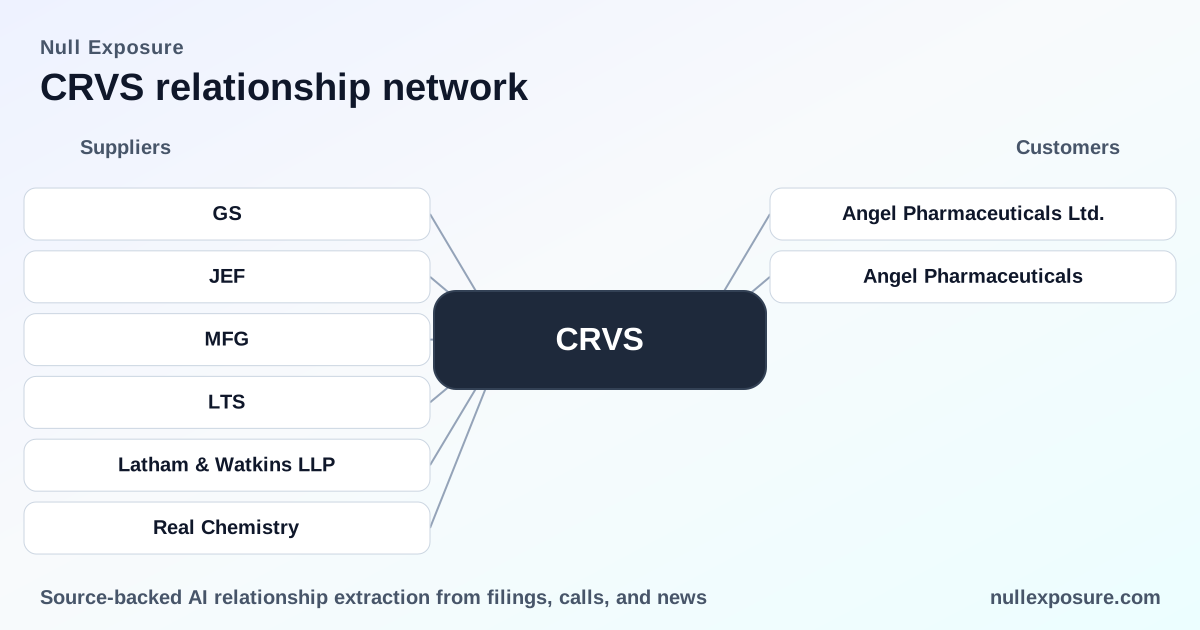
- Goldman Sachs & Co. LLC: Acted as a lead book‑running manager on Corvus’s upsized public offering announced in March 2026, helping price and place the shares with institutional investors. According to StockTitan press releases dated March 9, 2026, Goldman Sachs was a lead book‑runner in the transaction.
- Jefferies LLC: Served alongside Goldman Sachs as a lead book‑running manager for the same upsized offering, coordinating order books and investor allocation. StockTitan coverage on March 9, 2026, identifies Jefferies as a lead book‑runner.
- Mizuho: Functioned as a bookrunner on the upsized offering, supporting distribution beyond the lead banks and broadening syndicate reach. StockTitan’s March 9, 2026, transaction notices list Mizuho as a bookrunner.
- Ladenburg Thalmann / Ladenburg Thalmann & Co. Inc.: Served as a co‑manager on the offering, providing supplemental distribution and placement support for the equity raise. StockTitan reported Ladenburg Thalmann as co‑manager on March 9, 2026.
- Latham & Watkins LLP: Represented Corvus as legal counsel for the upsized public offering, managing the transaction legal workstream and filings. Latham & Watkins published a firm announcement in January 2026 confirming its representation.
- Real Chemistry: Acted as Corvus’s media contact and communications firm for clinical updates and press releases around trial cohorts and business updates; multiple press releases in January–March 2026 list Real Chemistry as the media contact. GlobeNewswire and StockTitan press releases in January and March 2026 show Real Chemistry handling Corvus media relations.
How these relationships map to operational risk and business model constraints
Company disclosures and public materials establish a clear operating posture: Corvus is a development‑stage company that outsources critical functions. That structure produces specific constraints investors must price into any operating or supplier assessment.
- Contracting posture: Heavy reliance on third‑party licenses and external IP arrangements is documented in company filings; historical license agreements with Vernalis, Monash University and The Scripps Research Institute are cited in disclosures and underpin product programs. This creates IP and royalty complexities that affect upside capture and freedom‑to‑operate.
- Concentration and criticality: Manufacturing and clinical services are critical and concentrated — Corvus does not own manufacturing facilities and is dependent on contract manufacturers and CROs for clinical supplies and trial execution. This dependency is company‑level and raises single‑point failure risk for clinical timelines and regulatory compliance.
- Relationship roles and maturity: The constraints data shows active engagements across manufacturing, licensing and professional services, indicating the supplier base is operational and ongoing rather than one‑off advisory engagements. That suggests near‑term continuity risk is real but manageable if contract terms and alternate vendors exist.
- Counterparty mix: Filings reference non‑profit academic licensors (Monash) and established research institutions (Scripps), which is typical for early‑stage biotechs and signals reliance on external IP provenance rather than wholly owned discovery platforms.
Investment implications — how to think about valuation and risk
- Capital structure and dilution risk are top near‑term drivers: The March 2026 upsized offering reiterates that equity raises substitute for revenue; frequent capital raises compress long‑term upside unless clinical value inflection points are achieved. (See underwriting relationships above.)
- Operational continuity depends on external manufacturers and CROs: Any disruption in those vendor relationships would directly delay clinical milestones and regulatory submissions; factor added timeline risk into discount rates.
- Reputation and messaging capacity matter: Real Chemistry’s role in shaping trial‑result communications and Latham & Watkins’ participation in the financing indicate management prioritized execution quality; this can reduce short‑term volatile reactions to trial readouts.
Learn more about mapping supplier risk to valuation at https://nullexposure.com/.
Tactical checklist for investors and operators
- Confirm counterparty diversification for critical active manufacturers and CROs.
- Review license terms and milestone/royalty burdens tied to external IP (historical licenses with academic partners are material).
- Monitor ongoing communications from external PR firms for signals on cohort results and enrollment guidance.
Bottom line and recommended next steps
Corvus runs as a capital‑dependent developer that outsources critical development and manufacturing functions; its supplier and advisor roster for the March 2026 offering demonstrates market access and execution capability but reinforces dilution and third‑party operational risk. Investors should prioritize counterparty continuity, license encumbrances, and the cadence of clinical readouts when modeling upside. For operators, maintaining multiple qualified manufacturers and clear IP freedom‑to‑operate are immediate priorities.
If you want structured relationship intelligence or a tailored supplier‑risk briefing on CRVS, visit https://nullexposure.com/ for a deeper assessment and monitoring options.