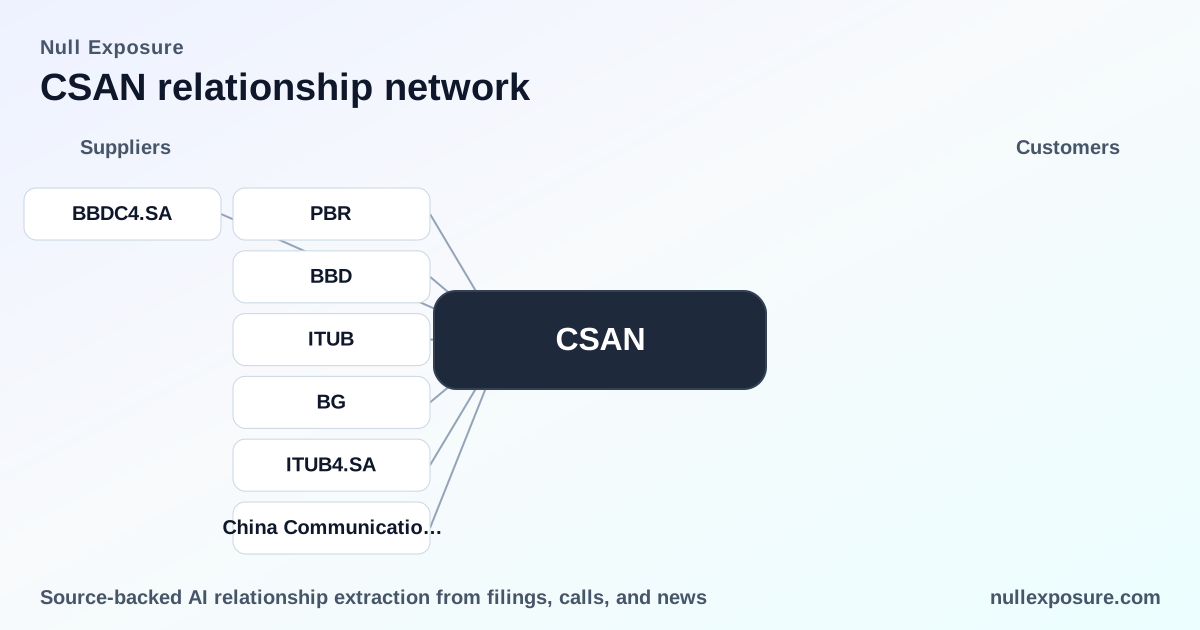
Cosan SA (CSAN) — supplier relationships that shape capital allocation and operational reach
Cosan is a Brazil‑headquartered energy and fuel distribution conglomerate that monetizes through integrated downstream assets, logistics, and joint ventures, capturing margin across distribution, terminals, and commodity flows rather than relying on commodity-price speculation. The company funds growth and M&A with a mix of bank financing and equity while extracting cash through operating subsidiaries such as Raízen and Compass; investors should treat Cosan as a capital‑intensive operator where financing relationships drive strategic optionality. For a quick look at supplier and counterparty ties that affect credit and operational risk, visit https://nullexposure.com/.
What Cosan’s model means for counterparties and investors
Cosan’s revenues and EBITDA show scale — Revenue TTM: $40.4bn, EBITDA: $13.98bn — but profitability and returns profile are uneven (negative EPS and a negative ROE), which makes counterparty credit and financing posture central to corporate strategy. The company’s core monetization is downstream distribution and logistics: controlling physical points of sale, terminals and ports creates recurring cash flow but requires sustained capital investment and banking relationships to fund large transactions.
Key operating truths for investors and suppliers:
- Cosan is capital intensive and uses long‑dated bank financing for M&A and asset builds.
- The firm is geographically diversified in fuel distribution, which reduces regional operational concentration but increases contractual complexity.
- Distribution and logistics assets are strategically critical to Brazil’s fuel and commodity flows; control over those assets is a structural advantage for Cosan.
If you evaluate supplier exposure or counterparty credit, align treasury and covenant monitoring with Cosan’s financing partners and recent acquisition activity. Learn more on the firm’s counterparties at https://nullexposure.com/.
Operating posture and company-level constraints investors should track
Treat these as company-level signals rather than relationship-level assertions. Cosan’s public profile indicates a contracting posture that favors syndicated bank financing and structured amortization tied to subsidiary cash flows. The company’s balance-sheet profile — Market Cap: $4.08bn; EV/EBITDA ~17.1; Price/Book ~4.04 — signals a mature operator with elevated leverage sensitivity and reliance on stable operating cash flow.
Operational constraints to monitor:
- Financing concentration: Cosan routinely uses a small set of large Brazilian banks for multi‑billion reais facilities, which centralizes refinancing risk.
- Asset criticality: Ports, distribution networks and gas utilities under Cosan control are commercially critical — disruptions or regulatory changes have outsized earnings impact.
- Maturity of cash flows: Revenue and gross profit are large and recurring, but negative EPS and ROE indicate earnings volatility and capital allocation that can compress returns.
Public relationships that matter (one by one)
Below are every relationship captured in public reporting and their concise implications.
-
Petrobras — According to Agenzia Nova (reported March 2026), Brazil’s antitrust agency CADE authorized Petrobras to sell its 51% stake in Gaspetro to Compass Gas e Energia (a Cosan group vehicle), positioning Cosan to consolidate a fuel distribution holding and increase its downstream control (source: https://www.agenzianova.com/en/news/brazil-antitrust-authorizes-petrobras-to-sell-gaspetro-fuel-distribution-holding-company/).
-
Bradesco (FY2012) — A Mercopress report from May 2012 documented that Bradesco financed part of the R$3.3bn package backing Cosan’s acquisition of BG Group’s Comgás stake, placing Bradesco as a key lender in a multiyear facility for Cosan’s gas distribution expansion (source: https://en.mercopress.com/2012/05/30/cosan-buys-bg-stake-in-brazil-s-largest-gas-distribution-company-for-1.7bn-dollars).
-
Itaú (FY2012) — The same May 2012 Mercopress coverage shows Itaú joined Bradesco in financing the R$3.3bn structure with an eight‑year tenor and two years before principal repayment, demonstrating Cosan’s reliance on large domestic banks for long‑dated acquisition financing (source: https://en.mercopress.com/2012/05/30/cosan-buys-bg-stake-in-brazil-s-largest-gas-distribution-company-for-1.7bn-dollars).
-
BG Group Plc (FY2012) — Mercopress reported that BG Group sold its entire 60.1% stake in Comgás to Cosan for R$3.4bn (May 2012), a transformational purchase that expanded Cosan’s regulated gas distribution footprint and required external funding (source: https://en.mercopress.com/2012/05/30/cosan-buys-bg-stake-in-brazil-s-largest-gas-distribution-company-for-1.7bn-dollars).
-
China Communications Construction Company (FY2022) — The Business Times reported Cosan’s acquisition of the São Luís port company from China Communications Construction Company for R$720mn, adding export/import logistics capacity intended to support iron‑ore movement and broaden Cosan’s commodity handling capabilities (source: https://www.businesstimes.com.sg/companies-markets/energy-commodities/brazils-cosan-acquires-49-miner-vale-plans-buy-more).
-
Itaú (FY2022) — Valor (Globo) coverage from October 2022 notes Cosan contracted R$8bn in financing with Itaú and Bradesco to support its stake build in Vale, with amortization structured against dividends from Raízen and Compass and no fixed term, underlining continued strategic financing ties to major banks (source: https://valorinternational.globo.com/business/news/2022/10/09/with-a-stake-in-vale-cosan-raises-its-bet-on-mining.ghtml).
-
Bradesco (FY2022) — The same October 2022 Valor report documents Bradesco’s role alongside Itaú in the R$8bn financing package for Cosan’s mining exposure, reinforcing that a narrow set of banks has repeat lending exposure to Cosan’s large strategic moves (source: https://valorinternational.globo.com/business/news/2022/10/09/with-a-stake-in-vale-cosan-raises-its-bet-on-mining.ghtml).
Takeaway: Cosan’s most material counterparties in public reporting are large Brazilian banks and sellers of strategic infrastructure and stakes; these relationships underpin the company’s ability to close large asset deals and expand logistics reach.
If you need a tailored counterparty exposure report or credit profile drilldown for Cosan, start here: https://nullexposure.com/.
Commercial and credit implications for suppliers and counterparties
- Suppliers should price for secured contracts and longer payment cycles given the capital intensity and recurring refinancing profile.
- Banks and lenders are pivotal counterparties: concentrated financing relationships create single‑point risks if a lead bank tightens terms.
- Operational counterparties (ports, gas utilities) are strategic — loss or transfer of these assets materially alters logistics economics for customers and suppliers.
Bottom line and recommended next steps
Cosan is a large downstream operator that leverages repeat banking relationships to execute strategic acquisitions and to scale logistics, creating commercial advantages but also concentrated refinancing risk. For procurement, treasury and investor teams, prioritize covenant monitoring, counterparties’ credit exposure, and the contractual terms securing payments to suppliers.
For an actionable supplier‑level insight package and up‑to‑date relationship mapping, visit https://nullexposure.com/ for bespoke analysis and risk scoring.