CSTA: Auditor warning sharpens counterparty and timing risk for investors
Constellation Acquisition Corp I (CSTA) operates as a classic SPAC: it raises sponsor capital, lists with a finite life, and monetizes through a business combination or liquidation of trust assets. The company’s value is tightly coupled to successful deal execution before the SPAC deadline and to the confidence signaled by its professional suppliers, particularly auditors and advisors. For investors and operators assessing supplier relationships, the recent auditor action materially elevates execution risk and counterparty sensitivity. Learn more about supplier risk monitoring at https://nullexposure.com/.
Why an auditor’s going‑concern flag matters to counterparties
An auditor’s going‑concern opinion is not procedural — it is a red line for counterparties, investors, and deal counterparties. When an independent auditor states that financial statements raise substantial doubt about a company’s ability to continue, that signal compresses timelines and increases leverage for counterparties. For a SPAC, which depends on a finite deadline to complete a business combination, that leverage has direct commercial consequences: counterparties reassess credit, service terms, and the economics of continuing relationships.
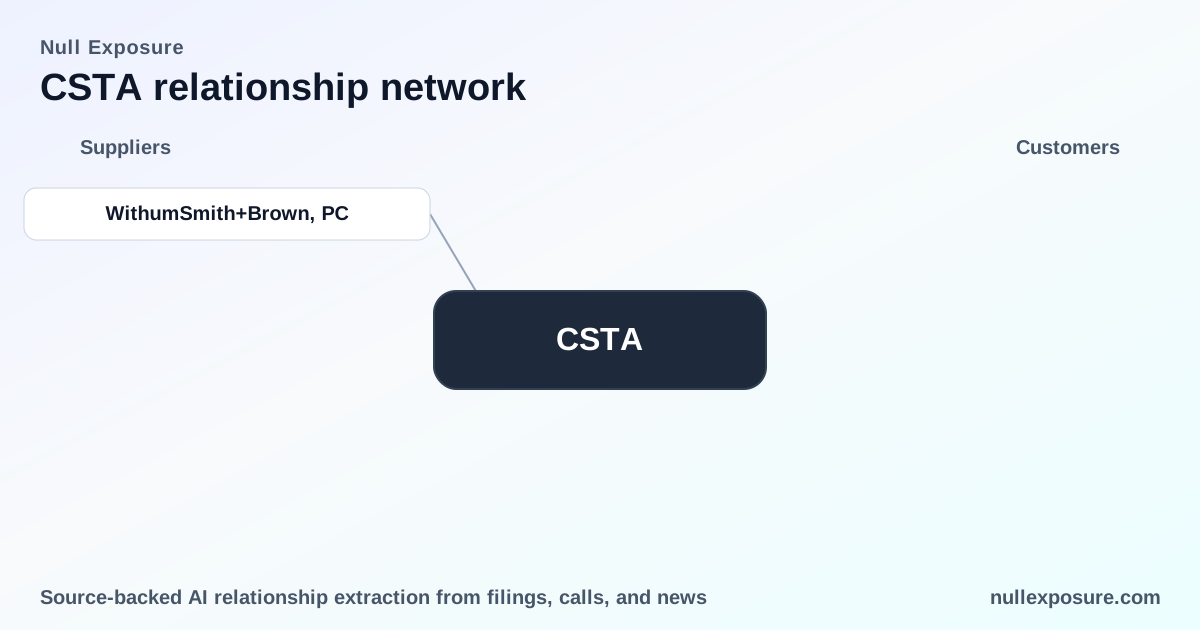
According to a Quartz report published March 9, 2026, WithumSmith+Brown, PC audited Constellation Acquisition Corp I’s FY2025 financial statements and included a going‑concern warning tied to the company’s financial condition and the approaching deadline to complete a business combination (https://qz.com/constellation-acquisition-corp-i-class-a-cstaf-report-1851774186). That single supplier action concentrates counterparty risk and accelerates need for operational contingencies.
The supplier relationship: WithumSmith+Brown, PC
WithumSmith+Brown, PC is the external auditor that examined CSTA’s FY2025 financials and issued a going‑concern warning due to the company’s financial condition and the deadline for completing a business combination. The auditor’s report was noted in press coverage on March 9, 2026 (Quartz, 2026) — an explicit, material supplier signal for investors and counterparties (https://qz.com/constellation-acquisition-corp-i-class-a-cstaf-report-1851774186).
What this single relationship reveals about CSTA’s operating model
- Finite‑life contracting posture: SPACs operate with contractual and statutory timelines; an auditor warning effectively tightens those timelines by increasing urgency for sponsor capital injection or deal close. This is a company‑level signal about the operating model rather than a characteristic of the auditor.
- Concentrated counterparty exposure: The auditor role is critical and non‑redundant; loss of confidence in audit opinions can propagate to banks, legal counsel, and target counterparties, creating concentration risk across a small set of suppliers.
- High criticality, low maturity: A SPAC pre‑combination has limited operating history and relies heavily on a short list of professional services — auditing, legal, and underwriting — that are mission‑critical to completing a transaction.
- Contracting leverage shifts to counterparties: With a going‑concern opinion on record, counterparties have more negotiating power on fees, collateral, or termination rights because they can credibly price the possibility of liquidation.
Those operating characteristics matter for vendor negotiation, counterparty credit analysis, and contingency planning across portfolios that include SPAC exposure. For vendor managers and operators, this is a call to re‑weight diligence toward continuity plans and funding commitments rather than transactional performance metrics alone.
Practical implications for investors and operators
- Liquidity and timing risk dominate: the auditor warning escalates the chance that the SPAC must liquidate at trust value or secure additional sponsor funding; either outcome changes recovery expectations for stakeholders.
- Counterparty renegotiation is likely: banks and advisors will reassess exposure and fees; counterparties will demand stricter covenants or immediate remedies to protect balance sheets.
- Reputational and market dynamics accelerate: public disclosure of a going‑concern opinion changes market pricing instantly and can narrow strategic options for the sponsor.
Monitor SEC filings, proxy statements, and any sponsor capital statements closely; auditor communications are often the first public sign that such filings will reflect materially different outcomes. For active monitoring and supplier relationship insights, visit https://nullexposure.com/ for more structured tracking.
How to triage exposure and what to watch next
- Verify sponsor capital commitments and whether they are immediately actionable; listed deadlines and sponsor letters determine survivability.
- Watch redemption patterns: heavy redemptions reduce available cash and push the SPAC toward liquidation economics.
- Track follow‑up communications from Withum and the company: any modification, qualification, or removal of the going‑concern language will change the risk profile quickly.
- Review contractual termination triggers in vendor agreements; auditors’ opinions can trigger covenants that alter service continuity.
These items are tangible, observable levers that convert the auditor’s opinion into economic outcomes. Investors should re‑price exposures and operators should model liquidation scenarios alongside deal‑close probabilities.
Bottom line: a concentrated supplier signal that requires tactical response
The going‑concern opinion from WithumSmith+Brown is a concentrated, high‑impact supplier signal for CSTA; it increases execution risk and elevates counterparty bargaining power. For investors, that translates into compressed timelines and an increased probability of value realization at trust or through sponsor recapitalization. For operators and vendor managers, the takeaway is to prioritize continuity clauses, funding assurances, and faster escalation paths with critical suppliers.
If your investment or operational playbook includes SPAC counterparties, incorporate auditor opinion triggers into monitoring rules and liquidity contingency plans. For deeper supplier mapping and ongoing surveillance of professional services to SPACs, explore institutional tools and coverage at https://nullexposure.com/.
Key takeaway: a single audit opinion can reshape outcomes for a SPAC because the business model’s finite life and concentrated supplier set make every professional service relationship strategically critical.