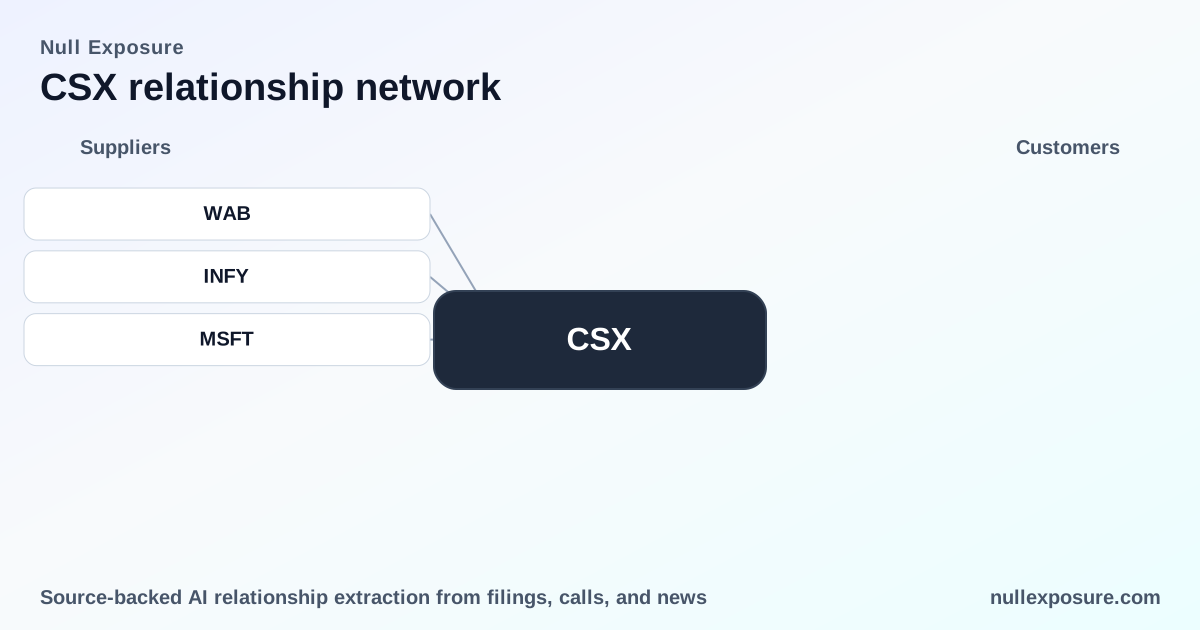
CSX Supplier Map: What investors need to know about suppliers, contracts, and strategic spend
CSX monetizes North American freight rail assets by operating an asset-light network of track, locomotives and terminals that generates high-margin, recurring cash flow from freight haulage, intermodal services and related logistics real estate. The company converts capital investment in locomotives, digital platforms and maintenance programs into operational density gains and improved pricing power; investors should evaluate supplier relationships as a direct lever on capital intensity, reliability and margin stability. This note dissects CSX’s supplier relationships disclosed in public reporting and recent press, identifies company-level contracting characteristics, and highlights the most material counterparty exposures for portfolio and operations due diligence.
For further supplier intelligence and continuous monitoring, visit our research hub at https://nullexposure.com/.
How CSX contracts and where the dollar goes
CSX runs a capital-intensive operating model that requires both long-duration supplier commitments and occasional short-term leases. The company mixes long-term maintenance and purchase commitments for core rolling stock with periodic digital and cloud modernization contracts, producing a hybrid contracting posture: capital-heavy strategic contracts balanced by short-term operational flexibility for capacity smoothing.
Key financial context: CSX reported roughly $14.09 billion in trailing revenue and $6.42 billion in EBITDA, with a market capitalization near $73.97 billion (latest quarter FY2025). That scale makes supplier spend into the high tens or hundreds of millions a strategic priority rather than a procurement detail.
Who CSX is transacting with (what the record shows)
Below I cover every supplier relationship surfaced in the available results, with a concise plain-English summary and the source cited naturally.
Wabtec / WAB — locomotive fleet upgrade and long-term equipment work
CSX signed a major fleet upgrade agreement with Wabtec, a contract reported at roughly $670 million to supply and upgrade locomotives, part of a broader multi-year capital program to modernize motive power and maintenance capacity. According to a GlobeNewswire press release dated February 26, 2026, the deal covers new locomotives and upgrade services that underpin CSX’s fleet renewal plans. (GlobeNewswire, Feb 2026)
Infosys — data-platform modernization and AI-ready analytics
CSX completed a large-scale modernization of its data platform with Infosys, consolidating legacy systems into a cloud-native environment intended to enable real-time analytics and reduce infrastructure overhead across the rail network. A Simply Wall St report summarized this program in March 2026 as a strategic digital transformation to support AI-ready operational decisioning. (Simply Wall St, Mar 2026)
Microsoft — cloud infrastructure partner for real-time services
CSX partnered with Microsoft to host a unified, cloud-native data platform that supports the company’s real-time analytics and AI initiatives, lowering on-premise infrastructure costs and enabling vendor-managed scale for advanced telematics and scheduling tools. The same Simply Wall St coverage in March 2026 described Microsoft as the cloud anchor for CSX’s modernization effort. (Simply Wall St, Mar 2026)
What the contract signals collectively mean for investors
The combined profile of disclosed relationships indicates several company-level operating and sourcing characteristics that matter for valuation and operational risk:
- Contracting posture: a mix of long-term capital contracts and short-term tactical leases. Public excerpts and disclosures show long-term maintenance and purchase obligations for locomotives alongside the occasional short-term lease to meet transient demand (evidence period: Dec 2025 disclosures).
- Spend concentration and criticality: supplier spend reaches the $100m+ band. CSX documents estimate multi-billion dollar payment obligations tied to locomotive rebuilds, maintenance programs and purchases, which places key suppliers in the strategic, high-criticality tier rather than a commoditized procurement category.
- Supplier role and market structure: manufacturer dependence for core assets. The rail equipment market is capital intensive with limited suppliers; CSX faces supplier-concentration risk for locomotives and major rolling stock components, raising switching costs and negotiating asymmetry for highly specialized equipment.
- Relationship maturity: active, multiyear engagements dominate. Evidence suggests active relationships with commitments extending to the late 2020s and beyond, implying predictable capex and service delivery timelines but also locked-in exposure to supplier execution.
These company-level constraints come from CSX’s public disclosures and contract-excerpt summaries around December 2025 and FY2026 reporting cycles; they are signals about how CSX sources critical inputs rather than claims tied to a single vendor.
For expanded supplier maps and contract-level scoring, explore our platform: https://nullexposure.com/.
Investment implications: what moves the needle
- Operational reliability and margin stability are tied to execution on the Wabtec locomotive program. Delays or cost overruns in locomotive delivery and rebuilds translate into higher operating expense and potential service interruptions; investors should watch milestone delivery schedules and warranty scopes in quarterly filings.
- Digital modernization is an earnings leverage point. The Infosys–Microsoft program reduces legacy infrastructure drag and should incrementally lower cost per unit moved while enabling higher yield freight through better routing and asset utilization; track realized infrastructure savings versus implementation spending.
- Concentration risk elevates downside vs. peers with more diversified supply chains. Significant dollars and long-term maintenance commitments concentrate counterparty exposure; monitor procurement disclosures and any sign of supplier distress or production bottlenecks.
Practical red flags to monitor in upcoming quarters
- Missed locomotive delivery timetables or escalation in capital estimates tied to rebuilds and purchases.
- Contract amendments that shift maintenance or warranty costs back to CSX.
- Supplier execution issues at Wabtec or third-party manufacturers that could force short-term leasing spikes and higher opex.
- Delays in cloud migration or integration problems that postpone anticipated cost savings from the Infosys/Microsoft program.
Bottom line and next steps for analysts and operators
CSX’s supplier posture is strategic and concentrated: long-term locomotive and maintenance commitments plus transformative cloud contracts define near-term capital allocation and operational risk. Investors should treat supplier milestones and spend bands as direct drivers of free cash flow and service reliability.
If you want an ongoing supplier risk scorecard or a tailored counterparty exposure brief, we publish continuous updates and deal-level monitoring at https://nullexposure.com/. For immediate inquiries or custom supplier diligence, start at https://nullexposure.com/ and request an engagement.