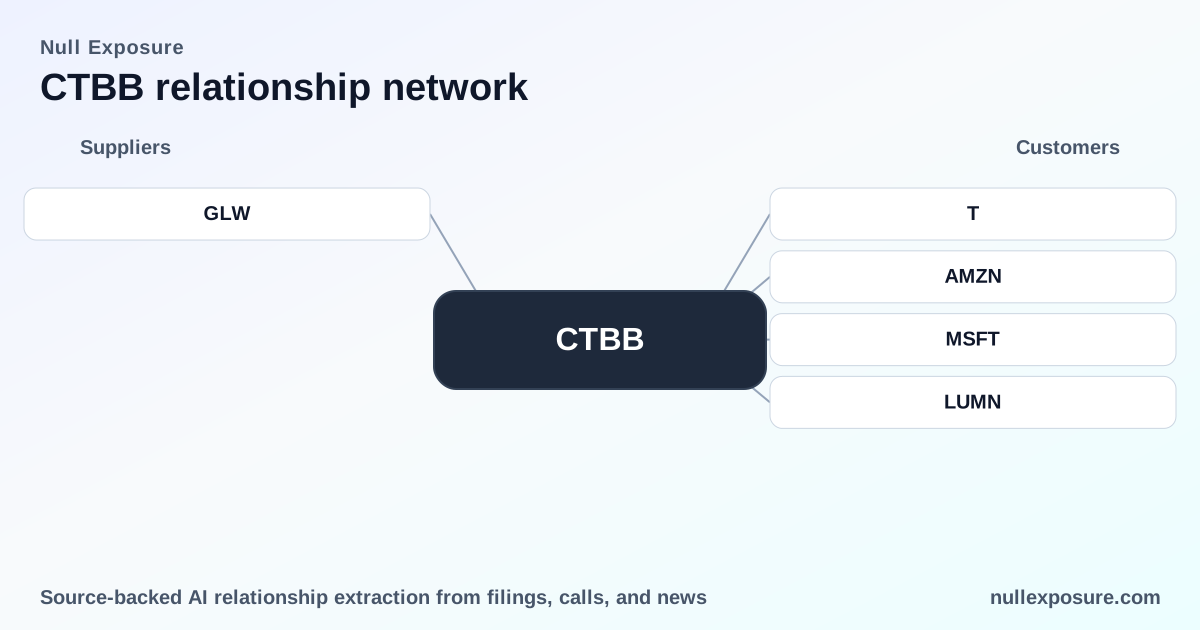
CTBB (Qwest Corp. NT) — supplier relationships and what they mean for operators and investors
Qwest Corporation (ticker CTBB) is an integrated regional communications operator that monetizes a mix of retail and wholesale connectivity by selling voice, data and network services across a multi-state footprint. The company operates with a hybrid ownership model — owning parts of its network while leasing substantial fiber capacity and procuring services from affiliated vendors — and captures margin through service contracts, prioritized technology access and recurring customer billing. For investors and procurement teams, the supplier posture matters as much as customer demand: network uptime and technology refresh cycles are driven by a small set of strategic supplier relationships that shape capital intensity and renewal risk.
Explore supplier intelligence and supplier risk coverage at https://nullexposure.com/.
The headline relationship: Corning supplies next‑generation fiber technology
CTBB explicitly expanded its partnership with Corning to secure priority access to state-of-the-art fiber technology intended to serve AI and high-bandwidth customers. This positions CTBB to host higher-value traffic and supports plans to upgrade backbone capacity where premium customers demand low-latency, high-throughput connectivity. According to CTBB's 2025 Q4 earnings call, management said they have “expanded our partnership with Corning, ensuring we have priority access to the newest state-of-the-art fiber technology delivering the AI backbone for today's and tomorrow's most important customers” (2025 Q4 earnings call, cited March 2026).
What that relationship means in practice
- Strategic technology priority, not just volume supply. The Corning arrangement is framed as preferential access to leading fiber innovations rather than a commodity purchase, which elevates its strategic importance for CTBB’s higher-margin enterprise and wholesale segments.
- Upgrade catalyst for product differentiation. Priority access to new fiber technology supports differentiated service tiers aimed at AI, enterprise and carrier customers who pay premiums for performance and reliability.
All supplier relationships disclosed (complete coverage)
Corning — CTBB expanded a strategic partnership to secure priority access to advanced fiber technology targeted at supporting AI and other high-bandwidth customers; this was disclosed on the company’s 2025 Q4 earnings call (March 2026). Source: CTBB 2025 Q4 earnings call transcript.
Company-level operating signals derived from disclosure excerpts
The supplier-relationship evidence set includes two operational constraints that are company-level signals rather than relationship-specific facts:
- CTBB is both a buyer of services from affiliates and a lessee of third-party network capacity. Management discloses that the company purchases telecommunications, marketing and employee-related support services from affiliates and classifies these as operating expenses in consolidated statements of operations. This is a company disclosure indicating dependence on affiliated operational services (company consolidated statements, disclosure excerpts).
- The company leases a substantial portion of its fiber network from other communications companies under arrangements that require periodic renewal or replacement. That leasing posture creates recurring contractual exposure and operational dependency on external network owners to sustain current operations (leasing disclosures and earnings commentary).
These signals translate directly into business-model characteristics investors must monitor:
- Contracting posture: CTBB’s model is a hybrid of owned assets plus leased capacity; the company is a recurrent counterparty to both equipment vendors (like Corning) and network lessors, meaning renewal cadence and vendor SLAs drive operational continuity.
- Concentration and diversity: The Corning relationship is strategic for technology priority, but leasing language implies CTBB sources capacity from several communications companies; this distributes risk but preserves dependency on external landlords and their renewal terms.
- Criticality: Fiber supply and priority technology access are mission-critical. Any supplier disruption or delayed technology delivery materially affects CTBB’s ability to serve AI and enterprise customers.
- Maturity of relationships: The Corning expansion indicates strategic, long-horizon partnerships oriented around technology roadmaps rather than transactional, spot purchases.
Risk and opportunity for investors and procurement teams
- Risk — renewal and counterparty concentration: Leasing a large share of network capacity creates exposure to contract renewals, potential price shocks, and service-level variability if lessors change posture or consolidate. Management’s reliance on affiliates for shared services adds an operational interdependency that must be monitored in filings and circulars.
- Opportunity — differentiated service offering: Priority access to Corning’s newest fiber technology positions CTBB to command premium pricing from latency-sensitive customers and can accelerate multi-year ARPU gains if executed with disciplined commercialization.
- Operational playbook required: For operators evaluating CTBB as a supplier or counterpart, contract terms (SLAs, renewal windows, termination rights) and supplier roadmap commitments (delivery timelines for new fiber types) are the key negotiation levers.
If you want continuous tracking of supplier disclosures and how they affect network continuity and valuation, visit https://nullexposure.com/ for ongoing coverage.
Practical takeaways and what to watch next
- Monitor CTBB’s next 10‑K/10‑Q and earnings calls for specific contract terms with Corning (length, exclusivity, delivery schedule) and for any disclosed financial commitments tied to fiber upgrades. These details convert strategic language into quantifiable capital or opex exposure.
- Track lease maturity schedules and counterparties named in the leasing disclosures to map renewal concentration risk across the portfolio of leased fiber.
- Evaluate how CTBB commercializes upgraded fiber capacity: look for new product announcements, enterprise sales to AI customers, or carrier wholesale contracts that demonstrate price realization.
For procurement teams and investors requiring a supplier‑level briefing focused on contract exposure, renewal calendars and technology roadmaps, check ongoing supplier analysis at https://nullexposure.com/.
Conclusion: concise investment implication
CTBB operates a hybrid network model that leverages strategic vendor partnerships (Corning) for technology leadership while relying on leased network capacity and affiliated service suppliers for operational continuity. The Corning expansion is a positive signal for product differentiation and potential premium revenue, but the leasing posture and affiliate service dependence create renewal and counterparty risks that will determine whether those revenue opportunities translate into durable margin expansion. Monitor contract disclosures and renewal timelines to convert this qualitative advantage into quantifiable investment conviction.
For deeper supplier relationship intelligence and deal-level coverage, go to https://nullexposure.com/.