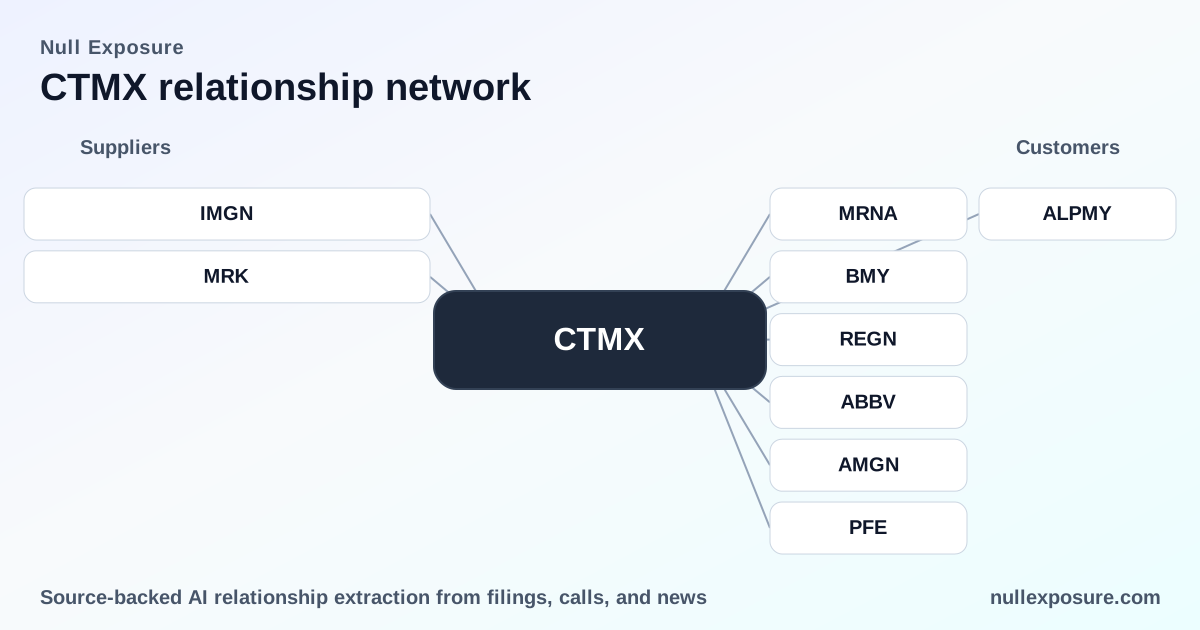
CytomX (CTMX): Supplier relationships shape execution risk for a masked‑therapeutics specialist
CytomX develops “masked” antibody and T‑cell engager therapeutics for oncology and monetizes through clinical-stage asset development, strategic collaborations, and licensing/milestone arrangements with large pharmas — while remaining asset‑light operationally by outsourcing manufacturing and clinical operations. With a market capitalization just over $1.1 billion and trailing revenue of ~$76 million, the company’s commercial upside depends on successful clinical readouts and partner-led combinations, not internal manufacturing scale. For a concise supplier and partner map, see NullExposure’s coverage: https://nullexposure.com/.
How CytomX makes money and where suppliers enter the P&L
CytomX’s revenue profile is typical of a clinical biotech: license and collaboration economics today, product revenue potential later. The company advances masked therapeutics through preclinical and clinical stages, then leverages partner relationships (co‑development and combination trials) to de‑risk and commercialize programs. Because CytomX does not own manufacturing capacity, its cost base and operational execution are driven by third‑party contract manufacturing organizations (CMOs), clinical research organizations (CROs), and specialist vendors that supply trial materials and services. For supplier intelligence, visit NullExposure: https://nullexposure.com/.
What the public signal set shows about supplier posture
Company filings and public disclosures provide a clear supply‑chain profile:
- Contracts are short‑term and cancellable. CytomX states that agreements with CROs and vendors are generally cancelable upon 30–60 days’ notice, which creates flexibility but also operational exposure. According to company filings (FY2025), this is the standard contracting posture.
- High reliance on third‑party manufacturing and some sole‑source suppliers. Management explicitly notes an absence of internal manufacturing capabilities and dependence on third parties for clinical and preclinical supplies, a position described as material to operations in filings.
- Geographic diversification includes APAC manufacturing. Filings indicate that some product candidates are, and will be, manufactured outside the U.S., including in China — a signal that APAC supplier relationships are operationally relevant.
- Relationship roles are tactical and operational. The company classifies its third‑party partners as manufacturers and service providers (CROs, data management, clinical investigators) and describes those relationships as active in support of ongoing trials.
These constraints create an operating model where execution is dependent on supplier reliability, single‑source exposures, and cross‑border manufacturing logistics, rather than fixed asset leverage.
Partner and supplier relationships that matter (two public signals)
ImmunoGen (IMGN) — payload licensing relationship (FY2025)
CytomX’s EpCAM‑targeted program incorporates a payload licensed from ImmunoGen — a next‑generation topoisomerase‑1 inhibitor used as the cytotoxic component of the drug conjugate. This linkage indicates strategic licensing of payload technology as a building block for CytomX’s masked agents. According to Fierce Biotech reporting (March 2026), the EpCAM candidate’s payload is licensed from ImmunoGen and is central to the molecule’s mechanism and potency. (Fierce Biotech, Mar 2026)
Merck (MRK) — clinical combination partner for CX‑801 (FY2026)
CytomX is running a Phase 1 dose‑escalation study of CX‑801 in combination with Merck’s KEYTRUDA for advanced melanoma, with enrollment reported at the second dose level; this is an active clinical collaboration that integrates a market‑leading PD‑1 inhibitor into CytomX’s development plan. RTTNews covered the combination trial and enrollment progress in March 2026, underscoring Merck’s role as a clinical and commercial amplifier for CytomX’s program. (RTTNews, Mar 2026)
What these relationships mean for investors
Both relationships—ImmunoGen as a payload licensor and Merck as a combination partner—fit a repeatable commercialization template for Biotech: build differentiated molecules via external technology licenses and accelerate validation and market access through large‑cap collaborations. Each relationship reduces certain scientific risks while expanding dependency on external partners for execution.
- Upside drivers: Collaboration with Merck provides clinical validation and potential route to market access, while Biomarker/payload alliances with firms like ImmunoGen accelerate molecule design and potency without capital investment in payload chemistry.
- Execution risks: The company’s short‑term contracting posture and reliance on third‑party, sometimes sole‑source, manufacturers creates nontrivial supply and timing risk for trials and potential commercialization. Company filings explicitly warn that interruption or inadequate supply could be consequential (FY2025 filing language).
Operational constraints — why supplier diligence is essential
The publicly disclosed constraints converge on a single theme: CytomX is asset‑light but supplier‑dependent. Key operating characteristics worth factoring into any evaluation:
- Contracting posture: agreements are cancelable on short notice (30–60 days), raising the bar for active supplier management and contingency planning.
- Concentration and criticality: the company identifies sole‑source suppliers and third‑party manufacturers as critical inputs, making single‑vendor failures material to development timelines.
- Geography and regulatory complexity: with manufacturing outside the U.S., including China, cross‑border logistics and quality oversight add complexity to regulatory filings and continuity planning.
- Maturity of relationships: the company’s public language treats these supplier relationships as active and operational, not speculative, indicating ongoing reliance for current clinical programs.
These are company‑level signals from filings and should factor into partner risk assessments and investment due diligence.
Investment takeaways and tactical signals
- Clinical partnerships provide validation but increase dependency. Merck’s involvement accelerates clinical development and enhances commercial optionality for CX‑801, making milestones tied to partner decisions a key valuation hinge.
- Supply chain is a central execution risk. Short‑term, cancelable contracts and sole‑source manufacturing are structural constraints that can produce bottlenecks ahead of pivotal readouts or regulatory filings.
- Capital efficiency aligns with licensing and collaboration revenue, not internal manufacturing upside. Investors should value CytomX more as a product developer and partnership allocator than a vertically integrated manufacturer.
For supplier mapping and more granular counterparty intelligence on CytomX, explore NullExposure’s supplier coverage: https://nullexposure.com/.
What investors should do next
- Prioritize monitoring the CX‑801/Merck trial milestones and any disclosure from ImmunoGen regarding payload supply or license terms, as these are the most material partnership signals in recent public coverage.
- Model scenario impacts from supply interruptions (30–60 day contract termination windows) into timeline and milestone probability assumptions.
- Engage or subscribe to dedicated supplier monitoring if exposure to sole‑source manufacturers or APAC production is a portfolio concern. Learn more at NullExposure: https://nullexposure.com/.
CytomX offers a classic biotech risk‑reward: high clinical upside amplified by strategic partners and concurrent execution risk concentrated in third‑party suppliers. Investors and operators should align diligence to both clinical milestones and the company's supplier resilience.