CTO-P-A: A supplier-side read on an owner-operator’s outsourcing and deal pipeline
CTO-P-A represents a preferred interest connected to an owner-operator that acquires income-producing retail real estate and monetizes through property-level cash flows: buy assets, lease them to tenants, outsource leasing and asset management where sensible, and return capital to holders via dividends or preferred distributions. Recent deal coverage shows active portfolio deployment and deliberate use of third-party brokers and leasing managers to accelerate occupancy and preserve balance-sheet optionality.
Explore more supplier intelligence at https://nullexposure.com/ for a concise view of counterparties and deal activity.
Deal snapshot — how the company is using outside partners to move assets
CTO is executing transaction-led growth in FY2025, layering external advisors into the acquisition and leasing workflow. The company used a major brokerage to source and close a large retail purchase, then engaged a specialist leasing manager to handle tenant sourcing for significant vacant space. That two-step approach highlights a contracting posture that prefers external expertise for disposition/closing and for ongoing leasing, reducing internal operating burden but increasing counterparty dependence.
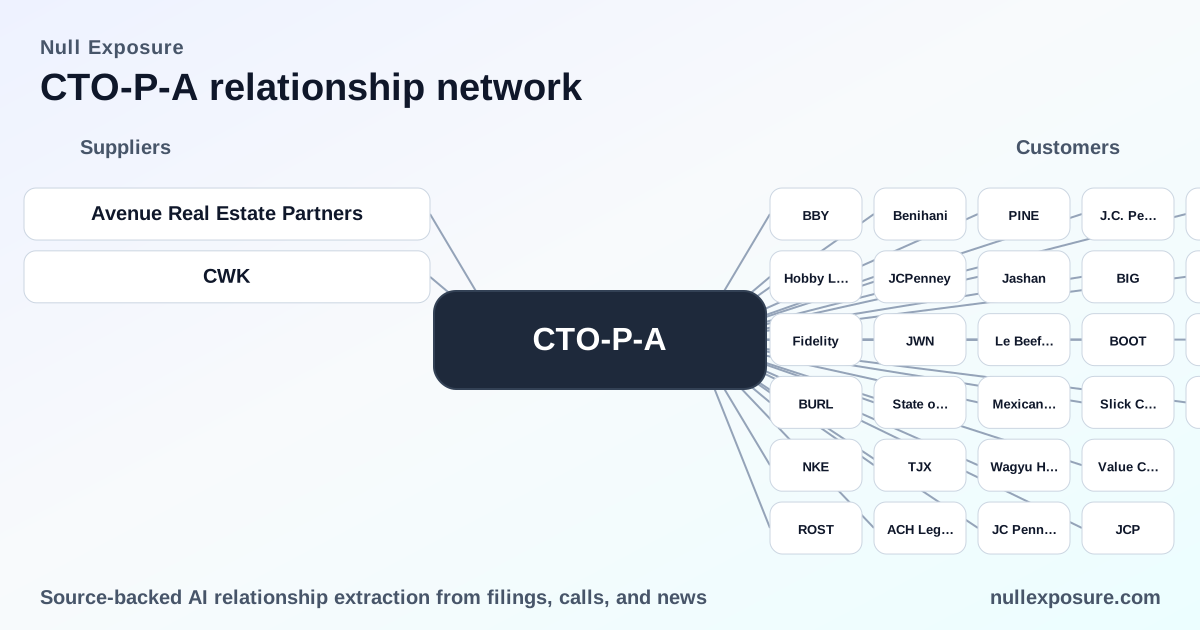
Avenue Real Estate Partners — leasing manager on Pompano Citi Centre
Avenue Real Estate Partners has been engaged to manage leasing for the Pompano Citi Centre property, where CTO plans to lease up roughly 62,000 square feet of second-floor vacant space. This is a direct operational relationship focused on tenant placement and space activation. Source: GlobeNewswire press release and subsequent Yahoo/CityBiz summaries (December 2025).
Cushman & Wakefield — exclusive seller advisor and transaction broker
Cushman & Wakefield acted as the exclusive advisor to the seller and brokered CTO’s acquisition of Pompano Citi Centre, a 509,000-square-foot retail complex purchased in late 2025. The involvement of a global brokerage underscores CTO’s reliance on institutional intermediaries to execute large asset purchases. Source: The Real Deal and GlobeNewswire transaction notices (December 2025).
What the relationships tell investors about operating model and counterparty exposure
No explicit constraints were provided in the supplied data; treat the following as company-level operational signals derived from the supplier relationships and public deal notices.
- Contracting posture: CTO outsources core commercialization functions — brokerage for acquisitions and an external leasing manager for tenanting — indicating a preference for variable-cost, vendor-led execution rather than large in-house leasing teams.
- Concentration and criticality: Reliance on a small number of large providers for discrete high-value functions (brokerage and leasing) concentrates execution risk on those vendors; losing a premier broker or leasing partner could slow deal flow or leasing velocity.
- Maturity and sophistication: Engaging top-tier partners like Cushman & Wakefield signals institutional-level transaction execution capability; this is consistent with a company that pursues portfolio-scale retail acquisitions and needs market access and execution certainty.
- Counterparty leverage: Outsourcing preserves balance-sheet flexibility but increases vendor negotiation importance; contract terms, fee structures, and performance KPIs will materially affect net operating income and the preferred claimant’s distribution coverage.
Financial transparency and data gaps — a material signal for investors
Public metrics in the supplied overview are sparse or absent: market capitalization, EBITDA, dividend yield, and most per-share metrics are not reported in the dataset, while price banding shows a 52-week high/low near $23.01 / $17.91. The lack of standard financial disclosures in the provided data increases reliance on transaction-level news and counterparties to assess creditworthiness and dividend sustainability. Investors should treat the absence of reported operating metrics as a material information gap and demand primary filings or audited financials before underwriting risk.
Risk and opportunity checklist for suppliers and investors
- Opportunity: Using established brokers and specialized leasing managers accelerates portfolio scale-up and preserves capital for acquisitions. The Pompano deal demonstrates the ability to acquire large-format retail in active markets.
- Operational risk: Outsourced leasing creates timing risk—rent roll and occupancy improvement hinge on third-party execution, not internal control.
- Counterparty credit risk: Preferred holders need clarity on the financial strength of vendors and any indemnities or performance guarantees in place.
- Information risk: Missing public financials and limited disclosure reduce visibility into coverage of preferred distributions and leverage levels.
If you want a tailored counterparty risk brief or a deeper review of counterparties to CTO-P-A, start here: https://nullexposure.com/.
Bottom line and next steps for investors evaluating CTO-P-A
CTO’s recent acquisition program and explicit use of outside brokers and leasing managers reveal a deliberate, partner-heavy operating model that accelerates growth while concentrating execution risk. For investors in preferred claims like CTO-P-A, the crucial questions are: how are leasing outcomes guaranteed, what are the fee and performance terms with third-party providers, and where are the audited cash flows that back preferred distributions?
For further diligence, request the company’s leasing agreements, recent investor presentations, and audited financials. For concise supplier mapping and counterparty exposure summaries, visit https://nullexposure.com/ — the quickest way to convert deal notices into actionable supplier risk intelligence.
Key takeaway: CTO is growing through acquisition and outsourcing; that model drives scalability but transfers critical execution risk to a small set of external partners — review vendor contracts and financial disclosures before assuming distribution stability.