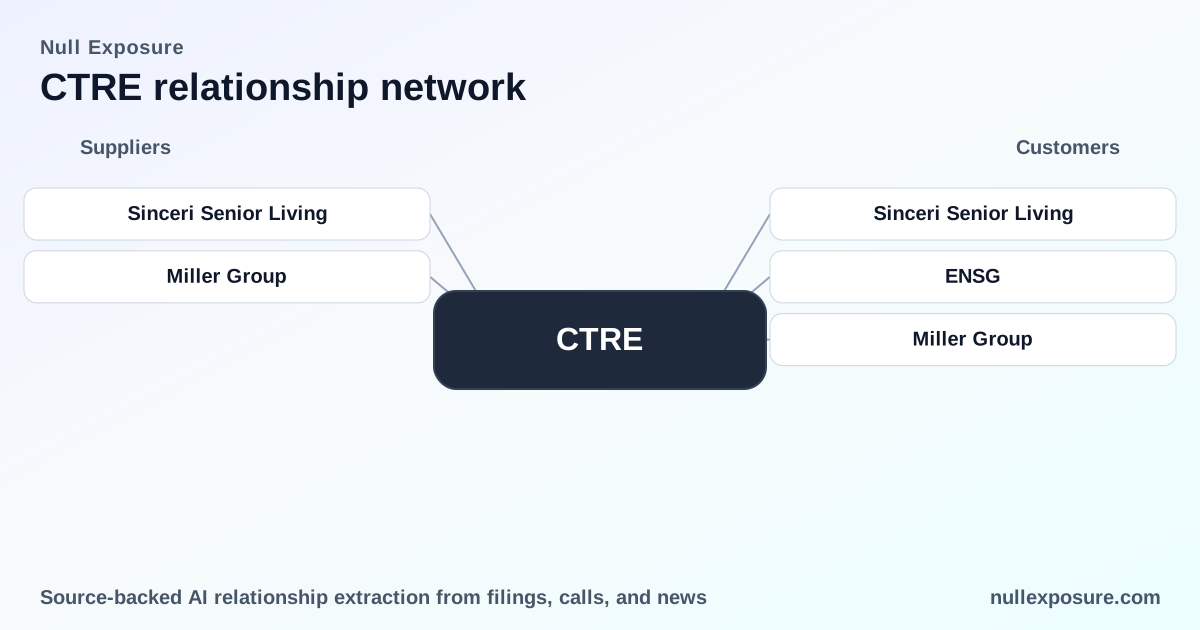
CareTrust REIT (CTRE): Supplier Relationships and What Investors Need to Know
CareTrust REIT operates and monetizes as an owner and operator of healthcare real estate: the company acquires, develops and leases skilled nursing, senior housing and other healthcare-related properties, and increasingly uses RIDEA and SHOP structures where independent third‑party managers run operations in exchange for management fees while CareTrust retains real estate economics. This combination produces stable rental and fee income, exposure to healthcare occupancy dynamics, and a growing reliance on external operators to deliver on-site performance. For a deeper look at how these supplier relationships affect portfolio risk and upside, visit Null Exposure.
How CareTrust’s operating posture translates to returns
CareTrust’s business model captures value through real estate ownership and structured operating arrangements rather than directly running healthcare services. The company’s SHOP platform and RIDEA contracts shift day‑to‑day operations to third‑party managers while CareTrust retains rent and property upside. That structure produces several investor-relevant characteristics:
- Contracting posture: CareTrust executes management agreements with independent operators rather than fully integrating operations, meaning legal and cash‑flow relationships are governed by management fee schedules and lease terms rather than payroll and clinical operations.
- Risk exposure: Because operators are paid management fees under RIDEA structures, CareTrust’s direct credit exposure to operating performance is limited relative to traditional triple‑net tenants; real estate cash flows are insulated by contract design and diversified property revenue streams.
- Maturity and stage: The company is actively expanding a nascent SHOP program—the fourth quarter 2025 SHOP investment and the operationalization of those assets indicate a ramping stage for this strategy rather than a mature platform.
- Concentration and criticality: Operator selection is critical to asset performance, but current disclosures show multiple independent managers are being engaged rather than sole dependence on one partner.
These structural features underpin CareTrust’s financial profile—market capitalization and margins reflect steady property-level economics while forward PE and EV/EBITDA imply investor expectations for continued earnings leverage through operating partnerships.
What the recent deals tell us about operator selection and geography
CareTrust’s most recent activity highlights a targeted approach: expanding SHOP in Texas and adding new Mid‑Atlantic operating partners to diversify operator exposure and regional risk.
Sinceri Senior Living — manager for three Texas SHOP communities
CareTrust’s fourth‑quarter SHOP investments include three communities in Texas totaling 270 assisted‑living and memory‑care units that Sinceri Senior Living will manage on behalf of CareTrust as part of the new SHOP platform. Source: Senior Housing News, February 13, 2026 (coverage of CareTrust’s SHOP deal) and the company’s Q4 2025 earnings transcript reported by The Globe and Mail and InsiderMonkey in March 2026, which stated, “We are excited to partner with Sinceri Senior Living, who will help manage those communities for us.” (Senior Housing News, Feb 13, 2026; Q4 2025 earnings call transcript coverage, March 2026).
Miller Group — new Mid‑Atlantic operating partner
CareTrust announced a new Mid‑Atlantic operating partner identified as Miller Group, a standalone operator chosen for a recent transaction in the region; management clarified that Miller Group is not affiliated with other peer announcements such as Sabra. This reflects CareTrust’s preference for known independent operators for discrete markets. Source: Q4 2025 earnings call transcript coverage published March 2026 (InsiderMonkey / transcription of the company’s remarks).
Company‑level constraints that shape supplier risk and opportunity
Company disclosures and excerpts provide unambiguous signals that define the supplier model and its investment implications:
- Service‑provider relationship role: CareTrust consistently frames third‑party managers as service providers paid via management fees, not as tenants bearing full credit risk; the company states third‑party managers “manage our communities in exchange for the receipt of a management fee…we are not directly exposed to the credit risk of the property managers in the same manner or to the same extent as our triple‑net tenants.” This is a company‑level signal that reduces direct operational credit exposure but increases dependence on contract enforcement and operator competence.
- RIDEA structure usage: The firm uses a RIDEA structure “pursuant to a management agreement with an independent, third party manager who manages and operates the properties,” which places operational control with the manager while CareTrust captures property economics—an arrangement that preserves upside while outsourcing operational execution.
- Active and ramping stage: As of December 31, 2025, third‑party managers operated all three SHOP properties, and the SHOP platform was established in Q4 2025. These disclosures indicate the program is live and expanding, meaning investors should treat SHOP as an emerging growth vector rather than an entrenched revenue source.
For a consolidated supplier mapping and to monitor future operator announcements, see Null Exposure.
Investment implications — risks and upside distilled
- Operational execution is outsourced and therefore a pivotal risk: Because property performance depends on external managers, operator selection and oversight are top‑tier risk factors. A capable manager preserves occupancy and revenue; a poor operator increases turn costs and occupancy volatility.
- Contract structure limits direct credit exposure: Management fees and RIDEA terms protect CareTrust’s balance sheet from direct operating shortfalls, making the company less sensitive to operator solvency than a landlord with full operational responsibility.
- Growth is modular and capital‑efficient: The SHOP strategy allows CareTrust to scale its real‑estate footprint without building internal operating infrastructure, generating capital efficiency and geographic diversification.
- Early‑stage execution risk exists: The SHOP platform is in a ramping phase, so short‑term earnings variability is possible as new partnerships are integrated and performance is proven.
Actions for investors and operators
- Conduct operator‑specific diligence: focus on historical occupancy performance, staffing stability and prior RIDEA experience for candidates like Sinceri and Miller Group.
- Monitor contract terms disclosed in filings: pay attention to management fee cadence, termination rights and performance thresholds that protect landlord economics.
- Track expansion cadence: ongoing SHOP acquisitions indicate a strategic shift; follow quarterly disclosures for evidence of scale and margin capture.
For continuous intelligence on CTRE’s operator network and supplier constraints, visit Null Exposure’s homepage.
Conclusion — CareTrust’s supplier relationships are a strategic lever: the company is deliberately outsourcing operations to independent managers under RIDEA and SHOP arrangements to capture real‑estate upside while limiting direct operational credit exposure. Investors should weigh operator quality and contract protections as primary drivers of realized returns going forward. For ongoing coverage and detailed supplier profiles, see Null Exposure.