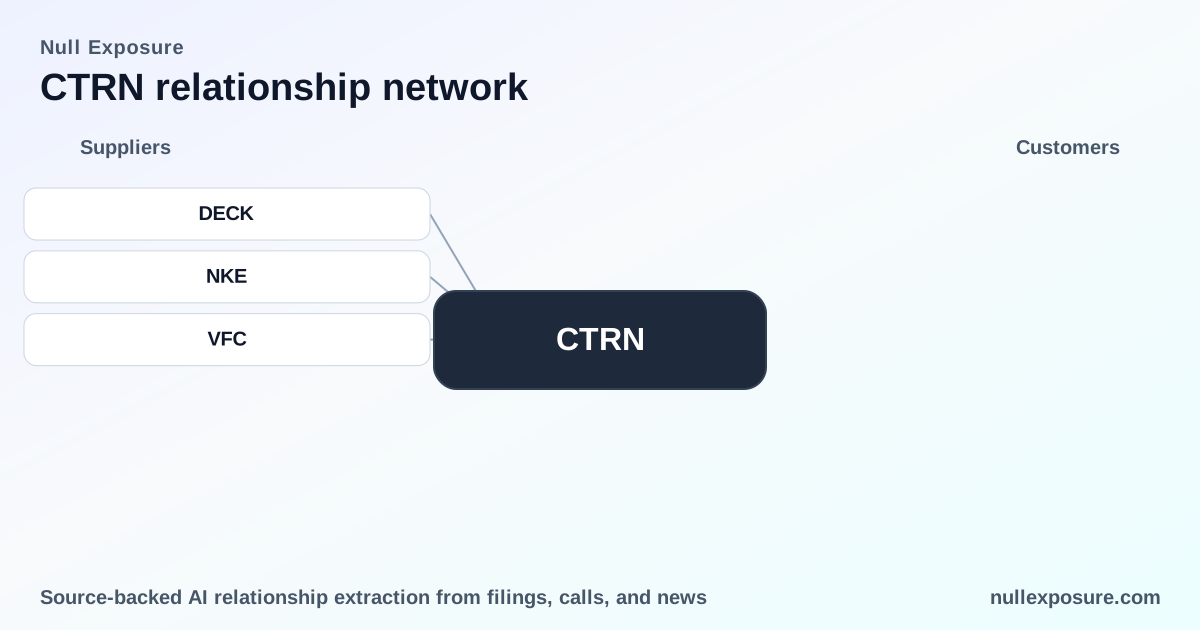
Citi Trends (CTRN) — Supplier Map, Brand Partnerships and Procurement Risks
Citi Trends operates as a value-oriented apparel and home goods retailer that monetizes by buying branded and private‑label merchandise at scale and selling through its store fleet and digital channels. The company sources inventory from thousands of domestic manufacturers and importers, carries material purchase obligations, and drives revenue through high‑turn assortments at lower price points; Revenue TTM was $800.7M with Gross Profit TTM $314.8M (latest reported). For investors and operators, the supplier picture is about branded footwear assortment partnerships, geographically exposed manufacturing, and meaningful near‑term purchase commitments. Learn more about supplier intelligence and mapping at https://nullexposure.com/.
Why this matters: branded footwear and seasonal buys are margin drivers for value retailers, but they also create concentrated purchase timing and supply‑chain risk. Citi Trends’ supplier posture combines mature, long‑standing vendor relationships with a procurement footprint that is geographically skewed toward Asia‑Pacific manufacturing and financially committed at scale.
What the headline brand relationships indicate for procurement strategy
Mentions in Citi Trends’ Q3 FY2025 earnings discussion highlight several recognizable footwear and apparel brands — UGG, HOKA, Timberland and Jordan brand — positioned as notable product lines the chain carries. These partnerships indicate Citi Trends curates recognizable name‑brand inventory to drive traffic and differentiation in the off‑price/value segment. The earnings transcript reference is captured in an InsiderMonkey coverage of the Q3 FY2025 call (published March 2026). (InsiderMonkey Q3 FY2025 earnings call transcript: https://www.insidermonkey.com/blog/citi-trends-inc-nasdaqctrn-q3-2025-earnings-call-transcript-1654445/.)
At the company level, filings and disclosures provide useful operating constraints and signals:
- Long‑term contracting posture: store leases and capital facilities are structured on multi‑year horizons (typical five‑year store leases with extension options; a five‑year, $75M credit facility amended April 10, 2025 to extend maturity to April 10, 2030). These items indicate stable lease and capital arrangements that support multi‑season buying programs.
- APAC manufacturing exposure: a substantial portion of merchandise is manufactured outside the U.S., sourced from China and other Asia‑Pacific countries, which creates standard trade and logistics risk for apparel inventory.
- Manufacturer relationships and maturity: Citi Trends sources from thousands of domestic manufacturers and importers and reports long‑standing supplier relationships while still opening new brand partnerships — a signal of a mature, diversified sourcing base.
- Material near‑term purchase commitments: purchase obligations for open merchandise orders totaled $138.0M due within 12 months, underscoring meaningful committed spend in the current buying cycle.
These are company‑level signals derived from recent filings and management commentary and should shape negotiation timelines, forward cover strategies, and supply‑chain contingency planning. If you are building supplier exposure models, treat the purchase obligation figure as a working proxy for committed inventory spend in the next 12 months.
Explore supplier mapping and relationship overviews on the home page: https://nullexposure.com/.
The relationships — one by one
HOKA (inferred ticker DECK)
Citi Trends referenced HOKA as one of several notable brand deals mentioned on the Q3 FY2025 earnings call, indicating HOKA product assortments appear in store plans and seasonal buys. This positions HOKA as a brand partner contributing to Citi Trends’ footwear assortment strategy. (InsiderMonkey Q3 FY2025 earnings call transcript, March 2026 — https://www.insidermonkey.com/blog/citi-trends-inc-nasdaqctrn-q3-2025-earnings-call-transcript-1654445/)
Jordan brand (inferred ticker NKE)
Management included Jordan brand among examples of notable product lines during the same earnings discussion, signaling that premium sportswear labels are used selectively to drive traffic and perceived value in the merchandising mix. Jordan brand serves as a traffic driver in the footwear category. (InsiderMonkey Q3 FY2025 earnings call transcript, March 2026 — https://www.insidermonkey.com/blog/citi-trends-inc-nasdaqctrn-q3-2025-earnings-call-transcript-1654445/)
Timberland (inferred ticker VFC)
Timberland was cited by management as a named brand deal, implying seasonal or core placement of Timberland footwear and apparel within Citi Trends’ assortment. Timberland contributes to the company’s strategy of combining known brands with value positioning. (InsiderMonkey Q3 FY2025 earnings call transcript, March 2026 — https://www.insidermonkey.com/blog/citi-trends-inc-nasdaqctrn-q3-2025-earnings-call-transcript-1654445/)
UGG (inferred ticker DECK)
UGG was listed among notable product relationships, indicating UGG lines are part of the branded footwear mix Citi Trends sources and sells. Carrying UGG signals access to higher‑profile seasonal footwear within a value retail model. (InsiderMonkey Q3 FY2025 earnings call transcript, March 2026 — https://www.insidermonkey.com/blog/citi-trends-inc-nasdaqctrn-q3-2025-earnings-call-transcript-1654445/)
Investment implications and procurement risk checklist
Citi Trends’ supplier profile has actionable implications for investors and vendor managers:
- Concentration vs. diversification: The company sources from thousands of manufacturers and also carries recognizable branded partnerships; this combination provides product diversification but creates timing concentration when open purchase orders are sizable ($138M due within 12 months).
- Supply‑chain exposure: Significant APAC manufacturing exposure creates susceptibility to tariffs, shipping disruption, and lead‑time variability — factors that directly affect inventory availability and margin realization for seasonal footwear.
- Contracting maturity: Long‑term store leases and an extended credit facility align procurement cycles with multi‑year commercial relationships, enabling predictable store‑level assortment planning while increasing fixed cost commitments.
- Financial cushion and execution risk: Operational metrics show revenue growth but a negative EPS and compressed operating margin (Revenue TTM $800.7M; Diluted EPS TTM -$1.97; Operating Margin TTM -3.73%), which elevates execution risk if inventory write‑downs or supply shocks occur.
Quick checklist for investors/operators:
- Confirm forward purchase schedule against cash‑flow and credit facility headroom.
- Stress test APAC shipping scenarios for critical seasons.
- Validate brand margin contribution (branded vs private label).
- Monitor lease maturities and store economics given multi‑year leases.
If you need a structured supplier risk scorecard for Citi Trends’ relationships, start with a tailored report on https://nullexposure.com/.
Bottom line and next steps
Citi Trends’ public commentary and filings show a value retailer that balances branded footwear partnerships with a broad manufacturing base, significant near‑term purchase commitments, and multi‑year lease and credit structures. For investors, the core questions are how branded assortments convert to store traffic and margin, and how APAC exposure plus committed spend will perform through shipping cycles and macro pressure.
For a deeper breakdown of supplier counterparty risk, procurement concentration, and contract‑level exposure for CTRN, visit https://nullexposure.com/ and request a supplier mapping brief tailored to Citi Trends.