Carnival Plc ADS (CUK) — supplier relationships and operational signals investors should price in
Carnival Corporation & plc operates the world’s largest leisure cruise business by assembling and monetizing a portfolio of cruise brands that sell itineraries, onboard experiences, and ancillary services; the company generates revenue through ticket sales, onboard spend and targeted partnerships while funding fleet growth with multi-year shipbuilding commitments. Investors should evaluate Carnival’s supplier footprint as a mix of long-term capital contracts (shipyards and lifecycle maintenance) and commercial content/media partnerships that drive onboard revenue and guest engagement. For a concise supplier intelligence view, visit https://nullexposure.com/.
Quick thesis for investors
Carnival is a capital-intensive operator with material long-term supplier commitments for newbuilds and fleet maintenance alongside diversified commercial relationships that enhance passenger experience and ancillary revenue. Market signals show active global sourcing and contracted capital outflows balanced against improving operating margins and strong EBITDA generation; supplier risk is concentrated in ship construction and lifecycle systems, while media/content deals present low-capex, revenue-enhancing optionality.
What relationships are visible in public reporting and press
Below I cover each supplier relationship found in the public results, with a one- to two-sentence plain-English summary and the relevant source.
-
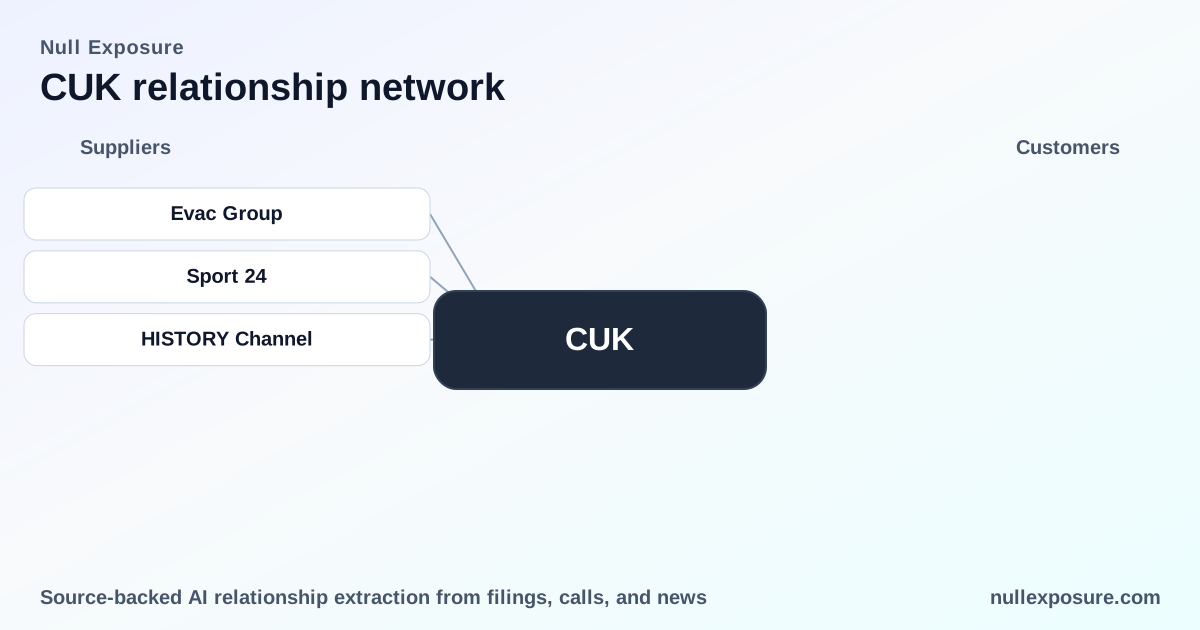
Evac Group — Carnival signed a fleet-wide service agreement covering preventive annual maintenance and lifecycle support for Evac wastewater and sanitation systems across vessels operated by Carnival’s eight cruise lines; this is positioned as a global, recurring maintenance contract. According to CruiseMapper, Carnival concluded the global Evac service agreement in March 2026 (CruiseMapper, March 2026). Ship Management International also reported the same global service contract describing preventive maintenance and lifecycle coverage (Ship Management International, March 2026).
-
Sport 24 — Carnival’s Holland America Line will carry Sport 24 tournament coverage in staterooms and select public venues on ships, indicating a content distribution deal that increases onboard engagement during major events and supports ancillary revenue channels. Finviz covered Holland America Line’s decision to air Sport 24 matches for the 2026 tournament schedule (Finviz news, March 2026).
-
HISTORY Channel — Holland America Line listed a themed cruise itinerary featuring the HISTORY Channel on its 2026 program slate, signaling branded content partnerships that feed itinerary marketing and themed onboard programming. This offering was highlighted in the same Finviz report on Holland America Line bookings and programming (Finviz news, March 2026).
What the constraint signals tell us about Carnival’s operating model
The supply-side constraints derived from company disclosures and filings present a coherent operating posture:
-
Long-term capital commitments dominate. Carnival’s disclosed new-ship growth commitments outline multi-year capital outflows through 2030 and beyond, reflecting multi-year contractual obligations to shipbuilders and long-dated capex scheduling (company filing as of November 30, 2025). This is a company-level signal that Carnival’s procurement is oriented to long-duration contracts rather than one-off purchases.
-
Global supplier base and sourcing. Management states the company sources “significant quantities of goods and services from a global supply base,” establishing that procurement, logistics, and maintenance strategies must operate across multiple geographies and regulatory regimes (company filing, FY2025). This global posture increases dependency on international suppliers for both capital projects and day-to-day operations.
-
Role as buyer and capital customer. Carnival is a primary buyer of large-scale manufactured assets (ships, integrated systems) and services, with explicit currency and contract exposures tied to euro-denominated newbuild payments totaling billions. That positions the company as a major counterparty whose credit and payment profile matter to suppliers (company disclosure, Nov 30, 2025).
-
Manufacturer relationships exist at scale. Carnival identifies Fincantieri and Meyer Werft as its ship construction contractors, confirming high criticality of a small number of specialized manufacturers for fleet renewal and capacity expansion (company filing, FY2025). This concentration is a company-level signal and increases the systemic impact if a single shipyard experiences production delays.
-
Active, ongoing supplier engagements. Procurement and lifecycle relationships are active — the company references ship construction contracts and maintenance programs as current and forward-looking commitments (company disclosure, FY2025).
Why these signals matter financially
-
Cash-flow timing and capital intensity are the primary valuation levers. Long-dated shipbuilding commitments create predictable but large future cash outflows; investors should model these as committed capex that constrains free cash flow until delivery cycles complete.
-
Concentration amplifies supply disruption risk. With a small set of shipbuilders and lifecycle system vendors, operational criticality is high: a delay at a shipyard or in systems maintenance scales directly into schedule slippage, lost revenue, and potential repositioning costs.
-
Content and media partners are low-capex lifts with high revenue optionality. Deals like Sport 24 and HISTORY Channel increase onboard engagement and incremental spend without material capital commitment; these partnerships are earnings-accretive levers compared with shipyard contracts.
-
Currency and contract structure create financing and hedging considerations. Euro-denominated build payments and multi-year schedules necessitate active currency management and can affect reported margins and cash needs depending on hedging posture.
If you want a deeper supplier risk map and contract maturity timeline for Carnival’s vendor stack, explore our supplier intelligence hub at https://nullexposure.com/.
Tactical takeaways for investors and operators
-
For investors: model committed shipbuilding cash flows explicitly, treat manufacturer concentration as a non-diversifiable operational risk, and isolate ancillary revenue growth from content partnerships as margin-accretive upside.
-
For operators and procurement teams: prioritize redundancy and contingency plans with shipyards and lifecycle vendors, and exploit low-cost, high-return branded content partnerships to accelerate onboard revenue while capex is deployed.
If you need a tailored supplier-risk assessment or contract maturity visualization for Carnival or comparable operators, start here: https://nullexposure.com/.
Closing assessment
Carnival’s supplier footprint combines highly material, long-term capital contracts (shipbuilders and lifecycle systems) with nimble, revenue-driving media partnerships. The company’s global sourcing posture and concentrated manufacturer exposure create a clear trade-off: predictable growth in capacity at the expense of elevated supplier concentration risk. Active lifecycle contracts such as the Evac Group agreement underscore the operational focus on fleet reliability, while Sport 24 and HISTORY Channel deals illustrate how non-capex partnerships increase guest engagement and ancillary revenues. For investors prioritizing downside protection, the supplier risk profile argues for close monitoring of shipbuilding schedules, currency hedges, and key lifecycle contracts. Final note: for ongoing supplier news and contract tracking on Carnival and other travel-services names, visit https://nullexposure.com/.