Torrid (CURV) — Supplier relationships and what they mean for investors
Torrid (ticker CURV) operates as a specialty apparel retailer focused on women's plus-size and intimate apparel, monetizing through omnichannel retail sales — physical stores and e-commerce — and through managed supply-chain sourcing and leased retail/distribution real estate. The business converts inventory purchases into retail revenue while carrying material fixed-cost exposure from long-term leases and concentrated international sourcing, a profile that explains its modest enterprise value relative to revenue (EV/Revenue ~0.52) and thin reported profitability (TTM revenue ~$1.04bn; EBITDA ~$60.2m). For investors evaluating supplier risk and counterparty exposure, the FY2025 Form 10‑K lists a small set of named supplier relationships and the filing contains company-level disclosures that shape contracting posture and operational concentration. Learn more at https://nullexposure.com/.
Quick take: the key investor implications
- Supplier disclosure is narrow: the filing highlights a couple of named sourcing partners and flags affiliated-purchasing activity.
- Supply chain is international and concentrated: Torrid sources substantially all product receipts from Asia in FY2024, implying geographic concentration risk.
- Cost structure tilts to fixed commitments: Torrid operates under primarily non‑cancelable leases with materially long terms (one to 17 years), amplifying the importance of supply continuity and inventory management.
- Service-provider reliance: the company relies on third-party transportation and external real-estate/construction services for store and DC operations.
Supplier disclosures from the FY2025 10‑K — the specifics investors need
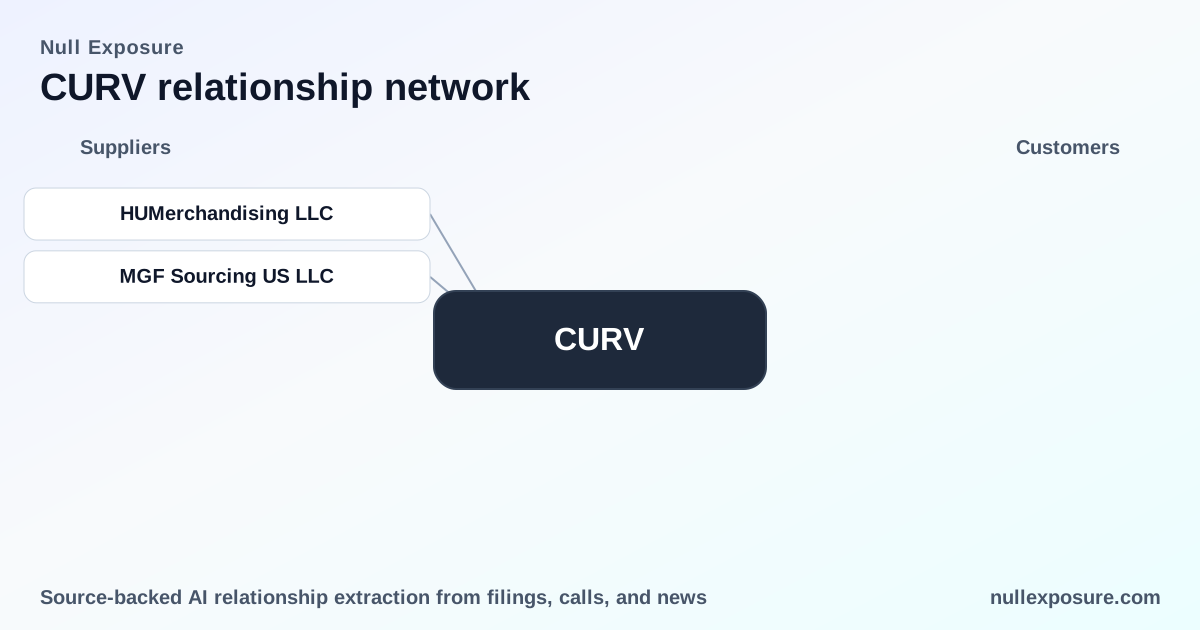
HUMerchandising LLC
Torrid's FY2025 10‑K records purchases of supplies from HUMerchandising LLC and classifies the entity under affiliated purchasing activity, indicating a supplier relationship used for inventory procurement during the referenced fiscal period. According to Torrid's FY2025 Form 10‑K, this relationship is documented in the company's supplier disclosures for FY2025 (document filed Feb 1, 2025).
MGF Sourcing US LLC
The FY2025 10‑K similarly documents purchases from MGF Sourcing US LLC under affiliated purchasing descriptions, identifying MGF as a named sourcing partner used during the fiscal period covered by the filing. Torrid lists this vendor in the FY2025 Form 10‑K's supplier disclosure section (filed Feb 1, 2025).
These two entries are the only named supplier relationships disclosed in the supplied results; they are presented as purchasing counterparties in the FY2025 filing and carry an affiliated‑entity designation in the filing text.
What the filing's constraints tell you about Torrid's operating model
The disclosures and constraint excerpts in the filing highlight several company-level operating characteristics that investors must fold into supplier-risk analysis:
-
Contracting posture: long-term, fixed commitments. The company operates under primarily non-cancelable leases with terms from approximately one to 17 years. That lease profile makes occupancy and distribution fixed costs a critical lever for cash flow, increasing the importance of stable sourcing and demand predictability to cover rent burdens.
-
Geographic concentration: sourcing centered in Asia (APAC). Torrid reports that substantially all product receipts in FY2024 were sourced internationally, primarily from Asia. Geographic concentration raises exposure to tariff shifts, shipping disruption, and labor or regulatory shocks in those markets.
-
Relationship role: reliance on service providers. The 10‑K documents reliance on third-party transportation providers for virtually all shipments and on external parties for real-estate leasing and construction management services. That operating model reduces in‑house logistics control and shifts execution risk to third parties, making supplier selection and contract terms critical.
These are company-level signals, not attributions to any single supplier in the disclosure. The combined effect is a retail business that depends heavily on a small set of external partners and long-duration property commitments, which amplifies operational leverage and the impact of supply interruptions.
If you track supplier counterparties and operational resilience, consider signing up for structured disclosures or monitoring tools at https://nullexposure.com/ to stay ahead of updates.
How investors should read the named relationships
The naming of HUMerchandising and MGF Sourcing US in the 10‑K is not an exhaustive supplier roll‑call; rather, it highlights transactions with affiliated or notable counterparties. For investors:
-
Treat these disclosures as indicators, not the full map. The filing’s limited public naming suggests a combination of routine procurement and selected related‑party or material-supplier reporting requirements rather than a full supplier roster.
-
Prioritize scrutiny of related-party terms and concentration. When a retailer names affiliated suppliers, the negotiation dynamics and transfer pricing deserve attention because they affect gross margin realization and working capital flows.
-
Monitor logistics providers and lease obligations. Because Torrid outsources transportation and maintains long-term leases, third-party performance and lease covenant health create pathways for outsized operational impact.
Risk and opportunity framework for investors
-
Primary risk — supply shocks in APAC. Concentrated Asian sourcing plus global shipping reliance makes inventory availability and cost volatility the principal operational risk. Assess vendor diversification and freight cost pass-through policies.
-
Secondary risk — fixed-cost amplification from leases. With leases up to 17 years, occupancy commitments will compress margins during demand downturns. Check lease maturity schedules and any embedded rent-abatement or sublease flexibility.
-
Opportunity — close vendor relationships can be a margin lever. Affiliated sourcing partners and committed relationships can enable better lead times, quality control, and negotiated pricing if governance is tight. Evaluate related-party disclosures and whether purchasing benefits flow to shareholders.
-
Execution risk — outsourced logistics. Dependence on third-party transport providers reduces capital intensity but makes service-level agreements and contingency planning central to continuity.
Recommended investor actions
- Review the FY2025 Form 10‑K supplier and related‑party sections for contractual terms and payment practices; escalate any ambiguous related‑party arrangements.
- Monitor freight and input-cost inflation indicators that affect gross margin given APAC sourcing.
- Analyze lease schedules and covenant exposure to understand fixed-cost sensitivity to revenue shocks.
- Engage with management on supplier diversification plans and contingency sourcing alternatives.
If you want systematic monitoring of these supplier exposures and related filings, visit https://nullexposure.com/ for subscription details and daily alerting.
Bottom line
Torrid’s FY2025 disclosures identify a narrow set of named sourcing partners and make clear that the company operates with concentrated international sourcing, reliance on third-party logistics, and material long-term lease obligations. For investors, the critical questions are whether related-party arrangements translate to favorable economics for shareholders and whether sourcing concentration leaves the company vulnerable to supply-chain and freight shocks. Track the detailed 10‑K disclosures, vendor concentration trends, and lease maturity rhythms as part of ongoing diligence. For continuous visibility into supplier relationships and filings, see https://nullexposure.com/.