CVR Energy (CVI): Supplier relationships that drive refining margins and balance-sheet risk
CVR Energy operates integrated petroleum refining and nitrogen fertilizer businesses and monetizes through the physical refining margin, fertilizer sales, and strategic feedstock and product sourcing agreements that compress working capital and protect margins. The company’s earnings profile is tightly linked to a small set of supply and financing counterparties whose contracts determine crude access, pet coke feedstock, and capital structure flexibility. For investors and operators, the counterparty map is as important as refinery throughput — and it is monitorable through the company disclosures and recent financing activity. Learn more at https://nullexposure.com/.
Why supplier relationships matter for CVR’s economics
CVR’s core profitability flows from converting crude to refined products and fertilizer intermediates; that conversion economics depends on stable, timely feedstock flows and the cost of delivering those inputs. Two operating realities stand out from the filings: first, CVR relies on both long-term intermediation and internal gathering to secure crude, which reduces inventory and pricing risk; second, a concentrated, adjacent-supplier model supplies critical by-products such as pet coke and reduces logistics costs — but concentrates operational risk at a few nodes.
The FY2024 10‑K shows CVR’s gathering system supplied the majority of crude for key refineries, and long-term intermediation agreements reduce in-transit exposure while locking counterparty relationships into place through 2026. Commitments for transportation and purchase obligations are material on the balance sheet, consistent with a high-concentration, high-criticality supplier posture and multi-year spend exposure. Investors should treat these supplier agreements as economic levers that can both protect and stress margins depending on counterparty performance and commodity cycles.
If you are tracking counterparty exposure across CVR’s supply chain and debt arrangements, visit https://nullexposure.com/ for a consolidated view.
The supplier and counterparty list investors must track
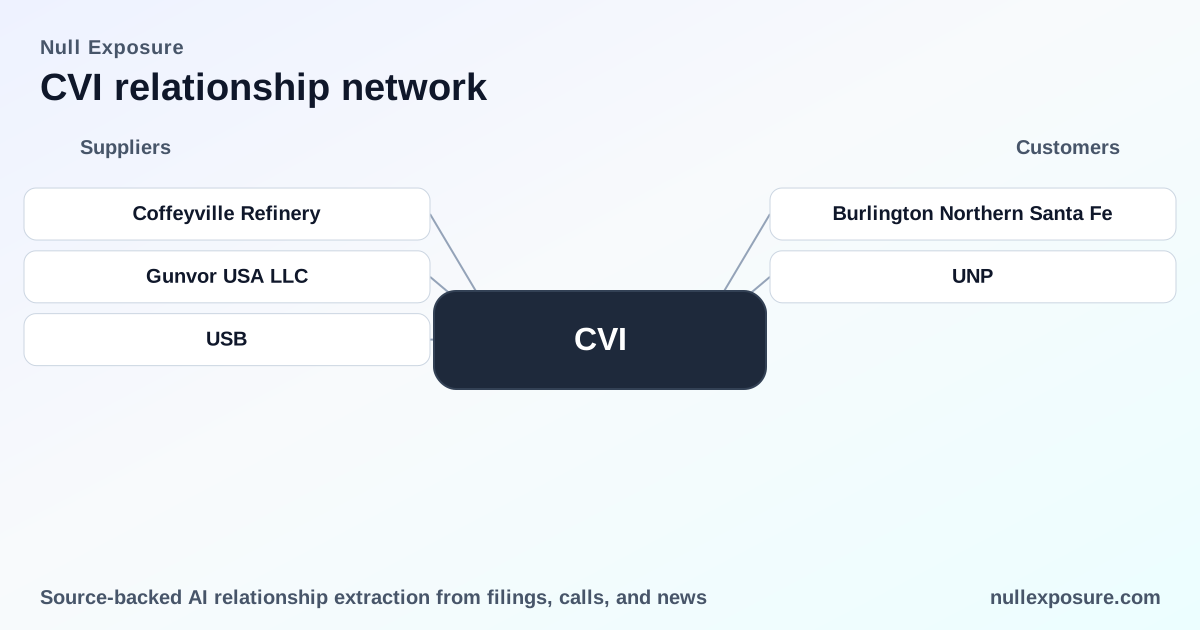
Coffeyville Refinery — pet coke supply under a master services agreement
A substantial portion of CVR’s pet coke requirements are supplied by the adjacent Coffeyville Refinery under the Coffeyville Master Services Agreement, creating a low-cost internal source of feedstock but concentrating supply risk; the 10‑K warns that if Coffeyville fails to deliver, CVR would need to source pet coke on the open market. (Source: CVR Energy FY2024 Form 10‑K.)
Gunvor USA LLC — crude oil intermediation agreement that reduces inventory risk
CVR’s Petroleum Segment obtains most of its crude through gathering operations and through a crude oil intermediation agreement with Gunvor USA LLC; that agreement “currently extends through January 31, 2026” and is designed to minimize in-transit inventory and shift pricing closer to refinery sale timing, effectively reducing CVR’s timing and basis exposure. (Source: CVR Energy FY2024 Form 10‑K.)
U.S. Bank Trust Company, N.A. — trustee for the 2026 note issuance
CVR issued $600 million of 7.500% senior notes under an Indenture dated February 12, 2026, with U.S. Bank Trust Company, National Association named as trustee, reflecting the company’s reliance on public debt markets for liquidity and capital structure management. (Source: MarketScreener news release, March 2026.)
What the constraints in the filings tell investors (company-level signals)
The extracted constraints in the FY2024 disclosures reveal a coherent operating model:
- Contracting posture: A mix of long-term and active contracts. The Gunvor intermediation agreement is expressly multi-year through early 2026, and the company reports material unconditional purchase obligations for transportation that span multiple years. These characteristics indicate strategic long-term supplier commitments complemented by tactical short-term purchases (for example, specified third‑party pet coke volumes through December 2025).
- Concentration and criticality: The gathering system supplies roughly 71% and 98% of crude needs for Coffeyville and Wynnewood refineries respectively, making feedstock channels both vertically integrated and concentrated; that concentration is a double-edged sword — it lowers unit logistics cost but raises single-point-of-failure risk.
- Maturity and stage: Most disclosed agreements are active and operational, with explicit near-term expirations (end‑2025/early‑2026), suggesting a period of re-contracting or renewal risk in the next 12–18 months.
- Spend magnitude: Transportation and purchase obligations reported in the commitments section imply multi-year spend that sits in the $100M+ band, flagging material cash-flow commitments even in stressed commodity cycles.
- Roles across the chain: CVR acts as both buyer (crude, pet coke, feedstock) and as a counterparty to in-house and third‑party service providers (feedstock procurement for renewable diesel, air separation, power), reinforcing a hybrid vertically integrated and outsourced operating model.
These constraints are company-level signals unless a constraint excerpt explicitly names a counterparty; for example, the Coffeyville MSA and the Gunvor intermediation agreement are called out by name in the filings and are therefore directly attributable.
Investment implications and a practical monitoring checklist
CVR’s supplier footprint translates into clear investor action items:
- Monitor contract expirations and renewal terms in 2025–2026 — Gunvor and short-term pet coke contracts are the immediate items to watch for price pass-through or margin compression.
- Track throughput at Coffeyville and Wynnewood — outages or supply interruptions at the gathering system will have outsized P&L impact because of the high percentage of demand they supply.
- Watch transportation commitments and working-capital needs — the filings show sizeable unconditional purchase obligations; tighten monitoring of cash conversion and covenant metrics as commodity cycles turn.
- Assess refinancing and liquidity — the February 2026 note issuance shows ongoing market access, but interest-rate and covenant settings of new debt change the breakeven for investments in maintenance or feedstock hedges.
Quick checklist for traders and credit analysts:
- Confirm renewal windows for Gunvor and Coffeyville agreements.
- Quantify open-market pet coke sourcing costs against MSA pricing.
- Model transportation commitment cash flows under stressed margins.
- Watch upcoming quarterly updates for any mention of third-party feedstock procurement for renewable diesel.
Actionable next steps for operators and investors
Operators should prioritize contingency plans for third-party pet coke sourcing and validate alternate crude pathways in the event of a gathering disruption. Investors should model scenarios where logistics commitments remain fixed but refining margins compress. For a consolidated counterparty view and to track contract expiries and material spend commitments, see https://nullexposure.com/.
CVR’s supplier map is both an efficiency engine and a risk concentration — the company’s margins are defended by close, long-term supply relationships, but those same relationships create timing and counterparty exposure that materially affect cash flow under stress. For ongoing monitoring and a cross‑reference of disclosure evidence, visit https://nullexposure.com/ and integrate these supplier signals into your investment or operational playbook.