CEL‑SCI (CVM) — Supplier relationships, operational posture, and what investors should price
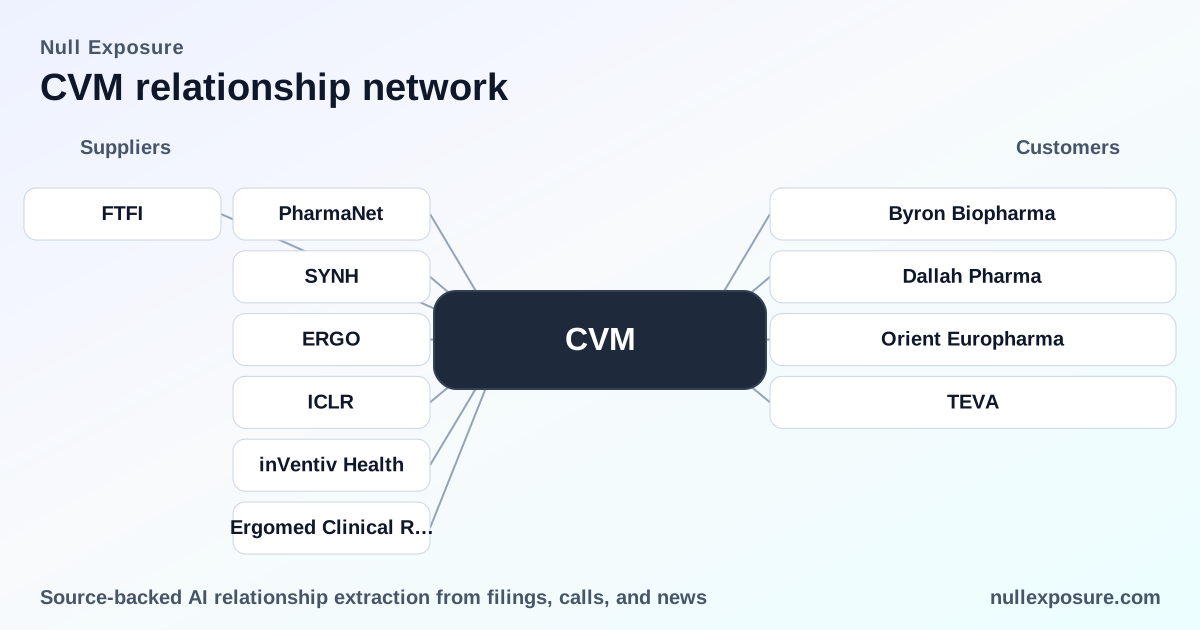
CEL‑SCI is a clinical‑stage biotechnology company that develops immunotherapy (Multikine) for cancer and infectious diseases; it generates negligible product revenue today and monetizes progress through clinical milestones, regulatory approvals, and commercial partnerships or licensing. The company’s operating model is heavily outsourced — CROs, manufacturing leases and local commercialization partners carry execution risk and timing risk for value realization. Investors should value CEL‑SCI as a development‑stage asset where supplier arrangements drive both clinical delivery and near‑term cash flow dynamics. For a concise vendor map and relationship intelligence, visit https://nullexposure.com/.
Quick take: the supplier posture that shapes outcomes
- Execution is outsourced and concentrated: CEL‑SCI relies on a small number of CROs and regional commercialization agents to run and file the confirmatory study and to prepare for local market access.
- Contracts include framework and master agreements: evidence shows formal master service documentation with at least one CRO, which increases predictability of scope but also locks in multi‑period obligations.
- Spend ranges from small operational fees up to multi‑million dollar fixed leases: the company carries both small monthly rents and a large facility lease used for manufacturing readiness.
- Legal precedent favors CEL‑SCI: a successful arbitration with a former CRO reduces legal tail risk in disputes and reinforces contract enforceability.
The supplier roster — each relationship and why it matters
Below are the reported supplier relationships in public sources. Each entry is a short, plain‑English description with a citation.
PharmaNet
PharmaNet was the original CRO contracted in 2010 to enroll 880 untreated patients; the relationship failed to meet enrollment obligations and is part of CEL‑SCI’s historical litigation history. A FierceBiotech report recounts the 2018 arbitration timeline and early contractual failures (FierceBiotech, March 2026 reporting on FY2018 events).
inVentiv Health / Syneos Health
inVentiv Health (later rebranded as Syneos Health) is the CRO that CEL‑SCI took to arbitration for alleged breach of contract; the arbitration decision was reported in CEL‑SCI’s favor, establishing a precedent for CRO liability in this case. FierceBiotech covered the arbitration outcome and the transition from inVentiv to Syneos (FierceBiotech, March 2026 on FY2018 litigation).
ICON
ICON replaced the original CROs in 2013 to help complete the pivotal study and was part of the consortium that finished enrollment; ICON’s role was operational — completing study delivery after earlier underperformance by the original contractor (FierceBiotech, March 2026, referencing FY2013–FY2018 events).
Ergomed (Ergomed Clinical Research, Inc. / Ergomed Group Limited)
Ergomed is a strategic, long‑standing CRO partner: CEL‑SCI selected Ergomed to serve as the CRO for its confirmatory registration study, with a Master Service Agreement and clinical trial orders documented; the company incurred roughly $0.7 million in R&D expense with Ergomed by Dec 31, 2025, and Ergomed received shares in 2024 as partial consideration for services. Sources include CEL‑SCI filings (SEC 10‑Q / FY2026), InvestingNews (FY2026), and a BioSpace press release noting a decade‑long relationship and Ergomed’s role in prior Phase‑3 completion (SEC 10‑Q FY2026; InvestingNews FY2026; BioSpace FY2025).
Ergomed Clinical Research, Inc. (as a contract entity)
CEL‑SCI’s FY2026 reporting explicitly names Ergomed Clinical Research, Inc. as the vendor contracted for clinical development services and documents incurred fees of approximately $0.7 million through year‑end 2025. The company’s 10‑Q and related press coverage provide this expense detail (SEC 10‑Q FY2026; TradingView summary of SEC filing).
First Berlin
First Berlin is CEL‑SCI’s European commercialization and regulatory representative for Saudi market engagement and SFDA filing preparation; the company is coordinating through First Berlin and local Saudi representatives to advance regulatory filings and potential reimbursement pathways (WorldPharmaceuticals / Yahoo Finance / BioSpace press releases, FY2025).
How constraint signals change the investment calculus
The collected constraints in public filings and press coverage present several company‑level signals that influence valuation and operational risk.
- Framework contracting with Ergomed: CEL‑SCI has a Master Service Agreement with Ergomed and clinical trial orders under that framework, which is a relationship‑specific signal indicating a formal, reusable contracting posture that should reduce renegotiation friction and accelerate study deliverables (evidence cited in company filings).
- Long‑term fixed obligations at the company level: CEL‑SCI carries multi‑year leases (a building remodel used for manufacturing with annual base rent ~ $2.7 million in the 12 months ended Sept 30, 2025, and a 20‑year lease with 3% annual escalators for other facilities), imposing fixed cash commitments that increase funding needs during the development window (company filing excerpts).
- Spend profile is mixed but material: reported R&D expense with Ergomed (
$0.7M by Dec 31, 2025) and outstanding payables settled via share sales ($350,885) show active, mid‑size spend bands between roughly $100k–$1M; separately, property lease commitments sit in the $1M–$10M band — a dual pattern of recurring operational costs plus larger capitalized lease exposure. - Service provider role and active stage: the company explicitly engages third‑party IT consultants and CROs, and filings show active contracts and transactions (including equity issued for services to Ergomed), signaling that supplier relationships are operational and integral to near‑term milestones rather than advisory-only engagements.
Investment implications — what to watch and price
- Execution risk is supplier‑driven: the confirmatory registration study’s timeline and quality depend on Ergomed and CRO coordination; delays or operational failure would materially extend dilution and lower the probability of an approval outcome. Ergomed’s master agreement reduces but does not eliminate this risk.
- Funding pressure from leases: significant lease obligations produce a structural cash burn floor; investors must model continued access to capital or partnering for commercialization to avoid equity dilution.
- Legal posture is an asset: the successful arbitration against a prior CRO reduces counterparty risk and strengthens CEL‑SCI’s contract enforcement profile.
- Concentration and counterparty risk: the small number of strategic partners (notably Ergomed and First Berlin) creates concentration risk; any counterparty failure would have outsized operational consequences.
- Governance and consideration practices: issuance of shares to Ergomed in 2024 for services and the partial settlement of payables via share sales are material governance signals for how CEL‑SCI will manage vendor obligations under cash constraints.
For a deeper vendor mapping and to track future supplier disclosures as they hit filings and news, check the work at https://nullexposure.com/.
Practical next steps for an investor or operator
- Build scenario models that stress a 6–18 month slip in confirmatory study milestones and quantify incremental CRO fees and lease‑driven cash burn.
- Run counterparty due‑diligence on Ergomed’s capacity and staffing for global enrollment, and validate First Berlin’s market access track record in Saudi Arabia.
- Monitor receivables/payables behavior and any future share‑for‑services transactions as signals of cash constraint.
CEL‑SCI’s value is a function of clinical execution and partner stability: Ergomed is the single most consequential supplier relationship, backed by a master agreement and recurring clinical spend; the company’s long‑term leases and concentrated supplier roster demand that investors price in both operational dependence and fixed cash commitments. For ongoing updates and supplier intelligence, visit https://nullexposure.com/.