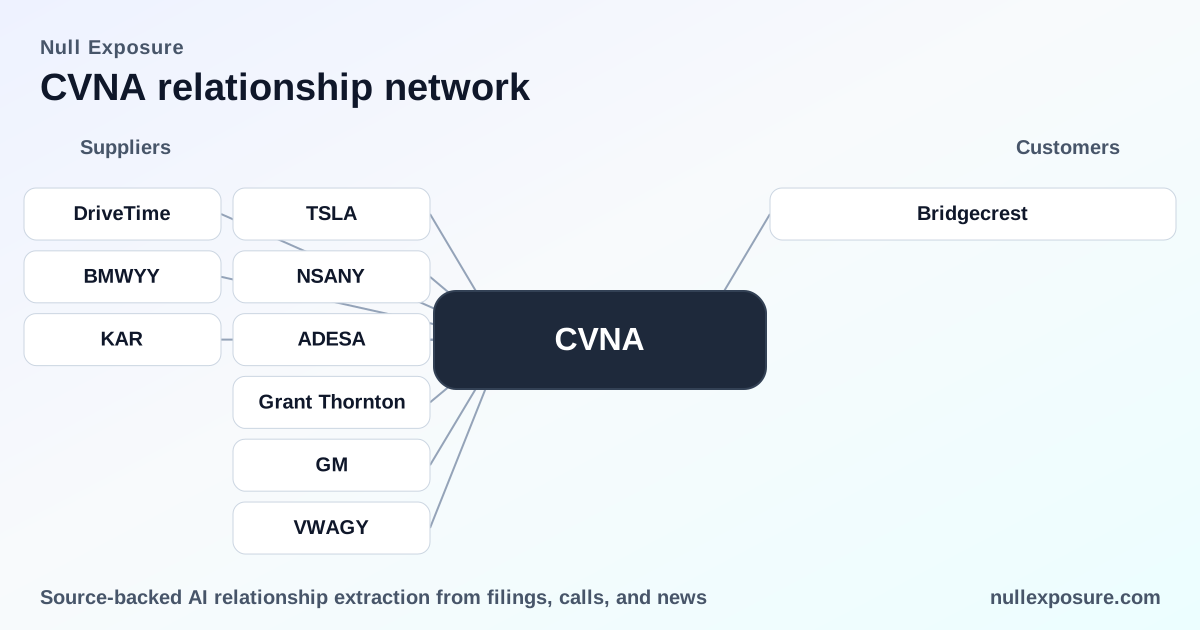
Carvana (CVNA): supplier map, operating posture, and the vendor signals investors should price in
Carvana operates a vertically integrated e-commerce platform for buying and selling used cars, monetizing through retail vehicle margins, reconditioning and logistics efficiencies, and consumer finance origination and servicing. Revenue is driven by vehicle sales and finance receivables; profitability improvement is tied directly to logistics scale and lower outbound/inbound transport costs. For investors evaluating supplier risk and operational leverage, supplier relationships that touch inventory sourcing, reconditioning, financing and audit oversight are high‑signal for margin and governance outcomes. For a structured supplier intelligence view, visit Null Exposure.
The business model in plain terms: where the margin lives
Carvana’s economics depend on three linked activities: sourcing used vehicles (trade‑ins and purchases from individuals or auctions), reconditioning vehicles at proprietary sites, and selling retail units online plus providing finance. The company benefits from scale in reconditioning and logistics—the more cars processed through Carvana’s network, the lower per‑unit transport and reconditioning cost, which converts directly to improved gross margins and EBITDA. On the funding side, a mix of long‑dated secured notes and short‑term finance receivable facilities underpins financing of retail receivables, so liquidity and cost of capital are central operating levers.
Key public metrics underline the scale: FY TTM revenue roughly $20.3B and EBITDA ~$2.16B, with market capitalization near $67B and a return on equity exceeding 60%, signaling profitable capital deployment when utilization is high.
Catalog of supplier relationships and what each signals
Below I list every relationship referenced in the source material and the operational implication for Carvana.
Tesla — inventory mix signal
Electrek’s coverage of Carvana’s used‑EV trends (May 2024) noted the Tesla Model 3 as one of Carvana's top sellers, highlighting demand on the platform for mainstream EVs and the company's exposure to Tesla resale pricing dynamics. (Electrek, May 2024)
Nissan — used EV sourcing strength
Electrek reported that the Nissan LEAF was Carvana’s top selling qualifying EV in the dataset cited, indicating the company sources mainstream, affordable EVs that have a distinct resale profile versus premium EVs. (Electrek, May 2024)
General Motors — portfolio exposure via the Chevy Volt
Electrek’s piece listed Chevy Volt (a GM‑linked PHEV) among top sellers, signaling Carvana’s inventory includes legacy electrified models from legacy OEMs that influence aftermarket pricing and parts/reconditioning requirements. (Electrek, May 2024)
Volkswagen — niche EV residuals to watch
Electrek named the e‑Golf in its top five, showing Carvana handles older OEM EV models whose residual curves and parts availability materially affect reconditioning cycle time and per‑unit cost. (Electrek, May 2024)
BMW — legacy EVs impact on reconditioning throughput
Electrek called out the BMW i3 among the top five, underscoring a continued stream of legacy EV models that require specific reconditioning and parts processes at Carvana’s sites. (Electrek, May 2024)
ADESA — logistics and reconditioning partner with integration upside (multiple mentions)
Multiple Sahm Capital reports (Jan–Feb 2026) credit the integration of ADESA locations with lowering inbound and delivery costs and improving utilization of Carvana’s logistics footprint; however, those same reports warn that ADESA site bottlenecks could reverse margin gains if utilization softens. (Sahm Capital, Jan–Feb 2026)
DriveTime — credit support and adjusted EBITDA dependence
A Sahm Capital article covering a short report (Jan 28, 2026) asserts that DriveTime’s credit support props Carvana’s adjusted EBITDA and that, absent DriveTime leverage, Carvana’s earnings would not cover interest expense—this flags counterparty credit linkage between Carvana’s reported profitability and a third party’s financing profile. (Sahm Capital, Jan 28, 2026)
Grant Thornton — auditor and governance risk raised by short research
Sahm Capital summarized a short report’s claim that Grant Thornton could resign and historical 10‑Ks might need restatement, which elevates governance and audit risk for investors if confirmed; the presence of such claims in public research affects both market perception and potential regulatory scrutiny. (Sahm Capital, Jan 28, 2026)
Operating constraints and what they reveal about the vendor posture
Carvana’s supplier and financing architecture shows a hybrid contracting posture:
- Long‑term secured debt: public notes maturing through 2028–2031 create a long‑dated capital structure that anchors funding but increases fixed obligations over multiple years.
- Short‑term, usage‑based credit facilities: revolving finance receivable facilities fund receivables prior to sale and carry monthly usage‑based fees and interest, tying funding cost to origination volumes and utilization.
- Spot vehicle purchases from individuals: Carvana actively sources cars directly from consumers and expects growth in trade‑in and purchase volume, which creates a mix of contract types from spot to longer procurement relationships.
- Service provider relationships at reconditioning sites: Carvana uses integrated vendors and consultants for parts, reconditioning, and security/IT services—these relationships are operationally critical and currently active.
Collectively, these constraints show a company that is capital structured for scale but sensitive to short‑term funding costs and third‑party operational throughput. The mix of long‑term notes and short‑term, usage‑based facilities increases leverage efficiency when volumes are high and funding markets are normal; conversely, it amplifies risk when used‑car demand softens or counterparty credit support (e.g., DriveTime) is questioned.
Risk framing and investor checklist
- Operational dependency on ADESA integration is a primary margin driver; track utilization and bottlenecks at ADESA sites. (See Sahm Capital, Jan–Feb 2026.)
- Funding stack sensitivity: usage-based finance facilities make net interest expense proportional to origination and securitization activity; monitor spreads and facility utilization.
- Counterparty credit linkage: DriveTime’s role in supporting adjusted EBITDA is a governance and financial risk if its support is overstated. (Sahm Capital, Jan 28, 2026.)
- Audit/governance watch: public claims about Grant Thornton and restatements elevate the need for due diligence on reported metrics and controls. (Sahm Capital, Jan 28, 2026.)
For a focused supplier‑risk dashboard and supplier map investors use to model these levers, visit Null Exposure.
What to watch next and a final read
Monitor three catalysts: ADESA throughput and unit cost trends, finance receivable facility utilization and pricing, and any official audit filings or restatement disclosures. These three variables determine whether Carvana’s logistics and financing mix convert scale into sustainable free cash flow or leave the company exposed to cyclical margin compression.
For a consolidated supplier intelligence feed and continuous monitoring of names like ADESA, DriveTime, and auditor developments, see Null Exposure.
Bottom line: Carvana’s profit trajectory is a function of logistics scale and funding efficiency; supplier and counterparty dynamics—especially ADESA integration and DriveTime’s financing linkage—are the highest‑impact variables for investors to price into CVNA today.