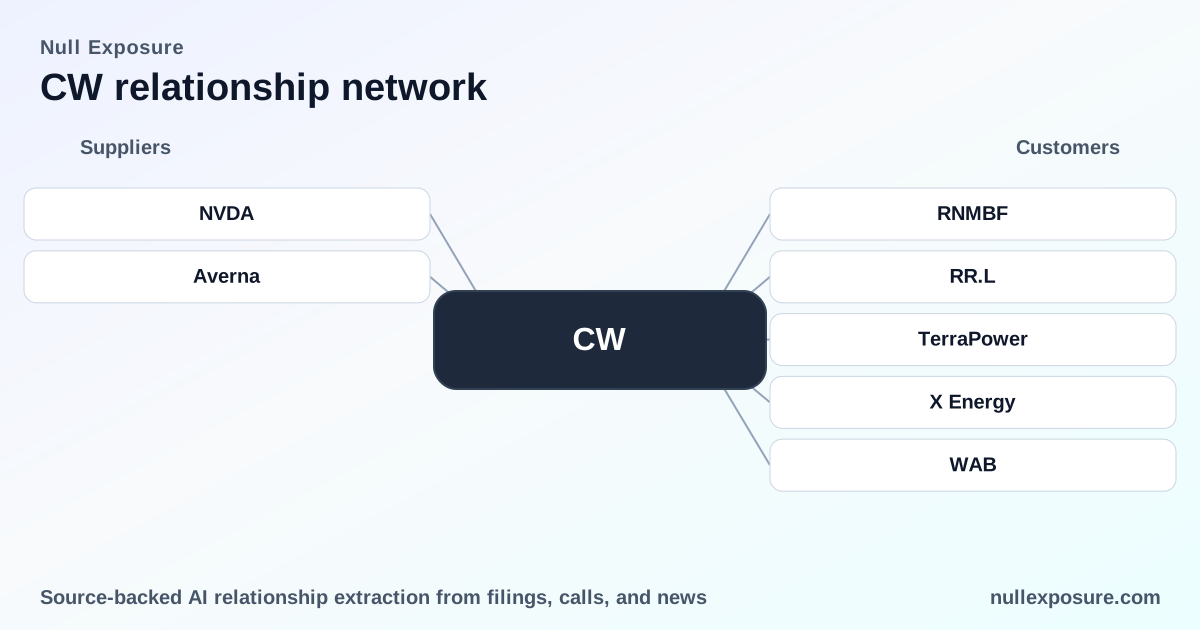
Curtiss‑Wright (CW): Supplier relationships that shape the aerospace & defense supply curve
Curtiss‑Wright designs, manufactures and services precision components and engineered systems for aerospace, defense, industrial and power markets and monetizes through component sales, aftermarket repair services and increasingly through embedded systems and integrated solutions (including ruggedized computing and test systems). Revenue derives from a mix of high‑margin engineering services and recurring aftermarket work, supported by defense and industrial contracting, producing a TTM revenue base of $3.50B and EBITDA of $796M that underpins a $25.2B market capitalization (FY2025–FY2026 snapshot).
If you evaluate supplier-side exposure or vendor strategies, this profile synthesizes the active external relationships reported in FY2026 and the corporate contracting posture that governs how Curtiss‑Wright buys, partners and integrates supplier technology. For a consolidated view of supplier relationships and constraints, visit https://nullexposure.com/.
Why suppliers matter for Curtiss‑Wright investors
Curtiss‑Wright is not a commodity parts house; it is a systems integrator that packages components into mission‑critical assemblies and sells lifecycle services. That model elevates supplier relationships from transactional purchases to strategic integrations—suppliers are sources of capability, not merely inputs. The company’s valuation metrics (EV/EBITDA ~31.7, Price/Book ~9.55) price a premium for durable defense exposure and engineering differentiation, so supplier choices that enable higher technical content materially affect margins and reorder value creation.
Key business drivers influenced by suppliers:
- Integrated electronics and computing platforms that allow higher ASPs and recurring service revenue.
- Test and qualification partnerships that shorten time‑to‑field for new modules and sustain aftermarket positions.
- Material sourcing and contract terms that determine manufacturing cost structure and working capital.
Explore supplier intelligence on the Curtiss‑Wright profile at https://nullexposure.com/ to track relationship shifts and concentration.
What the FY2026 relationship signals show
Curtiss‑Wright’s FY2026 public mentions record two notable supplier/partner relationships that reflect a strategy of embedding third‑party advanced components and test capability into its product line.
NVIDIA — embedding high‑end compute into rugged systems
Curtiss‑Wright is actively designing and building ruggedized computing platforms that incorporate NVIDIA GPUs—from flagship Blackwell units down to optimized configurations tailored to specific defense and industrial compute needs. This confirms a strategic move to integrate best‑in‑class commercial compute into mission‑critical hardware, increasing product content and potential service attach rates. According to an FY2026 earnings call transcript published on InsiderMonkey (March 9, 2026), Curtiss‑Wright discussed using NVIDIA GPUs across its ruggedized compute portfolio.
Source: InsiderMonkey earnings call transcript, FY2026 (published March 9, 2026).
Averna — co‑developing aerospace test systems
Curtiss‑Wright entered a partnership with Averna to develop custom aerospace test systems, integrating Averna’s advanced test technology into Curtiss‑Wright’s production and validation workflows. This partnership reduces time and cost for qualification cycles and strengthens Curtiss‑Wright’s position in delivering turnkey test solutions to OEM and defense customers. The relationship was reported in a SahmCapital news article covering Curtiss‑Wright activity (March 4, 2026).
Source: SahmCapital news report, March 4, 2026.
What these relationships imply for investors
The two cited partnerships are consistent with a deliberate strategy: use third‑party technology to add functionality and accelerate time‑to‑market rather than develop everything in‑house. NVIDIA supplies computational horsepower that enables higher margin systems; Averna supplies test systems that protect supply quality and shorten qualification cycles. Both relationships increase the technical density of Curtiss‑Wright’s offerings and raise switching costs for customers.
- Revenue and margin upside comes from higher content per system (compute modules and integrated software/services).
- Operational resilience increases when test capability is co‑developed, reducing defect risk and aftermarket warranty costs.
- Vendor concentration risk is manageable at scale but watch GPU supply cycles and licensing terms as potential constraints on delivery and margin.
For a deeper look at supplier-level exposures and how they change valuation drivers, see the Curtiss‑Wright supplier dossier at https://nullexposure.com/.
Contracting posture and operating constraints (company‑level signals)
Public constraint evidence shows Curtiss‑Wright has a buyer contracting posture: the company explicitly purchases materials for manufacture of components, indicating that many supplier interactions are transactional procurement relationships even as some partnerships are strategic co‑developments. This buyer posture has implications:
- Negotiation leverage: As a buyer for commodity materials, Curtiss‑Wright can push cost and delivery terms; however, when suppliers provide differentiated technology (e.g., NVIDIA GPUs), leverage shifts toward suppliers and contract structure becomes critical.
- Concentration risk and criticality: Strategic supplier relationships—those supplying specialized compute or test capability—are high‑criticality because they affect product differentiation and delivery timelines. Curtiss‑Wright’s large institutional ownership (≈86.8%) and stable margin profile indicate maturity in supplier management, but risk remains where single‑source components are embedded.
- Maturity and scale: The company’s long presence in aerospace and defense positions it as a mature systems integrator with established supplier networks, enabling bundled commercial terms and aftermarket capture.
These constraints are company‑level signals derived from public excerpts and should be monitored alongside each supplier’s own business trends.
Investment implications and risk checklist
Curtiss‑Wright’s supplier choices accelerate its transition from component seller to solution provider, which justifies premium multiples but creates dependence on external platform vendors and specialized test partners. Key risks to track:
- Supply bottlenecks for high‑end GPUs or proprietary test platforms that could delay deliveries.
- Contractual exposure to supplier price increases or restrictive licensing that compresses gross margins.
- Integration and qualification timelines that, if extended, can defer revenue recognition and aftermarket capture.
Against these risks, the company’s defensible margins (operating margin ~20.3%) and stable revenue growth (quarterly revenue growth YoY ~14.9%) support continued partner investment.
Bottom line and next steps
Curtiss‑Wright uses external technology partners to raise the value of its hardware and services lineup—NVIDIA for compute density and Averna for test capability—both strengthen product differentiation and aftermarket potential. Investors should treat these relationships as strategic levers rather than purely operational inputs and monitor supplier terms and delivery risk as part of ongoing due diligence.
For ongoing coverage of Curtiss‑Wright’s supplier network and to monitor relationship changes that affect valuation, visit https://nullexposure.com/.
If you want a tailored supplier risk brief or alerts tied to Curtiss‑Wright partner developments, explore the platform and sign up at https://nullexposure.com/ for continuous updates.