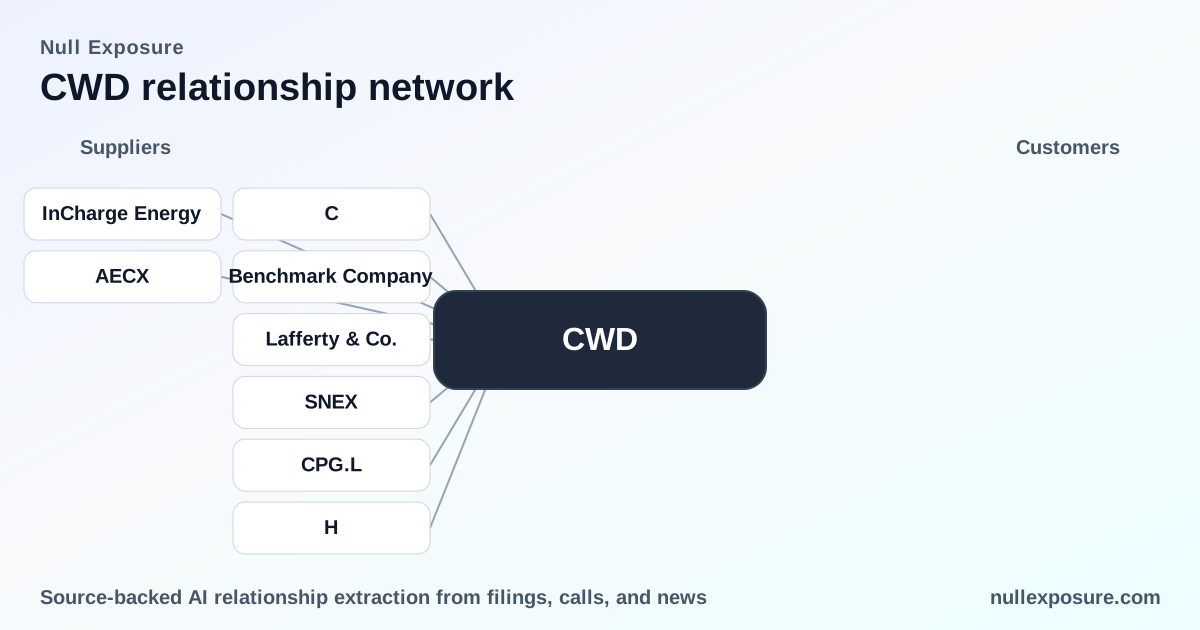
CaliberCos (CWD): Supplier relationships that steady a growth plan — and where the balance sheet constrains choice
CaliberCos monetizes as a diversified real estate operator: it develops, manages and leases commercial and residential assets while extracting fee income, operating cash flows and capital appreciation across its subsidiaries. The company augments its capital base through structured financings (including perpetual convertible preferred securities and ATM equity programs) and is actively expanding operational partnerships—trading treasury services, hotel development rights, venue concessions and EV infrastructure—to both reduce operating cost and open new revenue channels. For investors, the relevant thesis is simple: supplier and counterparty relationships are operational levers that de-risk execution, but Caliber’s concentrated liabilities and short-term financing posture materially constrain flexibility. Learn more at https://nullexposure.com/.
Why supplier relationships matter for a real estate operator’s valuation
CaliberCos’ value depends on two dynamics working in tandem: asset-level cash generation from properties and the company’s ability to finance and hedge those cash flows. Suppliers and counterparties—banks, sales agents, hospitality brands, and niche service providers—directly affect both cost of capital and revenue stability. Strategic partners that guarantee development pipelines or treasury execution materially change enterprise risk, while transactional or short-term suppliers have more limited long-term impact.
The full supplier map and what each partnership contributes
Below are every supplier relationship surfaced in public filings and press coverage, summarized in plain English with source context.
Citibank
Caliber completed its first financing transaction with Citibank and intends to expand financing opportunities with the bank going forward; this establishes a relationship with a large national bank that can support future capital needs. This came from remarks in the 2025 Q1 earnings call.
Benchmark Company
Benchmark Company acted as co-manager on Caliber’s ATM equity program, supplementing lead agent Lafferty & Co. in execution of equity offerings and placement activity. The role is disclosed in a GlobeNewswire press release dated September 17, 2025.
Lafferty & Co.
Lafferty & Co. served as lead sales agent on Caliber’s ATM program, coordinating at-the-market equity issuance that supports liquidity and near-term capital raising. The arrangement was announced via GlobeNewswire on September 17, 2025.
StoneX
Caliber selected StoneX as an additional institutional platform to support its Digital Asset Treasury (DAT) Strategy, providing trading and custody services that broaden treasury counterparties beyond traditional banking. This was announced December 16, 2025, in both GlobeNewswire and The Globe and Mail press releases.
Compass Group (Wolfgang Puck Catering)
Caliber’s joint venture signed a ten-year exclusive agreement with Wolfgang Puck Catering—part of Compass Group—to run food and beverage operations across PURE’s venues, bringing long-term, contracted operating income and service standardization to event spaces. This was discussed on the 2025 Q3 earnings call.
Hyatt Hotels Corporation
An affiliate of Hyatt was granted exclusive development rights to build 15 new Hyatt Studios hotels across targeted states, anchoring a multi-unit development pipeline and providing brand-backed operating revenue and franchise visibility. This agreement was disclosed in Caliber’s 2025 Q1 earnings call.
InCharge Energy
Caliber announced a partnership with InCharge Energy to deploy EV charging infrastructure across its portfolio, starting in Phoenix, which supports on-site utility services, tenant amenity expansion and potential ancillary revenue. This was reported in a company announcement dated October 7, 2025 via TipRanks.
Current
Caliber partnered with Current alongside InCharge Energy to scale EV charging installations across properties, signaling a coordinated infrastructure rollout rather than isolated installations. The partnership was reported October 7, 2025 on TipRanks.
How these relationships interact with company-level constraints
Caliber’s supplier posture must be read against explicit company constraints disclosed in filings and earnings commentary: short-term contract structures for certain notes (12-month terms with a 12-month extension option), a deliberate mix of large-enterprise counterparties, and balance-sheet signals that elevate supplier criticality.
- Contracting posture: The company’s financing often uses short-term notes with 12‑month maturities and optional 12‑month extensions, which creates recurring refinancing demand and elevates the importance of reliable lending relationships. This is a company-level signal derived from reported note terms.
- Counterparty mix: Caliber maintains relationships across large national banks, community banks, private equity lenders and insurers, indicating a diversified financing approach that nonetheless emphasizes connections with large enterprises as principal counterparties.
- Criticality and materiality: Caliber’s filings disclose operating losses, negative cash flow from operations and insufficient cash to cover notes maturing within 12 months—language that places supplier relationships into the “critical” category because capital providers and contractual partners directly influence solvency outcomes.
These constraints mean supplier selection is not optional but strategic: partners who underwrite development, provide liquidity or secure operating income are existentially important.
Investment implications and operational recommendations
Caliber’s partner mix shows a pragmatic blend of near-term financing tools and long-duration operating contracts. Key takeaways for investors and operators:
- The ATM program and sales agents (Lafferty & Benchmark) reduce immediate equity dilution friction and create a faster path to liquidity if the market is receptive; monitor placement velocity and insider/institutional uptake reported in subsequent filings.
- Relationships with StoneX and other treasury platforms signal active treasury diversification, reducing counterparty concentration and linking part of capital strategy to digital-asset infrastructure; assess custody and execution economics when evaluating net interest and trading returns.
- Long-term operating contracts (Hyatt, Compass/Wolfgang Puck) de-risk revenue at property level by delivering contracted occupancy, brands and concessions income—these are positive for stabilized NOI and valuations.
- However, the short-term financing posture and going-concern language elevate refinancing risk, making liquidity partnerships (for example, with Citibank) critical to credit stability.
For immediate next steps, review Caliber’s upcoming quarterly filings for ATM sales updates and any amendments to note maturities, and factor supplier longevity into valuation scenarios. If you want a comprehensive supplier-risk profile tailored to portfolio diligence, see https://nullexposure.com/.
Bottom line and recommended actions
CaliberCos leverages a balanced set of supplier relationships—capital markets agents, large-bank lenders, brand partners and infrastructure providers—to execute growth and treasury strategies. Strengths: brand-backed development deals and diversified treasury platforms. Key risk: concentrated near-term liquidity needs and short-term financing that make supplier continuity critical.
For investors evaluating position size or structuring vendor due diligence, prioritize updated maturity schedules, ATM uptake metrics, and any supplier escalation clauses in development agreements. For operators, strengthen long-duration service contracts and maintain multiple financing channels to reduce refinancing exposure.
Explore detailed supplier risk signals and monitoring tools at https://nullexposure.com/ for actionable research and portfolio-grade supplier intelligence.