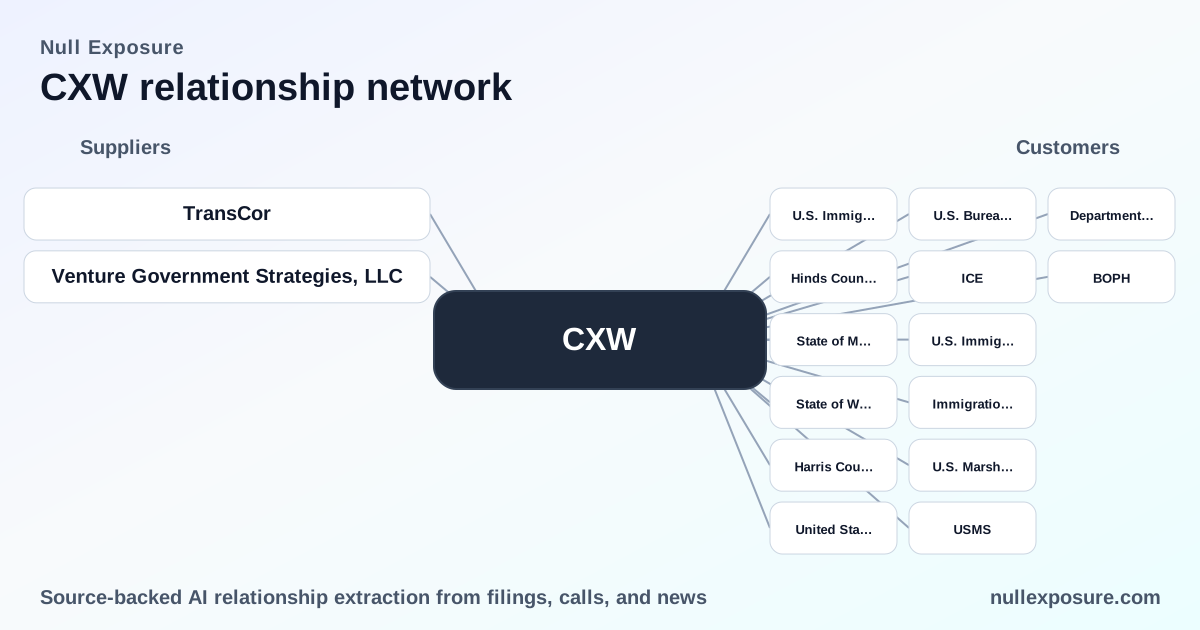
CoreCivic (CXW): supplier relationships, operating constraints, and what investors should know
CoreCivic monetizes a simple, contract-driven business model: it owns and operates partnership correctional, detention and residential reentry facilities and sells capacity and services to federal, state and local governments and other partners. Revenue is driven by facility occupancy, government contract terms and fee-based ancillary services such as inmate transportation and outsourced facility services. With trailing revenue of approximately $2.21 billion and EBITDA near $351 million, the company’s earnings profile is a function of operational scale, contract structure and regulatory exposure.
Explore supplier risk and relationship intelligence on the NullExposure homepage for ongoing diligence: https://nullexposure.com/
Big-picture read: what supplier and lobbying links reveal about execution risk
CoreCivic’s public disclosures and contemporaneous reporting point to two types of external relationships investors should track: operational-service subsidiaries that carry regulatory burden and external government-affairs firms that shape the company’s legislative footprint. These relationships are not peripheral — they intersect with operational continuity, regulatory compliance and reputation management.
- Operational services are embedded in the company’s delivery chain (transportation, food services and similar contractors).
- Government relations are an explicit part of the cost structure and public-facing compliance posture.
The relationships below are listed in full and summarized with source citations.
TransCor — in-house inmate transportation unit subject to DOT and DOJ rules
CoreCivic’s inmate-transportation subsidiary, TransCor, is explicitly regulated. According to CoreCivic’s 2024 Form 10‑K, TransCor is subject to regulations promulgated by the U.S. Departments of Transportation and Justice (FY2024). This is a clear operational and compliance vector: transportation services are critical to facility operations and their regulatory environment imposes operational controls and potential cost or liability variability.
Source: CoreCivic 2024 Form 10‑K (FY2024).
Venture Government Strategies, LLC — disclosed lobbying engagement and policy stance
A March 2026 news disclosure reported that CoreCivic disclosed $120,000 of lobbying activity through Venture Government Strategies, LLC, and the contractor affirmed it does not lobby for or against policies that would determine the basis for an individual’s incarceration or detention (FY2025 disclosure). This relationship is a direct expression of how CoreCivic manages governmental affairs: the company pays for representation while its vendor publicly frames the scope of advocacy.
Source: QuiverQuant news report on CoreCivic lobbying disclosure (reported March 2026; FY2025 disclosure).
What the company-level constraints reveal about procurement and operating posture
CoreCivic’s filings disclose that the company outsources certain non-core functions and structures contracts to control cost exposure. For example, the firm states: “We outsource our food service operations to a third party. The contract with our outsourced food service vendor contains certain protections against increases in food costs.” Treat this as a company-level signal about contracting behavior rather than a relationship-specific rating.
Key operating-model characteristics implied by that disclosure:
- Contracting posture: CoreCivic uses outsourcing for non-core operational services and includes explicit contractual protections to limit input-price volatility. That speaks to a proactive procurement stance.
- Concentration: The disclosure does not name a single dominant vendor for food services, which suggests the company treats these vendors as replaceable operational suppliers rather than strategic partners.
- Criticality: Outsourced services such as food and transportation are operationally critical — interruptions have immediate operational and regulatory impacts — but are controllable through contract clauses.
- Maturity: The presence of contractual protections indicates experienced contracting practices and institutionalized vendor management.
Investment implications: what investors should price in now
When modeling CoreCivic or evaluating counterparty risk, incorporate the following confirmed facts and implications:
- Regulatory and compliance exposure is real and measurable. TransCor’s DOT/DOJ regulation creates compliance cost floors and potential exposure to enforcement actions. Factor regulatory scenarios into operating-cost sensitivity.
- Government-affairs spending is disclosed and material to public positioning. The Venture Government Strategies engagement is a reminder that CoreCivic allocates capital to shape policy context; this is part of the company’s political and reputational capital management.
- Procurement practices reduce input-price volatility for specific services. Contract protections on food services lower gross-cost tail risk but do not eliminate counterparty or execution risk.
- Valuation context is supportive but not complacent. CoreCivic trades at an EV/EBITDA around 8.7 and a forward P/E near 11.7, implying the market prices a moderate risk premium for regulatory and operational variables.
Quick operational and risk checklist for underwriters and counterparties
- Confirm regulatory compliance programs for transportation and any vendor-managed services. TransCor’s regulatory obligations are non-negotiable for service continuity.
- Review lobbying and government-affairs spend disclosures when assessing political and litigation risk exposure.
- Validate contract terms for outsourced services, particularly clauses that cap or mitigate cost increases (food services example).
- Stress-test occupancy and contract-repricing scenarios given the company’s reliance on government payors.
Mid-analysis resource: for a deeper supplier and risk view, visit NullExposure’s overview at https://nullexposure.com/
Final read and recommended next steps for investors and operators
CoreCivic’s supplier relationships reveal a dual operational model: internally managed, regulated service lines (TransCor) and outsourced, contractually-protected vendor relationships (food services and similar). The public lobbying disclosures show active expenditure to manage legislative risk. Investors should model regulatory compliance costs and vendor continuity risk explicitly and treat government-affairs spend as an operational expense with reputational implications.
For ongoing monitoring and deeper supplier intelligence, review additional relationship history and constraint signals on the NullExposure homepage: https://nullexposure.com/
If you are conducting counterparty diligence or underwriting facility operations, prioritize document-level review of TransCor compliance records and vendor contracts that contain price-protection clauses; these documents drive the most visible operational risk and mitigation pathways.