Cyclerion Therapeutics (CYCN): supplier relationships reshape a clinical relaunch
Cyclerion Therapeutics runs as a clinical-stage biopharma focused on neuropsychiatric drugs, monetizing through licensing of intellectual property, strategic collaborations to de-risk clinical development, and eventual product commercialization and downstream royalties. Recent activity centers on licensing from MIT and application-specific supplier partnerships that accelerate the CYC‑126 program for treatment‑resistant depression — moves that convert intellectual property and service-level relationships into a tangible path to clinical proof‑of‑concept and commercial optionality. For procurement and investor teams evaluating CYCN as a counterparty or supplier client, these arrangements change both operational dependency and strategic optionality. Learn more about supplier exposures and relationship mapping at https://nullexposure.com/.
How Cyclerion is using partners to relaunch the company
Cyclerion has pivoted from a broader biotech footprint to a concentrated neuropsychiatric strategy, outsourcing critical capabilities instead of building them in‑house. The company licensed core IP from the Massachusetts Institute of Technology to underpin its relaunch and then executed an exclusive, application‑specific collaboration and option‑to‑license with Medsteer to integrate EEG‑guided closed‑loop control into its CYC‑126 clinical program. Cyclerion’s approach is textbook asset-light: secure foundational IP, then plug in specialized external providers to accelerate clinical execution while conserving capital. More context and supplier intelligence are available at https://nullexposure.com/.
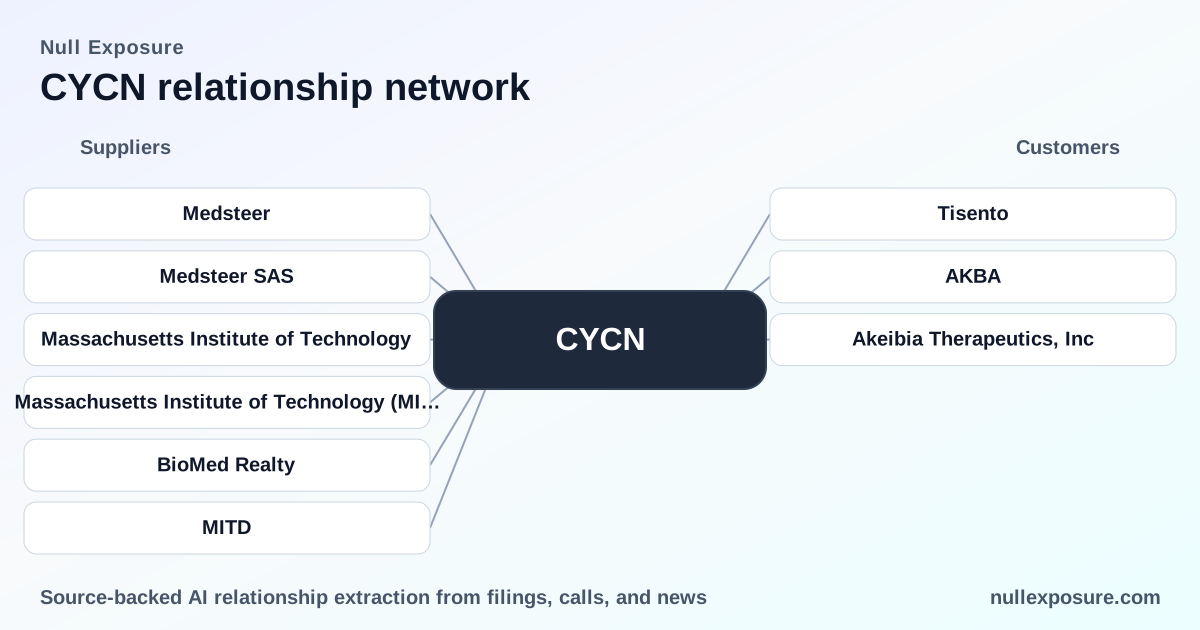
Relationship roll call — what every partner means for investors
-
Medsteer / Medsteer SAS
Cyclerion entered an exclusive, application‑specific collaboration and option‑to‑license with Medsteer to integrate validated EEG‑guided closed‑loop control technology, computational control modules and control software into the CYC‑126 program for treatment‑resistant depression. According to Cyclerion’s press releases in January and February 2026, the agreement gives Cyclerion access to Medsteer’s technology and annotated clinical datasets developed across dozens of settings and thousands of patients (GlobeNewswire, Jan–Feb 2026; investing.com, Jan 2026). -
Massachusetts Institute of Technology (MIT)
Cyclerion signed a license agreement with MIT that supplies the intellectual property foundation for its strategic relaunch toward neuropsychiatric indications. The licensing arrangement was announced as part of Cyclerion’s transformational relaunch in September 2025 and reiterated in subsequent filings and news summaries (GlobeNewswire Sept 2025; TradingView/QuiverQuant coverage FY2025–FY2026). -
BioMed Realty
Cyclerion has a historical commercial real estate relationship: a lease for 114,454 sq. ft. at 301 Binney St., East Cambridge, executed earlier in its lifecycle. That facility relationship reflects the company’s prior infrastructure footprint and continues to be relevant for any operational or landlord obligations (New England Real Estate Journal, FY2019).
What the company‑level constraints signal about Cyclerion’s operating model
Cyclerion’s public disclosures and relationship mapping show a consistent asset‑light contracting posture:
- The company explicitly states it will not build manufacturing facilities and intends to rely on third‑party contract manufacturing organizations (CMOs) for raw materials, drug substance and drug product across clinical development and commercialization. That is a core operating decision that increases supplier criticality while preserving capital flexibility.
- Cyclerion relies on third‑party providers for cloud‑based infrastructure, encryption, authentication and other critical business systems, which makes its infrastructure vendors strategically important to operations and regulatory compliance.
- The company uses third‑party CROs, application providers and hosting companies for both research and business systems, indicating a broad outsourcing footprint rather than concentrated vertical integration.
These constraints translate to four investment‑grade signals: high supplier criticality, outsourced manufacturing concentration risk, operational agility through specialty partners, and pre‑commercial maturity that compresses internal fixed costs but shifts execution risk to vendors.
Investor implications: concentration, criticality and contract terms
Cyclerion’s supplier posture creates a tradeoff that investors and procurement professionals must price explicitly:
- Concentration risk: reliance on CMOs and a small set of specialist technology partners (e.g., Medsteer for closed‑loop EEG) concentrates operational risk. Loss of a critical supplier or delays in integration could directly delay Phase 2 milestones.
- Contractual leverage and terms: because Cyclerion is pre‑commercial and capital‑constrained, its bargaining position with manufacturing and tech vendors will influence timelines, quality controls, and indemnities. Expect milestone‑linked payments and option‑to‑license structures in key agreements.
- Regulatory and data dependencies: integrating device/algorithmic control tech into psychiatric trials raises device‑validation, data‑integrity, and regulatory evidence requirements that make the technology partner’s track record and datasets material to trial success.
- Facility leases remain legacy liabilities: historic real estate commitments, such as the BioMed Realty lease, are part of the fixed‑cost base that matters if the company scales or restructures operations.
If you need a deeper supplier risk profile or contract‑level exposure map, find actionable reports and relationship scoring at https://nullexposure.com/.
Practical recommendations for operators evaluating CYCN relationships
- Demand detailed vendor contingency plans from Cyclerion before onboarding as a service provider or vendor: specify backup CMOs, data redundancy, and validation deliverables.
- Require clear milestone and payment schedules tied to regulatory steps and clinical endpoints to align cashflow with execution risk.
- For vendors providing infrastructure or clinical technology, negotiate audit rights, SLAs and data governance clauses that reflect the high criticality of the services to Phase 2 outcomes.
- Track the MIT license terms where possible: IP scope and exclusivity will influence who controls derivative innovation and downstream commercial rights.
Final read: what matters to investors now
Cyclerion’s strategy is a classic IP‑plus‑outsourcing relaunch: licensed core technology from MIT paired with targeted supplier partnerships (notably Medsteer) that convert academic IP into a regulated clinical pathway. That structure preserves capital and accelerates timelines but concentrates execution risk in a small set of third parties. For investors and operator partners, the priority is to quantify supplier concentration, contractual protections, and integration timelines — the three variables that will determine whether CYC‑126 achieves clinical proof‑of‑concept on schedule. For supplier risk analytics, relationship intelligence, and action plans, go to https://nullexposure.com/.
Bold, supplier‑aware stewardship of contracts and operational backstops is the decisive mitigant that turns Cyclerion’s outsourced model from a risk to a lever for value creation.