Dominion Energy (D): supplier relationships, contracting posture, and investor implications
Dominion Energy is a vertically integrated, rate-regulated utility that monetizes through regulated retail rates, wholesale generation sales, and long-term commodity and infrastructure contracts. The company operates electric and gas distribution systems across multiple states, owns generation assets, and participates in joint ventures and service agreements to expand renewable and fuel supply capabilities — generating stable cash flow from regulated returns while capturing upside from generation and commodity margins. For a practical view of counterparty exposures and contract structure, see more at the Null Exposure homepage: https://nullexposure.com/.
How Dominion’s operating model converts to cash flow
Dominion’s business model is classic utilities economics: predictable rate-regulated revenue complemented by asset-level earnings. Key financial anchors include a market capitalization near $55.7 billion, trailing EBITDA around $8.1 billion, and a dividend yield roughly 4.22%, all reflective of regulated cash generation and capital-intensive operations. Dominion supports these cash flows with large credit facilities and multi-decade lease and purchase commitments, giving the company access to capital but also embedding long-duration obligations into the balance sheet. According to the company’s FY2024 Form 10-K, Dominion reports sizeable commitments and multi-year financing arrangements that shape liquidity and capital allocation decisions.
What the filings say about contract length and sourcing
The company’s disclosures reveal a clear contracting posture: material long-term commitments dominate, but Dominion also runs a hybrid sourcing approach that includes short-term and spot purchases where operational flexibility is required. The FY2024 filing highlights commitments for power purchase agreements that extend through 2040 and lease terms averaging decades, while other excerpts describe both short-term natural gas contracts and spot coal agreements. This mix delivers regulatory and earnings stability on the long-term side, while preserving operational responsiveness via short-term market purchases.
Supplier relationships investors should know
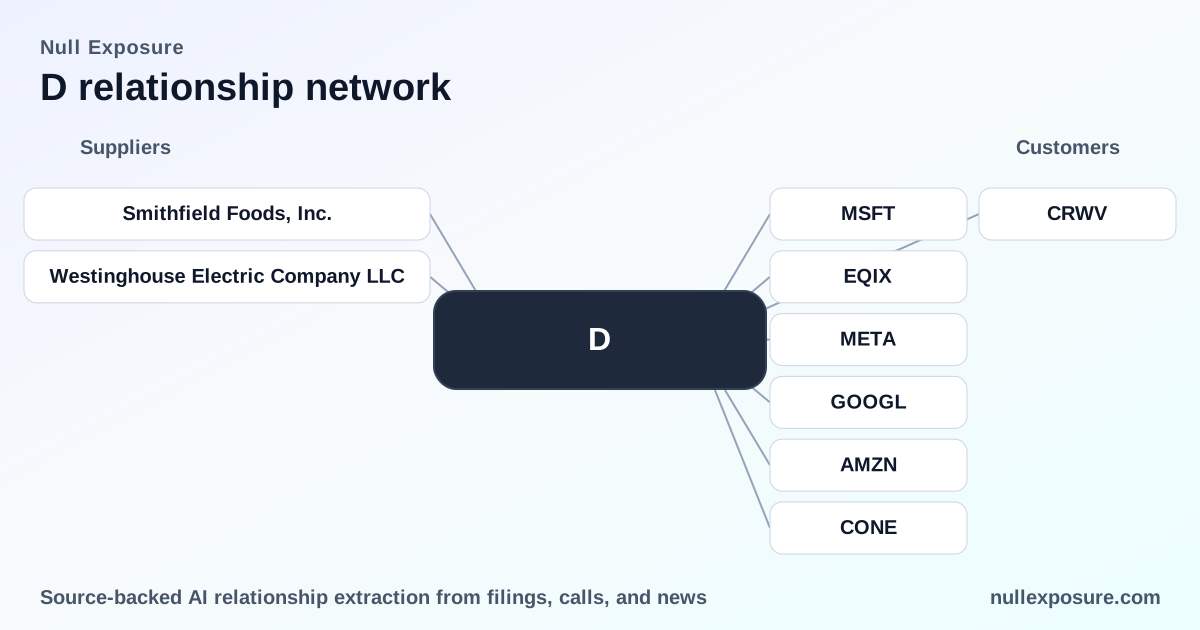
Below are the explicit supplier and partner relationships disclosed in Dominion’s FY2024 filing. Each is summarized plainly with its cited source.
Align RNG (joint venture with Smithfield Foods, Inc.)
Dominion formed Align RNG in November 2018 as an equal partnership with Smithfield Foods to develop renewable natural gas assets and related infrastructure, representing a strategic move into decarbonized gas supply and alternative fuel monetization. According to Dominion’s FY2024 Form 10-K, the company announced the formation of Align RNG as an equal partnership with Smithfield Foods, Inc. (FY2024 Form 10-K).
Takeaway: Align RNG is a strategic JV that advances Dominion’s renewable gas portfolio and potential non‑regulated earnings streams while deepening an industrial counterparty relationship.
Westinghouse Electric Company LLC (nuclear fuel supplier to DESC)
Dominion’s subsidiary DESC has contracted Westinghouse as the exclusive provider of fuel assemblies on a cost‑plus basis, with deliveries expected to cover nuclear fuel requirements through 2036 — underlining a multi‑year, single‑source relationship for critical nuclear fuel supply. This arrangement is disclosed in Dominion’s FY2024 Form 10-K and describes Westinghouse as DESC’s exclusive provider for fuel assemblies through 2036 (FY2024 Form 10-K).
Takeaway: Westinghouse is a mission‑critical supplier for Dominion’s nuclear fleet; the cost‑plus structure and long horizon lock in supply but concentrate operational risk with a single vendor.
Company-level constraints that shape supplier risk and strategy
Dominion’s public disclosures surface several company-level signals that investors and operators should incorporate into supplier risk analysis:
- Long-term contracting bias: Commitments stretching to 2040 and operating leases with a weighted-average remaining term of roughly 31 years imply heavy lock‑in of supply and capital decisions. These terms support regulatory recovery profiles but reduce agility for rapid asset redeployment.
- Hybrid procurement mix: The filing documents a mix of long-term, short-term, and spot purchases for fuel and commodity supply, reflecting a procurement model that balances stability with market responsiveness.
- Dual role as buyer and internal service provider: Dominion documents service agreements within its group and procurement of external services, indicating internalized service platforms augmented by external vendors — a dynamic that concentrates operational knowledge but raises vendor management and cybersecurity demands.
- Material spend and financing scale: The company reports multi‑billion dollar revolving credit facilities and total commitments in the billions, signaling high procurement and capital intensity; spend bands exceed $100 million across key commitments, which elevates the importance of supplier creditworthiness and contract enforceability.
These constraints are presented as company-level signals reflected across the FY2024 disclosures and should inform counterparty selection, contract drafting, and contingency planning.
What operators and procurement teams should prioritize
Operationally, Dominion’s supplier playbook must reconcile regulatory predictability with commodity volatility. Practical priorities include:
- Ensuring robust service continuity clauses and alternative sourcing for mission‑critical suppliers (e.g., nuclear fuel).
- Enforcing performance and pricing mechanisms in long-term PPAs to preserve rate case recoverability and minimize basis risk.
- Scaling supplier governance for joint ventures like Align RNG to capture upside while protecting downside (governance, offtake, and capital call protections).
For a deeper supplier risk map and to compare Dominion’s counterparty posture across peers, visit https://nullexposure.com/.
Investment implications — what changes the thesis
- Stability driver: Long-term, rate-regulated contracts and large-scale financing provide predictable cash flow and support the dividend profile.
- Concentration risk: Exclusive, long-dated supplier relationships (illustrated by the Westinghouse fuel agreement) create single‑vendor exposure that elevates operational risk if performance or pricing dynamics deteriorate.
- Growth optionality: Strategic partnerships such as Align RNG expand avenues for non‑regulated earnings and help de‑carbonization positioning, offering upside beyond regulated returns.
Investors should monitor contract expirations, counterparty credit trends, and the progress of JV commercialization as primary catalysts for valuation re-rating.
For practical tools to assess these supplier exposures against market peers, Null Exposure maintains a focused suite of relationship analytics at https://nullexposure.com/.
Bottom line
Dominion’s supplier map in FY2024 shows a hybrid procurement architecture anchored by long-term contracts and strategic joint ventures, coupled with sizeable capital commitments that both stabilize returns and concentrate supplier risk. Investors seeking utility-like predictability will value the regulated cash flows, while risk‑sensitive operators and credit analysts should prioritize contingency plans for single‑source, long‑dated suppliers and track the commercialization pathway for renewable projects like Align RNG. For ongoing updates and comparative counterparty analysis, visit https://nullexposure.com/.
Sources: Dominion Energy, Inc., FY2024 Form 10‑K (company filings referenced in FY2024 disclosures).