DBV Technologies (DBVT): supplier footprint and what it means for investors and operators
DBV Technologies develops epicutaneous immunotherapy products under the Viaskin platform and monetizes through future product commercialization and partner arrangements while currently funding development through limited operating revenue and capital markets. The company is clinical-stage: small current revenue ($5.5M trailing twelve months) and a large market capitalization (~$1.14B) reflect investor bets on future commercial upside rather than present cash-flow generation. For investors and procurement teams evaluating supplier counterparty risk, the critical questions are concentration of manufacturing, the size and duration of clinical-service commitments, and operational arrangements that could throttle a commercial launch. Learn more at https://nullexposure.com/.
The headline operating thesis for supply-side risk
DBV runs a classic development-stage biopharma operating model: heavy reliance on third-party manufacturers and service providers, meaningful multi-year clinical spend commitments, and limited in-house manufacturing capacity. These characteristics create a supplier posture that is both concentrated and critical — suppliers are essential to trial execution and any future launch. DBV funds operations with a mix of equity and partnership arrangements, leaving supplier execution as a primary operational risk vector for investors and operators.
- Concentration and criticality: The company relies on a single contract manufacturer for active pharmaceutical ingredient supply and multiple CRO/CMO partners for trials and production, making supplier disruption high impact.
- Contracting posture: A mix of long-term, non-cancellable trial and manufacturing obligations alongside short-term operational leases creates predictability in some cost lines while retaining flexibility elsewhere.
- Spend profile: Clinical and supplier commitments place DBV in a $10M–$100M spend band for outsourced services over the near term, a size that requires formal supplier governance and contingency plans.
- Company health context: Operating losses are substantial (negative EBITDA and EPS), meaning supplier contracts and payment terms are primary levers to preserve runway.
If you need structured supplier intelligence and operational risk maps, start here: https://nullexposure.com/.
Reported supplier/market relationships (complete coverage)
Below are the relationships identified in public reporting and press coverage. Every result in the dataset is covered.
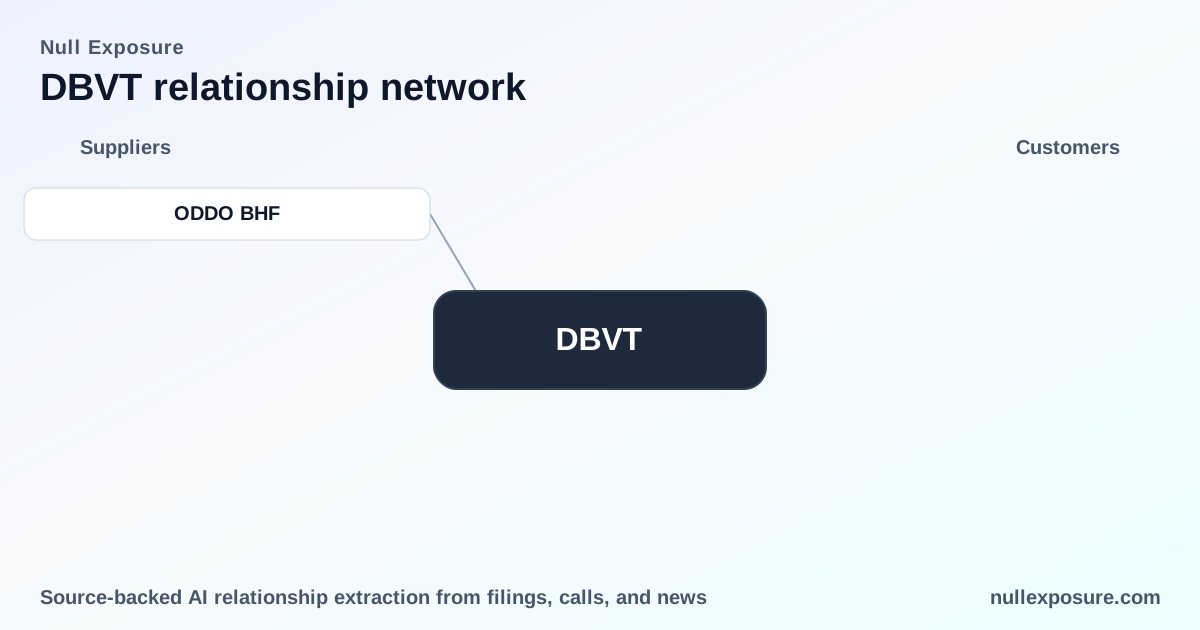
ODDO BHF — liquidity contract detail (GlobeNewswire, Jan 7, 2026)
A half‑year report published on January 7, 2026, discloses that under DBV’s liquidity contract with ODDO BHF the liquidity account held 74,580 DBV shares and €527,891.63 as of December 31, 2025, reflecting ODDO BHF’s role as DBV’s market liquidity provider. According to the GlobeNewswire release, these assets are booked on the liquidity account for the contract period.
ODDO BHF — liquidity contract referenced in Yahoo Finance (Mar 9, 2026)
A Yahoo Finance article on March 9, 2026, repeated the same liquidity-account figures, confirming the market‑making arrangement with ODDO BHF and the value held at year‑end 2025. The Yahoo item provides an independent press distribution of the liquidity‑contract disclosure.
What the ODDO BHF relationship means operationally
The ODDO BHF entries document a liquidity provider contract rather than a manufacturing or clinical supplier relationship. Liquidity contracts support orderly trading and short‑term share availability; they are operationally important for markets and investor relations, but they are not a substitute for manufacturing or clinical services. The disclosed cash and share amounts are modest relative to DBV’s market cap and do not alter the company’s supplier concentration or manufacturing risk profile.
Supplier constraints and what they imply for procurement and risk teams
Public filings and company disclosures consolidate into a clear company-level supplier signal:
- Long-term commitments coexist with short-term operational agreements. DBV reports non-cancellable CRO obligations through 2026 and product-specific manufacturing agreements that run for five years after regulatory approval of a Viaskin product. This mix creates locked-in clinical spend while leaving some facility and operational leases on shorter timelines.
- Single-source manufacturing for key inputs. DBV explicitly relies on a single contract manufacturer for APIs used in Viaskin candidates, which places high operational importance on that vendor and elevates the strategic imperative for a qualified second source.
- Services-heavy model. The company leans on CROs, CMOs, contract labs, and other external service providers for trials, data collection, manufacturing and cloud services — outsourced service execution is core to DBV’s ability to deliver regulatory milestones.
- Spend and runway impact. Reported trial spend ($170.3M as of Dec 31, 2024) and non‑cancellable obligations (~$10M to 2026) are consistent with the mid‑double‑digit million spend band; this level demands active supplier contract management to protect cash runway.
- Maturity and activity. Relationships are active and operational: ongoing trials, non‑cancellable obligations, and recent corporate leases (headquarters lease through March 2033) show a company committing to multi-year operations rather than one-off programs.
These constraints are company-level signals drawn from DBV’s disclosures and should guide due diligence, not be attributed to any single press-reported relationship unless the disclosure explicitly names it.
Practical implications for operators and investors
- Hedge supplier concentration now. Negotiate second-source qualifications for API and patch production and include change‑of‑control and supply‑continuity language in master agreements. Supplier replacement timelines in biopharma are measured in months to years; build redundancy early.
- Lock in supplier SLAs that align with regulatory timelines. Clinical milestones and regulatory submission windows are time‑sensitive; vendor SLAs must deliver not only quality but predictable timelines and traceability.
- Monitor cash flow impact of existing long-term commitments. With sizable development spend and negative operating margins, contract terms and payment schedules materially affect runway.
- Treat liquidity providers separately. Market‑making contracts (e.g., ODDO BHF) support share trading but do not substitute for operational supplier governance.
If your team evaluates supplier risk for biotech portfolios or needs a tailored supplier-risk brief, visit https://nullexposure.com/ to request a focused analysis.
Final read: risk versus optionality
DBV Technologies is a development-stage biotech with high operational leverage to supplier performance. The firm’s future value is concentrated in successful trials and a commercial launch of Viaskin products; therefore supplier continuity, multi-year manufacturing contracts, and CRO delivery are determinative. Investors should price in supplier concentration and the company’s active long-term commitments; operators should prioritize second‑source qualification and tight contract governance to convert the speculative upside into deliverable outcomes.
For a deeper supplier risk assessment or to integrate this profile into portfolio due diligence workflows, go to https://nullexposure.com/.