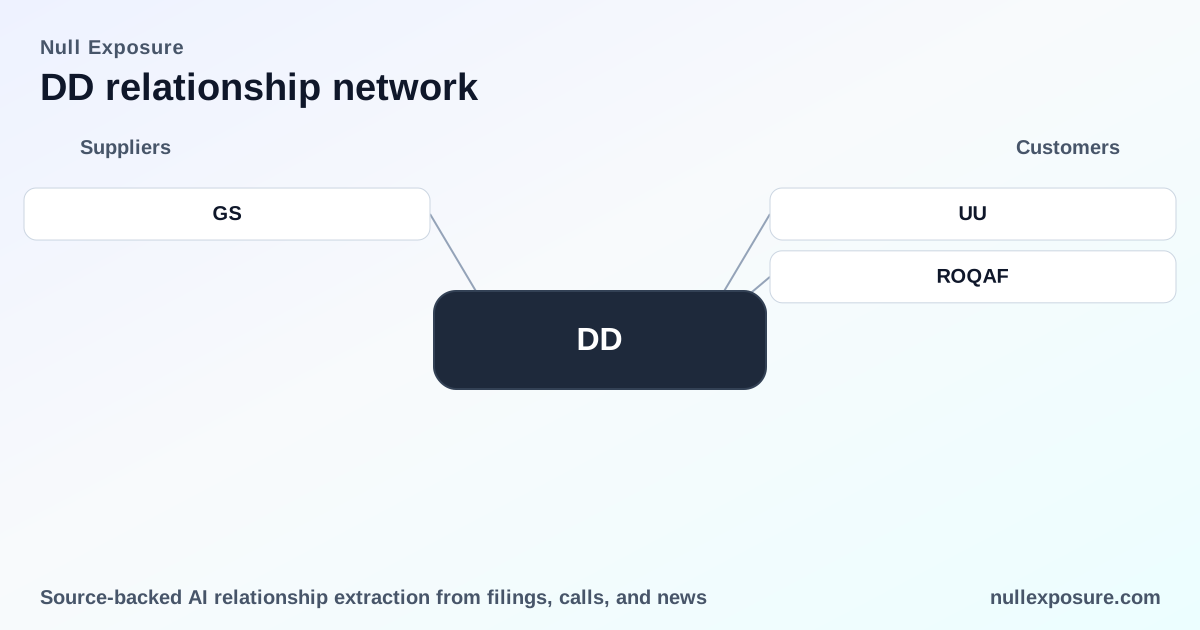
DuPont (DD) — supplier profile and what its financing relationships tell investors
DuPont is a global specialty chemicals supplier that monetizes through the sale of engineered materials, surface treatments and performance polymers, backed by a mix of product sales, negotiated long‑term purchase agreements, and active balance‑sheet management including receivables financing and strategic asset sales. For investors and procurement operators evaluating DuPont as a supplier counterparty, the company’s financing activity and contract posture are as revealing as its product mix: DuPont manages working capital through invoice programs while also protecting supply continuity with multi‑year contracts that include minimum purchase obligations. Learn more about how we surface these relationship signals at https://nullexposure.com/.
Quick read: why financing notes matter for supplier risk
DuPont’s supplier relationships are shaped by two parallel realities: extended payment terms and structured purchasing commitments. Extended terms put pressure on working capital providers and increase the importance of receivables financing, while long‑term supplier contracts increase operational predictability but can create locked‑in obligations if demand weakens. These structural dynamics inform counterparty diligence for buyers, lenders, and insurers.
Reported relationship entries — what the sources show
Goldman Sachs (news mention #1)
Goldman Sachs is reported to have improved financing terms tied to the sale of one of DuPont’s business units, a transaction that markets interpreted as optimizing DuPont’s asset allocation while leaving near‑term organic growth constrained. Source: an Intellectia news item referencing FY2026 commentary published March 9, 2026 (https://intellectia.ai/news/stock/dupont-declares-quarterly-dividend-of-020).
Goldman Sachs (news mention #2)
A second news item reiterates that Goldman Sachs adjusted financing terms around the same divestiture, underscoring that third‑party financiers are actively repricing risk and liquidity around DuPont’s portfolio moves. Source: Intellectia news item from March 9, 2026 (https://intellectia.ai/news/stock/dupont-declares-020-quarterly-dividend-yield-at-159).
Both entries point to the same counterparty relationship dynamic: investment bank financing tied to portfolio reconfiguration, which has real implications for supplier liquidity and the cost of working capital.
What the constraints and contract signals tell us about DuPont’s operating model
Company disclosures and excerpts show a dual contracting posture:
- Short-term: DuPont runs a receivables/payables program under which the company "agrees to pay the financial institution the stated amount of confirmed invoices from its designated suppliers on the same terms and on the original maturity dates of the confirmed invoices," with a weighted average payment term of approximately 110 days. This is a clear signal that DuPont leverages invoice financing to stretch payment cycles while preserving supplier cash flow through intermediaries.
- Long-term: DuPont also negotiates long‑term contracts that include minimum purchase obligations, indicating the company secures supply and price stability through contractual commitments that reduce operational volatility for critical inputs.
These contract signals combine into a predictable but capital‑intensive supplier model: short‑term payment programs reduce immediate cash outflows while long‑term purchase obligations lock in demand and pricing, which benefits suppliers and stabilizes production but raises counterparty exposure if volumes decline.
Financial context that amplifies supplier risk and opportunity
Several company financials frame the supplier/financing picture:
- Revenue (TTM) $6.85B and EBITDA $1.512B show core scale and cash generation.
- Profit margin (TTM) -11.4% indicates material margin pressure that increases reliance on financing and asset optimization.
- Forward P/E ~19.65 vs trailing P/E 216.19 implies market expectations for earnings normalization and the benefit of near‑term financing flexibility.
The Goldman Sachs financing adjustments around a divestiture signal active balance‑sheet management to offset margin pressure and to maintain supplier liquidity. For counterparties, this means DuPont can be both a stable long‑run buyer (through minimum purchase obligations) and a business that uses external financing to manage working capital cycles.
Implications for investors and procurement operators
- Counterparty strength: DuPont has scale and institutional financing relationships (e.g., Goldman Sachs) that support liquidity initiatives, but margins are under pressure, making financing terms and covenant structures relevant to counterparty assessments.
- Contract maturity mix: The coexistence of ~110‑day weighted invoice terms and negotiated long‑term purchase contracts creates a hybrid risk profile — operational continuity is prioritized, financed by receivables programs.
- Concentration and criticality: Long‑term minimum purchase obligations indicate suppliers of critical inputs will retain priority; however, extended payment cycles transfer working‑capital strain to financiers or trade partners.
- Actions for diligence: Review supplier contract length, minimum purchase clauses, and any off‑balance financing programs; validate how financing events (like divestitures) affect vendor payment flows and priority.
Consider registering for tailored reports and alerts that monitor these dynamics at https://nullexposure.com/.
Practical next steps for relationship monitoring
- Request transparency on whether a supplier’s invoices are enrolled in third‑party financing programs and the average payment terms; a 110‑day weighted average term is a red flag for cash flow sensitivity.
- Map minimum purchase obligations to demand scenarios to quantify the exit cost of long‑term contracts.
- Track financing counterparties (investment banks and factoring partners): changes in financing terms are an early indicator of stress or portfolio reshaping.
Closing recommendation
DuPont’s public relationship signals show a supplier that balances long‑term procurement commitments with active financing strategies to manage working capital and pursue portfolio optimization. For investors and operators, the priority is monitoring how financing events and divestitures alter payment flows and contractual commitments. For continuous monitoring and deeper supplier relationship intelligence, visit https://nullexposure.com/.
Bold takeaway: DuPont combines committed purchasing power with extended payment cycles financed through third parties — this creates operational stability but elevates the importance of monitoring financing counterparties and contract terms.