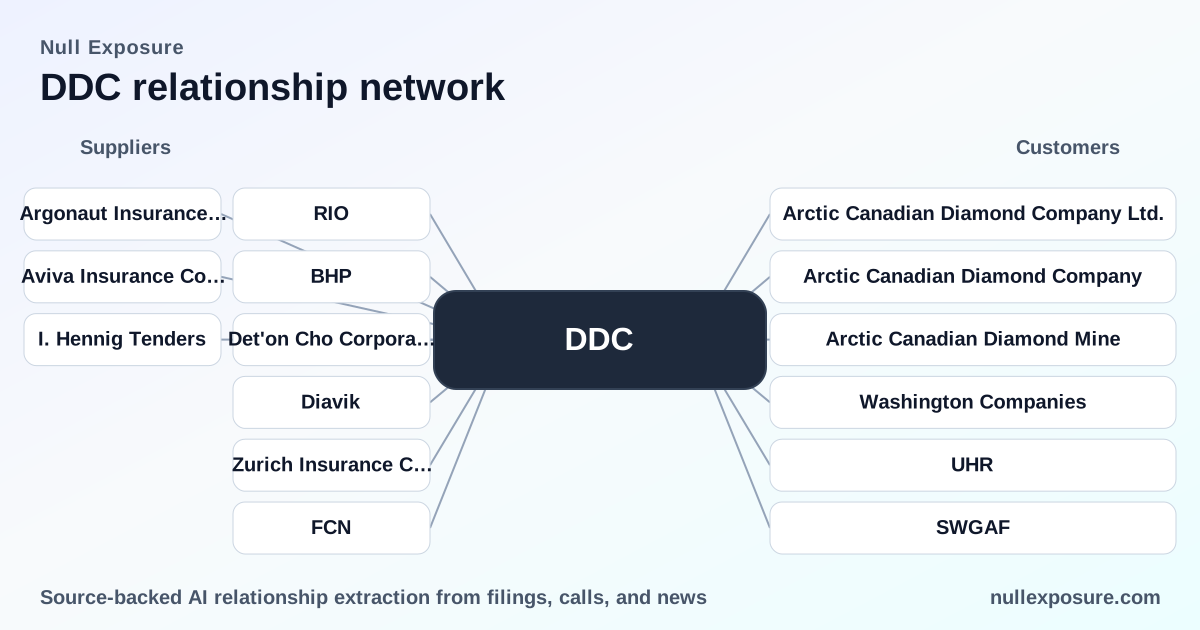
DDC Enterprise Limited: supplier relationships and what they mean for investors
Thesis: DDC Enterprise Limited operates as a vertically integrated diamond producer and marketer—owning and operating mines, cleaning and sorting production, and selling rough diamonds through auctions and third‑party channels—and it monetizes by selling production shares, marketing partner allocations, and occasional asset sales while shouldering material legacy liabilities. For investors and operators evaluating supplier and counterparty risk, the company’s business is defined by concentrated partner flows, high insider ownership, and balance‑sheet stress that elevates counterparty importance. Learn more at https://nullexposure.com/.
How DDC makes money and why counterparties matter
DDC’s core cash generation flows from mine production and the marketing of rough diamonds; the company historically marketed a share of production from joint operations and ran auctions for specialty parcels. Revenue is therefore tightly linked to partner allocations (who takes what share, who does valuation and sorting) and to the company’s ability to honor surety and indemnity obligations when restructuring events occur. The public record shows transactional relationships with upstream miners, valuation and sorting houses, insurers, and legal/financial monitors—each playing a distinct role in production realization and post‑distress resolution.
If you are modeling counterparty exposure, factor in a small market capitalization, negative operating performance in recent periods, and extreme insider concentration as amplifiers of counterparty negotiation dynamics. For direct access to our supplier maps and signals, visit https://nullexposure.com/.
What the record shows about every key relationship
Below are concise, plain‑English summaries of each relationship extracted from the public record. Each entry is tied to the source cited in context.
Rio Tinto’s Antwerp facilities (RIO) — FY2017. After initial processing at Diavik, the portion of rough diamonds allocated to DDMI was sent to Rio Tinto’s Antwerp facilities for final sorting and valuation; this underlines reliance on established international sorting hubs for price discovery and inventory disposition, according to an SEC exhibit filed in 2017. (SEC exhibit, FY2017)
BHP — FY2020 (JCK article). Dominion purchased the Ekati mine from BHP as BHP exited the diamond business, establishing Dominion’s ownership of a major operating asset and consolidating its upstream footprint, per a JCK industry report covering the 2020 insolvency context. (JCK Online, FY2020)
Det’on Cho Corporation — FY2020. Det’on Cho is identified as Dominion’s largest northern creditor, owed about C$5 million, which highlights regional supplier and community creditor exposure during restructuring, as reported in a CBC longform piece on Dominion’s collapse. (CBC News, FY2020)
Diavik — FY2018. Dominion marketed 40% of Diavik’s production, positioning it as a material marketing partner for Diavik origin stones and underscoring the company’s revenue dependence on joint‑venture allocations, according to coverage in JCK. (JCK Online, FY2018)
Zurich Insurance Company Ltd. — FY2021. Zurich, along with other insurers, was named in legal documentation describing the assumption of C$279 million of indemnity and related obligations under Dominion’s surety bonds—a transaction summarized in a legal brief produced by Torys in early 2021. (Torys legal summary, FY2021)
BHP Billiton — FY2020 (miningdigital). Historical corporate filings and industry coverage show Dominion reached an agreement to buy BHP Billiton’s assets (including a controlling interest in Ekati) in 2012–2013, which reshaped its asset base and long‑term operator role in the Northwest Territories. (MiningDigital profile, FY2020)
BHP — FY2018 (JCK CEO resignation context). Industry reports reiterate that Dominion’s purchase of Ekati from BHP left it with a majority stake in the mine, a structural fact that informed leadership and strategic choices through the late 2010s. (JCK Online, FY2018)
FTI Consulting (FCN) — FY2024. FTI Consulting served as the court‑appointed monitor over Dominion’s affairs; FTI’s legal counsel indicated in April 2021 there was no realistic prospect unsecured creditors would be paid, underscoring creditor recovery risk and the monitor’s central role in disposition and claims resolution. (Cabin Radio reporting on FTI/monitor role, FY2024)
Argonaut Insurance Company — FY2021. Argonaut was one of the surety bond issuers whose obligations were documented in the C$279 million assumption agreement, signalling exposure among multiple reinsurers and surety underwriters during the restructuring process. (Torys legal summary, FY2021)
Aviva Insurance Company of Canada — FY2021. Aviva appears alongside Argonaut and Zurich in the surety assumption materials, reflecting a syndicate of insurers tied to Dominion’s bonding and remediation indemnities. (Torys legal summary, FY2021)
I. Hennig Tenders — FY2017. Dominion ran a collaboration with I. Hennig Tenders to hold an auction of fancy yellow rough diamonds, illustrating the company’s use of specialist auction houses to monetize high‑value parcels. (Israel Diamond Industry news, FY2017)
Company‑level operating constraints and signals
Because the constraints list is empty in the raw record, present company‑level signals from public financials and ownership that influence supplier posture:
- Concentrated ownership and low institutional liquidity: Insiders hold ~53% of shares while institutions own ~0.3%, creating a governance dynamic where insider priorities and liquidity constraints determine counterparty negotiations more than broad market discipline.
- Balance‑sheet stress and earnings volatility: The company shows negative EBITDA and a negative profit margin alongside a small market cap (~$66 million), which elevates the criticality of insurers, monitors, and auction partners when liquidity tightens.
- High market beta and valuation dispersion: A beta above 5 and wide 52‑week range indicate volatile equity performance; counterparties will price this volatility into credit, advance, and auction terms.
- Counterparty concentration: Historical reliance on a handful of partners (Diavik allocations, Antwerp sorting, and insurer surety syndicates) creates negotiation leverage for those partners and execution risk for DDC if any single relationship breaks down.
- Maturity and legal complexity: The public record of assumed surety obligations and court monitors signals that counterparties will treat contracts as legally contested and contingent on restructuring outcomes.
What investors and operators should focus on next
- Prioritize counterparties that control valuation and sale channels (sorting houses and auction houses): disruptions at Antwerp or in specialty tenders would directly compress realizations.
- Underwrite surety and indemnity counterparty performance given the past C$279 million assumption and monitor involvement—insurers and surety issuers are central to remediation and reclamation risk.
- Model liquidity under stress: given small market cap, low institutional float, and negative margins, plan for forced asset sales and accelerated use of auctions to meet obligations.
For a supplier exposure map and tailored counterparty scores, visit https://nullexposure.com/ and request our supplier risk brief.
Bottom line for investors and operators
DDC’s commercial model ties production realization to a small set of high‑leverage relationships—mining joint ventures, international sorting hubs, surety underwriters, and specialist auction houses. That configuration creates outsized counterparty risk when the firm’s balance sheet and governance are constrained by insider control and low institutional participation. Operators and creditors must price in legal complexity and limited recovery prospects observed in prior restructuring outcomes.
For detailed supplier analytics and scenario modeling on DDC and comparable names, go to https://nullexposure.com/.