Dell Technologies: supplier relationships that move margins and inventory
Dell Technologies monetizes by designing, manufacturing and selling end-to-end IT hardware and services — from client PCs and workstations to enterprise servers and storage — while capturing recurring revenue through services, lifecycle management and vendor rebate programs. The company uses a concentrated supply chain of contract manufacturers and strategic component vendors to trade capital intensity for speed-to-market and margin leverage. For investors, supplier relationships are both an operational lever and a principal risk: they determine component access for AI-optimized products, drive working capital volatility, and shape negotiating power on pricing and rebates.
Explore deeper supplier intelligence at https://nullexposure.com/.
Why suppliers matter for Dell’s P&L and balance sheet
Dell’s business model is a hybrid of branded OEM and services provider. Revenue comes from large-volume hardware sales and higher-margin software and services; gross margin is directly influenced by supplier pricing, contract manufacturing terms and vendor rebate programs. The company reports material receivables tied to a limited set of contract manufacturers and multi-billion-dollar forward purchase obligations that compress or expand near-term cash requirements. The recent pivot to AI-optimized systems is accelerating component spend and inventory build — a strategic revenue opportunity that also increases counterparty concentration and working capital exposure.
The two supplier relationships that matter right now
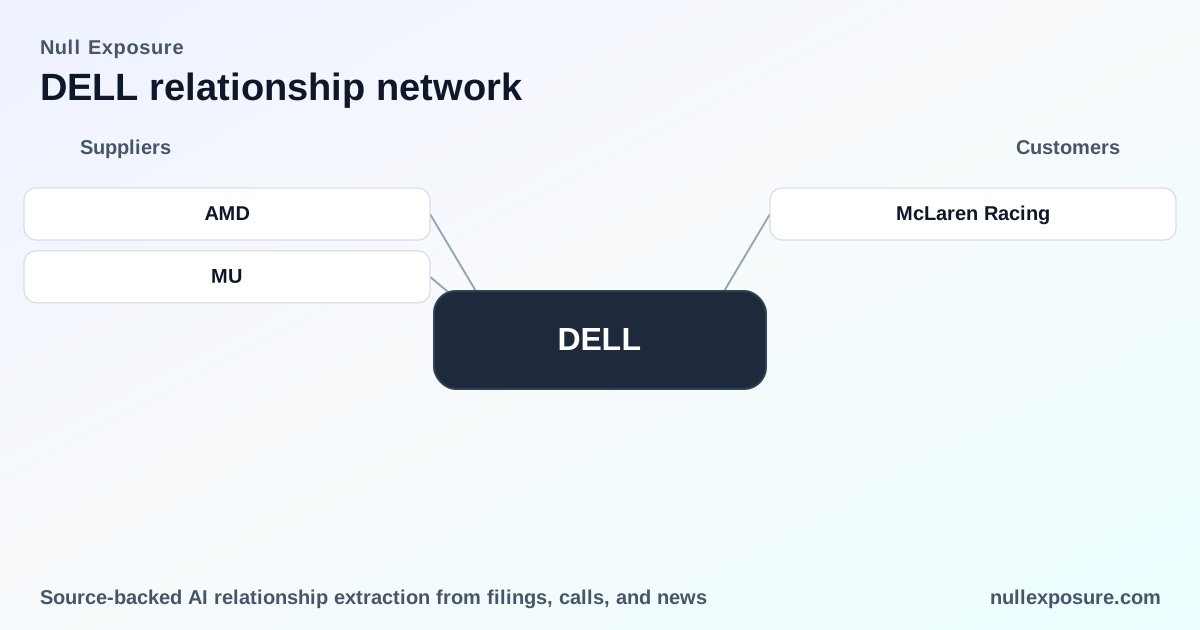
Below I cover every supplier relationship surfaced in the supplier scope results: Advanced Micro Devices (AMD) and Micron Technology. Each relationship is summarized in plain English with source context.
AMD — supplying Ryzen AI PRO processors to Dell mobile workstations
Dell will source AMD’s Ryzen AI PRO 400 Series processors for mobile workstations offered to businesses and consumers, with models expected to ship beginning in the second quarter of 2026. According to a March 2, 2026 GlobeNewswire release from AMD, the company listed Dell as one of the OEM partners launching systems powered by the expanded Ryzen AI 400 portfolio. This relationship is a product-level strategic tie that supports Dell’s push into AI-capable client devices and diversifies its CPU supplier mix.
Micron — local memory for “Made in India” Dell laptops
Micron presented its first shipment of memory modules produced at its new India assembly-and-test facility to Dell for laptops built in India for the Indian market, marking a localized supply arrangement that reduces import exposure and supports Dell’s regional manufacturing footprint. An InvestingNews report on Micron’s plant opening in 2026 described Dell as the initial recipient of Micron’s made-in-India memory modules. This illustrates Dell’s strategy to localize components to manage logistics, tariffs and lead times for key markets.
What the constraints signal about Dell’s operating model
The supplier constraints captured in filings and company commentary reveal four interconnected operating characteristics investors should weight:
- Contracting posture and concentration: Dell relies on a limited number of contract manufacturers to assemble portions of its product line, and the company disclosed large receivables — $5.4 billion as of January 31, 2025 and $3.4 billion as of February 2, 2024 — primarily concentrated with its three largest contract manufacturers. This is a concentration risk and a working-capital transmission channel to suppliers (company filing, fiscal 2025).
- Criticality and manufacturer role: The company uses contract manufacturers to achieve operational flexibility, cost efficiencies and faster delivery; vendor pricing and rebate negotiation materially affect gross margin. These are not third-tier suppliers — contract manufacturers are core to Dell’s production model (company filing disclosures).
- Ramping and product-cycle dynamics: Dell increased purchases of certain components to support AI-optimized products, which drove higher inventory and new working-capital dynamics. The “ramping” posture indicates elevated near-term spend as product cycles retool for AI capabilities (company commentary).
- Spend scale and forward obligations: Purchase obligations disclosed were $5.0 billion for fiscal 2026, $0.6 billion for fiscal 2027, and $0.9 billion for fiscal 2028 and thereafter, highlighting multi-year committed spend that constrains procurement flexibility and cash flow planning (company filing).
Together these constraints describe a supplier model that is highly operational, moderately concentrated, and capital-sensitive: suppliers are integrated into Dell’s assembly footprint and large supplier invoices and obligations directly influence cash conversion and margin realization.
How AMD and Micron fit into that profile
Both AMD and Micron are strategically consistent with Dell’s operating model:
- AMD supplies a differentiated CPU product that enables Dell to sell premium, higher-margin AI-capable workstations; the relationship supports product leadership during a critical AI transition.
- Micron’s local memory supply reduces import risk and shortens lead times for a major regional market, aligning with Dell’s use of contract manufacturers and localized assembly to manage logistics and costs.
Both relationships are incremental to Dell’s core manufacturing and procurement strategy rather than replacements for the contract manufacturing base that handles final assembly.
Investment implications and near-term risk factors
- Upside: AI-enabled client and server products create an opportunity for margin expansion if Dell captures premium pricing and vendor rebates. AMD’s inclusion on mobile workstations supports a differentiated product roadmap that can justify higher average selling prices.
- Inventory and working-capital pressure: The company’s ramp to AI products and the disclosed forward obligations indicate a period of elevated inventory and cash conversion risk. Receivables concentrated with a few contract manufacturers and multi-billion purchase commitments create a potential drag on free cash flow.
- Supply concentration and bargaining power: Heavy reliance on a small set of contract manufacturers increases counterparty dependency; Dell offsets this through large-scale purchase commitments and vendor rebate negotiations, but bargaining power is asymmetric while demand for specialized AI components is tight.
- Regional manufacturing as risk mitigation: Localizing memory supply in India with partners like Micron reduces geopolitical and tariff exposure and improves supply resilience for region-specific SKUs.
If you want to monitor supplier exposures and their cash-flow implications, find ongoing supplier intelligence and supplier-level risk signals at https://nullexposure.com/.
What investors should watch next quarter
- Changes in purchase obligations and receivable profiles tied to contract manufacturers in Dell’s next quarterly filing.
- Shipment timelines and ASPs for AMD-powered AI workstations, which will indicate whether premium pricing is achievable.
- Expansion of local component sourcing (e.g., memory or storage) that materially shortens lead times or reduces cost in targeted markets.
For a close look at supplier relationships and their balance-sheet implications, visit https://nullexposure.com/ for our regular updates.
Bottom line
Dell’s supplier architecture is a deliberate trade-off: concentrated contract manufacturing and strategic component partnerships deliver speed and scale but create sizeable working-capital exposure and counterparty concentration. The AMD and Micron relationships reinforce Dell’s AI and regional manufacturing strategies, respectively, and are both aligned with a product-led margin expansion thesis — yet they sit atop a procurement posture defined by large forward commitments and concentrated receivables. Investors should track quarterly disclosures on purchase obligations and receivables, plus product shipment cadence, to assess whether supplier arrangements convert into sustainable margin and free cash flow improvement.