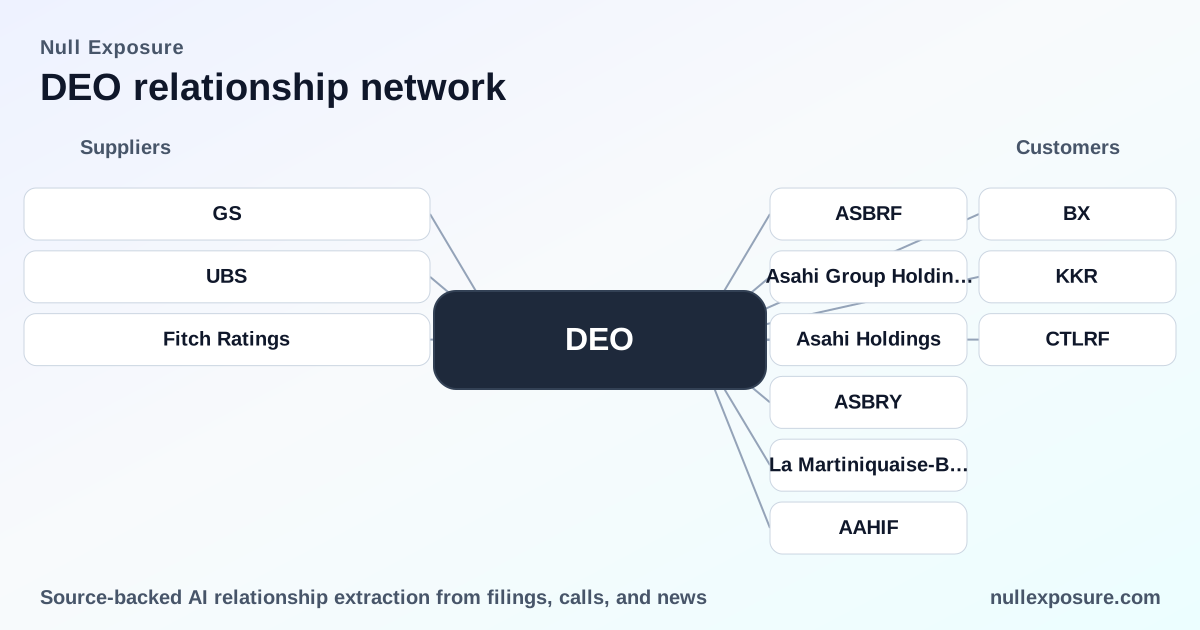
Diageo (DEO) — what the adviser appointments and rating actions mean for supplier risk
Diageo monetizes global brand strength in spirits and beer by owning, marketing and distributing branded alcohol across developed and emerging markets; revenue comes from consumer sales, premiumization, and geographic portfolio exposure. Recent activity—appointing investment banks for a China-asset review and an external ratings withdrawal—signals a corporate reallocation exercise that will influence counterparty exposure, cash deployment and regional distribution arrangements. Investors should view these developments as a strategic supply-and-portfolio management move with near-term execution risk and medium-term balance-sheet optionality. For a concise supplier-risk brief and ongoing monitoring, visit https://nullexposure.com/.
Why the banking appointments matter to buyers and operators
Diageo’s decision to hire financial advisers to review Chinese holdings is a governance move that directly affects supplier and distributor networks across that market. Appointing global banks to run a sale or carve-up process puts transaction execution, valuation timing and communication control in the hands of advisers, which accelerates potential counterparty churn for local bottlers, co-packers and distribution partners. That increases short-term commercial uncertainty for regional suppliers while creating optionality to simplify or reprice supply contracts if assets are divested.
- Contracting posture: The company-wide review suggests Diageo can pivot contracts pragmatically—expect standard change-of-control provisions to be triggered in regional agreements.
- Concentration and criticality: China represents a material exposure in these press reports; any divestment of a large stake would re-shape concentration risk for local suppliers and partners.
- Maturity of relationships: The use of top-tier banks signals a conventional M&A process rather than a distressed sale—this preserves value for counterparties who are contractually aligned with an orderly transition.
For active tracking and supplier-impact analysis, see https://nullexposure.com/.
Who is listed as a supplier/relationship in the reporting (and what each means)
Below are every relationship cited in the available reporting, with a plain-English summary and source note.
Goldman Sachs Group Inc (GS)
Diageo has engaged Goldman Sachs to conduct a review of its Chinese operations, including its majority stake in Sichuan Swellfun, positioning Goldman to run potential divestment or restructuring of those assets. Source: Yahoo Finance and related March 9, 2026 reports.
UBS Group AG (UBS)
UBS has been retained alongside Goldman Sachs to advise on the China asset review, sharing advisory duties and signaling a formal sale or portfolio-streamline process in that market. Source: Yahoo Finance and FoodBusinessME coverage, March 9, 2026.
Fitch Ratings
Fitch issued a notice to withdraw Diageo’s credit ratings with implementation around mid‑January 2026, citing commercial reasons in its December 15, 2025 communication; this is a ratings-administration action that reduces a public credit anchor rather than an immediate covenant change. Source: credit-coverage reporting (Fitch notice dated December 15, 2025; discussed in March 2026 summaries).
What investors and supplier managers must read into these relationships
These three named relationships are not operational suppliers in the manufacturing sense, but they materially shape Diageo’s supplier risk profile.
- Advisory firms (Goldman, UBS): Their engagement is a catalyst event. When top-tier advisers lead a disposal or portfolio review, expect coordinated information flows, accelerated due diligence demands on local partners, and potential contract novations. For suppliers this raises short-term negotiation leverage risk and medium-term counterparty replacement risk.
- Rating agency action (Fitch): Withdrawal of ratings reduces public transparency on credit standing and increases execution uncertainty around financing for any transaction; counterparties that rely on published ratings for collateral or term triggers should reassess covenant mechanics. This is a governance-level signal rather than an operational supplier failure.
Practical implications: what to monitor and how to act
Operators and investors should track three execution vectors over the coming quarters:
- Transaction timetables and deal structure (asset sale vs. joint venture) to judge contract continuity or novation risk.
- Notices to counterparties and any change‑of‑control clauses activated by an ownership change in Chinese affiliates.
- Financing and liquidity signals post-rating withdrawal—watch commercial paper, bank facility amendments and covenant waivers for evidence of stress or contingency planning.
Key takeaway: the adviser appointments increase the probability of significant reconfiguration in China, which will cascade into supplier negotiations and distribution agreements; the Fitch withdrawal amplifies the need for counterparties to validate credit and payment safeguards.
Constraints and company-level signals for supplier risk
There are no supplier-constraint excerpts recorded in the available data set. As a company-level signal, the absence of enumerated supplier constraints suggests no documented centralized supplier embargoes, force‑majeure notices, or contractually disclosed procurement limitations in this reporting window. That implies Diageo’s current public data does not flag contract-level supplier restrictions, but execution risk remains driven by the M&A process itself rather than pre-existing procurement constraints.
Bottom line and investor action items
Diageo’s engagement of Goldman Sachs and UBS to review Chinese assets, paired with Fitch’s withdrawal notice, is a coordinated corporate re‑allocation signal that impacts supplier counterparty risk and credit transparency. For investors and operator teams: re-evaluate China-facing contracts, update counterparty credit checks, and price short-term execution risk into forecasts.
For structured supplier-risk intelligence and tracking tools, start here: https://nullexposure.com/.
If you manage supplier contracts or run procurement for a distributor in the region, use this window to confirm change-of-control provisions and payment terms—more detail and monitoring options are available at https://nullexposure.com/.
Major relationship takeaways: Goldman Sachs and UBS are executing advisers for a China-asset review; Fitch’s rating withdrawal reduces a public credit anchor—both actions warrant immediate supplier-contract diligence and credit re-assessment.