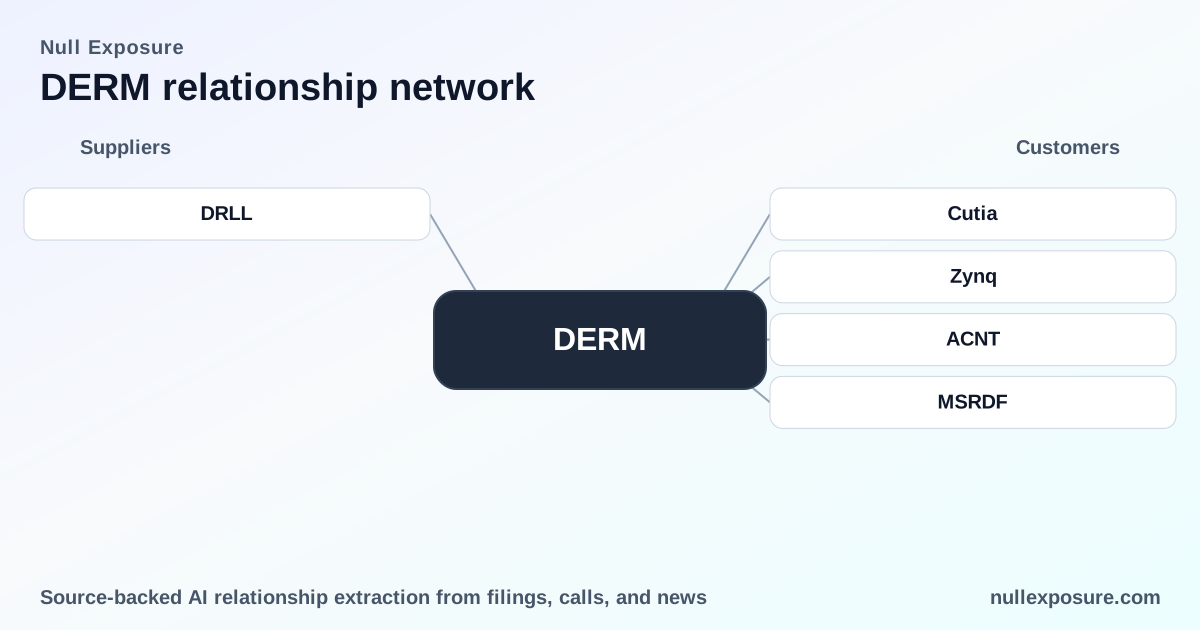
Journey Medical (DERM) — supplier profile and investor implications
Journey Medical develops and commercializes dermatology therapies in the United States and monetizes primarily through product sales and partner-enabled commercialization of assets such as Emrosi; the company outsources core manufacturing and clinical execution, turning supplier contracts into a de facto extension of its balance sheet and operational capacity. Revenue comes from marketed dermatology products, while manufacturing and clinical delivery are delivered through third-party contracts—a model that compresses fixed capital needs but concentrates operational risk in supplier relationships. For more detailed supplier discovery and relationship monitoring, visit https://nullexposure.com/.
Single-supplier exposure: the DRL manufacturing relationship matters
Journey Medical’s regulatory and commercial trajectory for Emrosi is materially dependent on an exclusive manufacturing relationship with DRL. According to Journey Medical’s FY2024 Form 10‑K, DRL is responsible for the manufacture and clinical supply of Emrosi drug product, and the company states it is completely reliant on DRL to provide adequate supply (FY2024 10‑K filing). This contract is not ancillary—it is a critical operational linchpin for any clinical or commercial roll‑out tied to Emrosi.
According to the same FY2024 filing, the Emrosi Agreement grants DRL responsibility for manufacture and supply under exclusive, worldwide rights, placing high concentration and supply‑chain criticality squarely on this counterparty (FY2024 10‑K).
How Journey’s contracting posture shapes risk and optionality
Journey Medical runs a classic asset‑light biopharma operating model: product development and commercialization in‑house, while relying on external partners for manufacturing and clinical operations. This posture creates both benefits and constraints:
- Concentration: The Emrosi program is highly concentrated on a single manufacturer for drug product supply, which creates a single point of failure for commercialization timing and revenue ramp.
- Criticality: Supply from DRL is described as essential; any disruption would directly impact product availability and regulatory commitments.
- Contracting posture: Agreements include exclusive rights and defined duties for the manufacturer, transferring operational manufacturing risk to the counterparty but preserving commercial upside for Journey.
- Maturity: Journey discloses limited internal manufacturing experience and no internal cGMP capabilities, so the company is operationally immature for in‑house production and will continue to rely on contract manufacturers.
- Service dependencies: The firm also expects to rely on third‑party CROs and other vendors for clinical trial conduct and regulatory work, adding layered outsourcing risk across development and commercialization.
These characteristics imply that investors should treat supplier counterparties as strategic assets rather than tactical vendors.
Every supplier relationship in the record (concise coverage)
- DRL (inferred symbol DRLL): Journey Medical’s FY2024 Form 10‑K states the company is currently dependent on DRL for the manufacture and clinical supply of Emrosi drug product; the Emrosi Agreement places responsibility for manufacture and supply with DRL and indicates complete reliance on that supplier for adequate supply (FY2024 10‑K filing).
Source: Journey Medical FY2024 Form 10‑K (filed for period ending 2024‑12‑31).
(This dataset contains a single explicitly identified supplier relationship; the filing further notes reliance on multiple contract manufacturers and CROs for other product candidates without naming additional manufacturers.)
Operational and valuation implications for investors
The supplier profile drives four investment-relevant conclusions:
- Timing risk is elevated. A single critical manufacturer for Emrosi makes delivery schedules and regulatory filings vulnerable to supplier delays; revenue acceleration depends on DRL’s performance.
- Execution risk is outsized relative to scale. Journey’s limited internal manufacturing maturity increases execution leverage to third parties—positive outcomes scale revenue without fixed‑cost burden, but negative supplier events translate directly into missed milestones.
- Negotiation leverage is asymmetric. Exclusive rights and dependence on an established manufacturer can shelter Journey from immediate capex needs, but also reduce flexibility if re‑sourcing becomes necessary in the face of capacity or quality issues.
- Valuation sensitivity to supply-chain events. Given the company’s market capitalization and the relatively small revenue base (Revenue TTM ~$59.4M, gross profit ~$39.2M), supply disruptions that delay commercial ramps will have disproportionate earnings and sentiment impacts.
Analyst sentiment sits with multiple buy recommendations and an unpublished target around $13.50 in the snapshot data, but investors should weight upside against the high supply‑chain concentration and operational dependency.
For ongoing monitoring of these supplier linkages and counterparty concentration, see https://nullexposure.com/.
Operational mitigants and what operators should track
Operators and business partners should focus on three actionable areas to reduce supplier concentration risk:
- Contractual protections: enforceable supply guarantees, penalties for missed deliveries, and step‑in or tech‑transfer clauses that permit alternative manufacturing if needed.
- Capacity and quality surveillance: regular audits, capacity certifications, and a clear remediation path in the event of deviations.
- Dual‑sourcing roadmap: a pragmatic plan and timeline to qualify a second supplier or in‑house contingency to reduce single‑point risk over 12–24 months.
Journey’s current public disclosures highlight the first two as immediate priorities; moving toward a dual‑sourcing plan would materially change the company’s operational profile and investor risk assessment.
Final takeaways and next steps
- The DRL relationship is material and exclusive for Emrosi—this is a primary operational risk for Journey Medical until alternative manufacturing options are qualified.
- Journey’s business model benefits from low fixed manufacturing cost but pays for it in concentration and execution risk.
If you want deeper counterparty maps or continuous supplier monitoring to quantify concentration and change‑events, start your analysis with the supplier coverage tools at https://nullexposure.com/. For bespoke diligence and alerts on Journey Medical’s supplier relationships and contract disclosures, visit https://nullexposure.com/ and request specialized tracking.