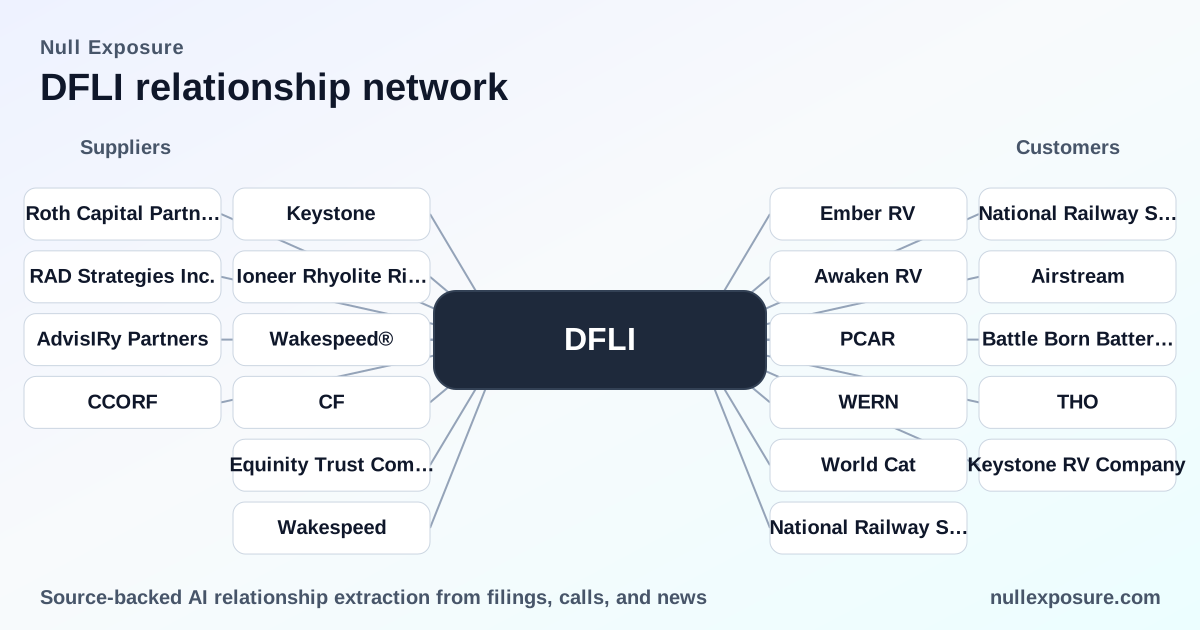
Dragonfly Energy (DFLI): supplier map and commercial posture investors need to know
Dragonfly Energy designs and sells LiFePO4 battery systems and related power products, monetizing through hardware sales, commercial offtake commitments, and capital markets financing when product revenue is insufficient to cover operating losses. Revenue is generated from product sales across consumer and industrial channels, while strategic supplier and financing relationships underpin manufacturing continuity and working capital. For a deeper look at supplier risk and partner concentration, visit https://nullexposure.com/.
Quick commercial thesis for investors
Dragonfly operates as a vertically integrated battery and power-systems seller that sources critical LFP cells and BMS components from a small number of overseas manufacturers, assembles branded systems (Battle Born), and supports commercialization via OEM supply agreements and capital raises. The company’s model depends on a narrow supplier base for cells and BMS manufacturing, recurring purchase commitments with industrial customers, and periodic equity financing to fund growth given negative EBITDA and operating losses. Fiscal signals: trailing revenue is $57.8M (TTM) against persistent losses and a modest market cap ($35M).
For a full supplier risk profile and partner roster, see https://nullexposure.com/.
How Dragonfly’s operating model constrains strategy
Dragonfly’s public filings and press activity reveal several operating constraints that matter for procurement and counterparty diligence:
- Supplier concentration: The company sources LFP cells and its proprietary BMS from a very limited number of suppliers based in China. This is a company-level signal of supply concentration and regional exposure (constraint evidence in the 10‑K).
- Long-term procurement posture: Dragonfly states it has developed long‑term relationships with selected suppliers, which implies binding commitments and potential minimum purchase requirements.
- Buyer role with offtake commitments: The company has entered commercial offtake terms that require minimum annual purchases once supply starts; this is explicitly referenced in the Ioneer agreement excerpt.
- Active manufacturing relationships: The company currently relies on external manufacturers for cells and BMS; these are active, operational relationships rather than exploratory partnerships.
These constraints translate into concentration risk (single-region sourcing), operational leverage (minimum purchase obligations), and financing sensitivity—all core inputs for supplier diligence and counterparty credit decisions.
Supplier and partner relationships, line by line
Below are every partner or advisor referenced in public filings and press items, with a concise summary and source note.
Keystone
Dragonfly entered a long-term Manufacturing Supply Agreement with Keystone—a member of the THOR group and the largest towable RV OEM in North America—on November 19, 2021, positioning Keystone as a strategic OEM channel for Dragonfly’s systems. Source: FY2024 Form 10‑K (filed 2024‑12‑31).
Ioneer Rhyolite Ridge LLC
Dragonfly announced a commercial offtake agreement with Ioneer Rhyolite Ridge LLC, where Dragonfly will purchase product from the Rhyolite Ridge project under a minimum annual purchase requirement once production is commissioned, establishing Dragonfly as a named buyer under the arrangement. Source: FY2024 Form 10‑K (filed 2024‑12‑31), May 9, 2023 announcement.
Wakespeed (Wakespeed®)
Wakespeed charge control technology is cited as a component in Dragonfly-powered trucking power systems that received industry sustainability honors; Dragonfly’s announcement credits Wakespeed tech combined with Battle Born LiFePO4 batteries for reduced idle time and improved starter battery health. Source: GlobeNewswire press release and related coverage (February 4, 2026) and RVBusiness (2026).
Canaccord Genuity / Canaccord Genuity LLC
Canaccord is acting as the lead agent/sole bookrunner for multiple Dragonfly capital market transactions, including an Equity Distribution Agreement enabling up to $50M in at-the-market sales and standing as sole bookrunner for a public offering; Canaccord’s role signals primary placement capacity and a ~3.0% commission structure on ATM sales. Source: press releases (The Globe and Mail, January 30, 2026) and news coverage (StockTitan/TradingView, FY2025–FY2026).
Equinity Trust Company, LLC
Equinity Trust Company is serving as exchange agent and transfer agent for Dragonfly’s 1-for-10 reverse stock split, handling transaction mechanics and shareholder record adjustments. Source: StockTitan news release (FY2025).
Roth Capital Partners
Roth Capital Partners is acting as a co‑manager for a Dragonfly public offering, indicating syndicate-level underwriting support beyond the lead placement agent. Source: StockTitan news release covering offering pricing (FY2025).
RAD Strategies Inc.
RAD Strategies is listed as media relations on multiple press releases for product launches and awards, functioning as Dragonfly’s external PR agency for investor and media outreach. Source: GlobeNewswire press materials (FY2025–FY2026).
AdvisIRy Partners
AdvisIRy Partners is identified as Dragonfly’s investor relations firm, repeatedly named in company press releases and investor communications, supporting shareholder engagement and IR activities. Source: GlobeNewswire and SahmCapital press releases (FY2025–FY2026).
What this map implies for investors and operators
- Concentration and geopolitical exposure are the dominant procurement risks. Reliance on two Chinese cell manufacturers and a single BMS manufacturer creates a potential single‑region supply shock vulnerability; longer-term contracts reduce spot market flexibility but secure capacity.
- Commercial obligations create demand visibility and inflexibility. Offtake minimums such as the Ioneer arrangement convert supply availability into binding purchase obligations, increasing working-capital volatility if demand lags.
- Capital markets access is material to survival and growth. Multiple equity distribution and public offering engagements with Canaccord and co‑managers indicate Dragonfly uses equity placements as an operating lever; underwriting relationships therefore carry strategic weight.
Key takeaways: supplier concentration, binding purchase commitments, and frequent equity financings are core elements driving counterparty and liquidity risk.
Investment and operational calls-to-action
- For investors: review counterparty risk and regional supply exposure in your valuation assumptions and monitor ATM usage under the Canaccord agreement for dilution signals. Learn more at https://nullexposure.com/.
- For operators and suppliers: prioritize contractual clarity on minimums, lead times, and contingency sourcing given Dragonfly’s concentrated upstream relationships.
Final assessment
Dragonfly’s commercial architecture combines product sales with tightly negotiated supplier relationships and active capital-market dependence. The company has product traction and strategic OEM channels, but supply concentration and recurring financing behavior are principal risk levers that determine execution success. For an actionable supplier-risk briefing and to track changes across Dragonfly’s partner network, visit https://nullexposure.com/.