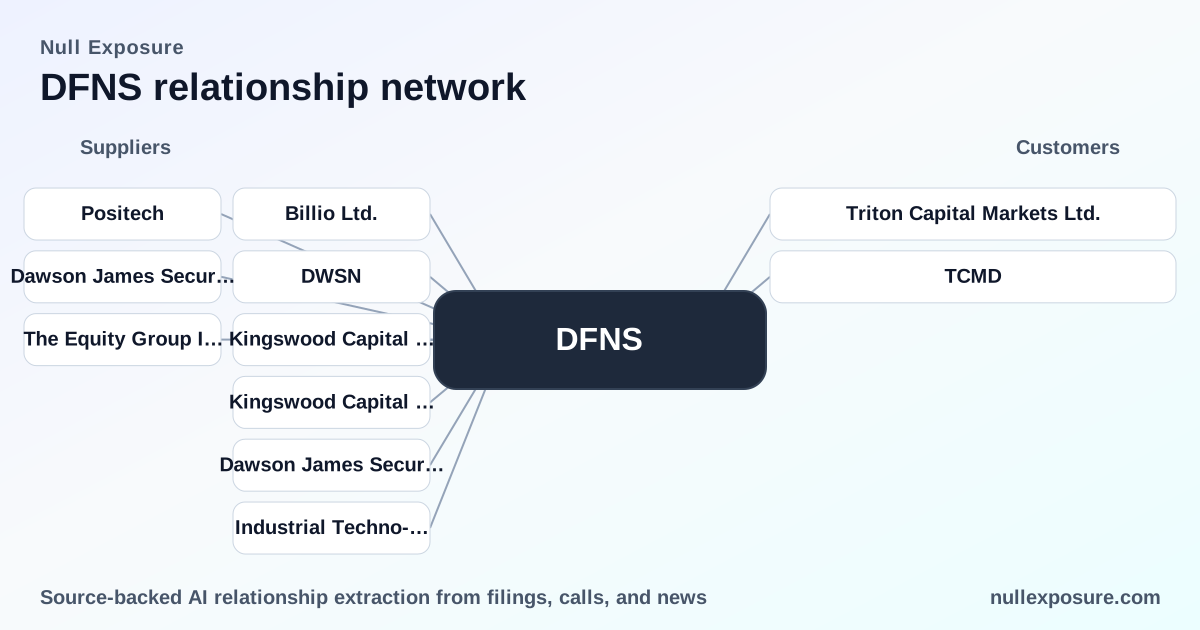
DFNS: Supplier relationships that define the operating levers
DFNS operates as a small-cap, acquisition-driven public vehicle that is currently consolidating leadership and revenue from newly acquired subsidiaries while using capital markets placements to fund growth. The company monetizes through equity raises and the operating cashflows of acquired operating companies; recent activity shows a clear emphasis on private placement financing and roll-up acquisitions to drive near-term revenue. For investors evaluating supplier and counterparty risk, the combination of high historical supplier concentration, recent contract terminations, and an active placement and IR network creates a concentrated set of operational dependencies that require monitoring.
Explore more supplier intelligence at https://nullexposure.com/ to map counterparties and contractual risk.
What to know fast: the operating model and supplier constraints
DFNS presents as a firm in transition: it has moved from older support-service arrangements into an acquisition-and-payment-services posture. Company disclosures and subsequent press coverage deliver three decisive signals:
- Supplier concentration was historically critical. Company filings show one affiliated supplier accounted for 94.6% and 86.8% of cost of revenues in fiscal years ended September 30, 2024 and 2023, respectively — an operational concentration that creates outsized single-vendor risk.
- Contracting posture shifted and legacy agreements were terminated. The company executed release agreements that terminated general services agreements effective January 1, 2024, and stated it ceased providing general support services to customers and related-party supplier arrangements as part of a strategic shift to payment services.
- Spend levels and maturity are mixed. Reported related-party cost of revenue figures were $4.65 million (2024) and $18.775 million (2023), signaling meaningful historical spend that has since been unwound or renegotiated.
These are company-level signals drawn from the company’s public filings and related press reporting in 2024–2026 and should be treated as structural characteristics of DFNS’s past and transitional operating model.
Active counterparties, placement agents and legal claims — one-by-one
Below are every counterparty and relationship item surfaced in public reporting and filings through March 2026, each with a plain-English summary and source reference.
-
Billio Ltd.
DFNS entered a consulting agreement with Billio Ltd. to secure the ongoing services of Menachem Shalom as principal executive officer, effectively contracting executive leadership through a third party. This development was disclosed in filings and press reporting in March 2026. (Source: investing.com filing and StockTitan sec filing, March 2026.) -
Dawson James Securities / Dawson James Securities Inc.
Dawson James acted as the exclusive or sole placement agent for DFNS’s private placement of up to $20 million, reflecting a firm placement relationship used to raise equity capital. This role is documented in the company’s February 24, 2026 placement agency agreement and corroborated by market reporting. (Source: StockTitan press and 8‑K filing, February–March 2026; Bitget news synopsis, March 2026.) -
The Equity Group Inc.
The Equity Group was listed as the investor relations contact on placement materials for DFNS’s capital raise, indicating outsourced IR support tied to the private placement effort. Contact names and details appeared in placement notices in March 2026. (Source: StockTitan placement notice, March 2026.) -
Kingswood Capital Partners / Kingswood Capital Partners, LLC
Kingswood Capital Partners filed a complaint naming DFNS and associated parties alleging an earned investment-banking success fee is due, creating an active legal contingency tied to past transactional advisory arrangements. The complaint was filed in late February 2026 and surfaced in multiple market outlets. (Source: StockTitan sec filing and TradingView legal notice, February–March 2026.) -
Industrial Techno-Logic Solutions (ITS)
DFNS announced acquiring a 51% stake in ITS on February 17, 2026, with the deal described as requiring no additional cash or securities and projecting combined annual revenue of $24–26 million. This is an operating revenue driver and demonstrates DFNS’s roll-up strategy. (Source: StockTitan news release, February 17, 2026.) -
Positech
Positech was listed as one of the subsidiaries to be managed under the company’s new leadership structure following the ITS acquisition, indicating DFNS is consolidating multiple operating entities under centralized executive control. (Source: StockTitan news release, March 2026.)
Each of the relationships above is drawn from filings and market reporting in early 2026 and represents the active counterparties and claims investors should track.
How these relationships affect capital allocators and operators
- Concentration risk has been structural. The company acknowledged reliance on a single related-party provider for the majority of cost of revenues in 2023–2024, a vulnerability that directly affects resilience and negotiating leverage. This is a core operational risk for creditors and counterparties.
- Termination of legacy GSAs resets counterparty risk. Release agreements terminating the prior General Service Agreements (including named parties such as FXDirectDealer LLC and Nukkleus Limited) were effective January 1, 2024, and the company stated it ceased general support services to customers to refocus on payment services; this materially changes who provides day-to-day operational services and reduces historical related-party exposure. These are explicit disclosures in company filings for 2024.
- Legal and success-fee claims create contingent liabilities. The complaint from Kingswood Capital Partners over an alleged earned success fee creates a near-term legal risk that could absorb cash or require settlement, complicating capital deployment from recent placements.
- Placement networks are active and central to funding. The use of Dawson James and externally listed IR support from The Equity Group shows DFNS is dependent on placement agents and outsourced IR to execute financing — a funding pattern that makes the company sensitive to intermediary relationships and market access.
Practical implications for investors and operators
- Institutional and operational counterparties should require clear transition plans for any legacy services previously provided by the terminated suppliers; confirm who now owns operational responsibility for customer servicing and payment flows.
- Legal diligence should prioritize the Kingswood claim and any other success-fee disputes as potential drains on capital from the current private placement proceeds.
- Monitor integration outcomes from the ITS acquisition; projected combined revenues are a primary near-term justification for the placement and for management’s strategy.
If you need a structured counterparty map or an ongoing monitoring feed for DFNS counterparties, visit https://nullexposure.com/ to start a tailored supplier-risk review.
Final assessment and actionable next steps
DFNS demonstrates a classic small-cap operational reset: high past supplier concentration, decisive contract terminations, active acquisition activity, and reliance on placement agents to fund the corporate plan. The core investment thesis hinges on execution of the ITS integration and resolution of legal claims while maintaining access to placement capital. For investors and operators, the priority is to verify the new service providers’ capability, quantify contingent liabilities from litigation, and validate revenue consolidation post-acquisition.
Begin detailed counterparty due diligence and continuous monitoring at https://nullexposure.com/ to convert these public signals into operational risk controls and investment decisions.