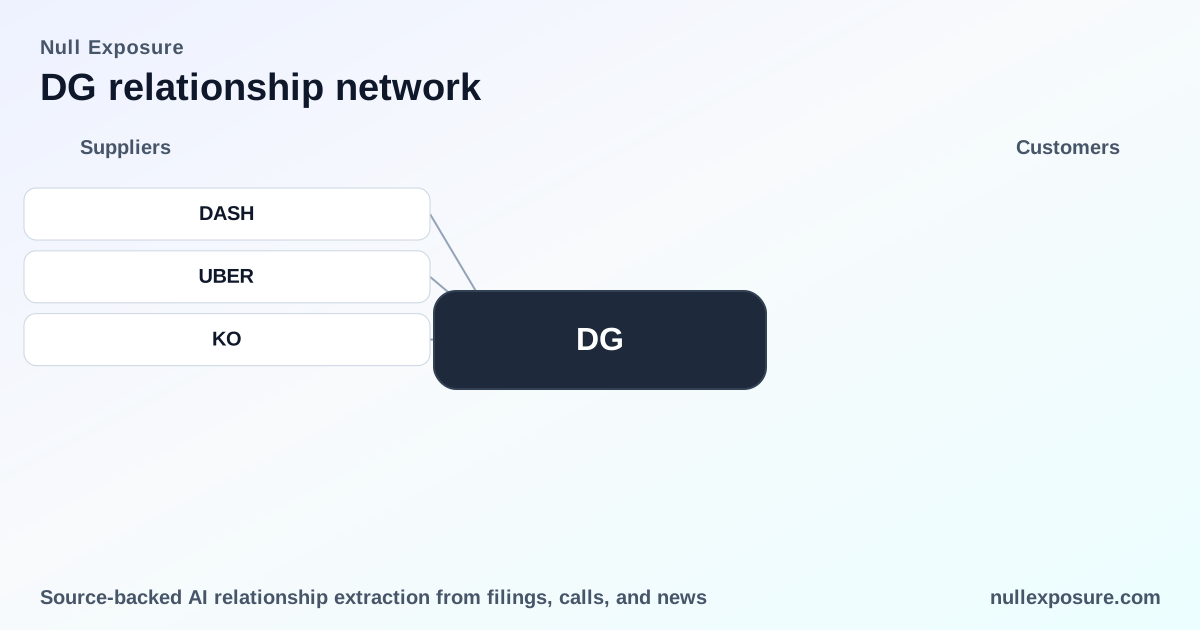
Dollar General: supplier relationships that widen reach while concentrating working-capital exposure
Dollar General operates a high-turn, low-price retail model: the company purchases national and private‑label merchandise from a broad base of suppliers, distributes most product through its network of distribution centers and private fleet, and monetizes scale through high SKU velocity, narrow margins, and ancillary partnerships that increase basket size and foot traffic. Recent media coverage highlights Dollar General’s use of third‑party delivery platforms and continued shelf presence for large consumer brands — relationships that amplify reach but sit alongside meaningful supplier payment terms and supply‑chain finance obligations. For an operationally minded investor, the critical questions are: how these partnerships change demand patterns, and whether Dollar General’s contracting and financing posture increases counterparty or working‑capital risk.
Explore more supplier intelligence at https://nullexposure.com/.
The compact operational picture investors need first
Dollar General is a mass‑market discount retailer with FY‑TTM revenue of $42.7 billion and EBITDA around $3.25 billion, operating a dense store footprint that relies on centralized distribution and a private fleet to control costs. The company’s profit margin and return metrics — profit margin ~3.5% and ROE ~19% — reflect a low‑margin, high‑volume model where merchandising decisions and supplier terms materially affect cash flow.
From vendor disclosures and company commentary we extract several company‑level signals important for partner risk assessment:
- Contracting posture: the company routinely negotiates short‑term supplier payment terms (up to 150 days), which provides working‑capital flexibility to Dollar General but concentrates timing risk in its payables cycle.
- Concentration: Dollar General lists two suppliers that together accounted for ~19% of purchases in 2024 (11% and 8%), indicating material but not single‑vendor criticality.
- Role and logistics: Dollar General functions principally as a buyer of national brands while also acting as a distributor, routing most merchandise through its distribution centers and private fleet; vendors still deliver certain items direct to stores.
- Relationship maturity and scale: supplier relationships are generally active and the company shows large confirmed obligations under supply‑chain finance (~$399.7 million as of Jan 31, 2025), which signals meaningful off‑balance sheet payment facilitation and counterparty exposure.
These constraints point to an operating model that leverages supplier credit and supply‑chain finance to support inventory flow and working capital, while maintaining material vendor dependencies at scale.
Delivery partners: DoorDash stretches last‑mile reach
DoorDash is part of Dollar General’s strategy to extend its in‑store assortment into the on‑demand delivery channel, increasing incremental traffic and basket size through platform reach. According to coverage in Yahoo Finance and Finviz (March 9, 2026), partnerships with DoorDash help Dollar General capture sales from consumers who prefer delivery rather than in‑store trips — a distribution extension rather than a core product supplier.
Source: Yahoo Finance / Finviz articles, March 9, 2026 — https://sg.finance.yahoo.com/news/walmart-dollar-general-better-retail-140800978.html, https://finviz.com/news/320376/walmart-or-dollar-general-which-is-the-better-retail-play-right-now
Delivery partners: Uber Eats opens an adjacent channel
Uber Eats plays the same strategic role as DoorDash: enabling Dollar General to reach urban and convenience‑hungry customers through third‑party logistics, supporting larger baskets and stronger customer engagement without the capex of additional stores. Media reporting in March 2026 lists Uber Eats alongside DoorDash as a partner that amplifies Dollar General’s convenience proposition.
Source: Yahoo Finance / Finviz coverage, March 9, 2026 — https://sg.finance.yahoo.com/news/walmart-dollar-general-better-retail-140800978.html, https://finviz.com/news/320376/walmart-or-dollar-general-which-is-the-better-retail-play-right-now
A legacy brand on shelf: Coca‑Cola’s Mr. Pibb relaunch carries shelf real estate
Coca‑Cola’s relaunch of Mr. Pibb was noted in local media as including Dollar General among participating retailers, demonstrating Dollar General’s continued role as a national outlet for beverage brands and nostalgic SKUs that drive in‑store traffic. The 11Alive report (March 2026) cites Dollar General by name among the retailers carrying the relaunch. This relationship is typical of Dollar General’s buyer role for established consumer packaged goods.
Source: 11Alive local news report, March 2026 — https://www.11alive.com/article/life/mr-pibb-makes-atlanta-comeback/85-6a56f6b6-f3c4-4dcc-b715-f74dc3d62181
What these relationships mean for margin, risk, and execution
Dollar General’s partnerships with delivery platforms are revenue multipliers: they increase reach without heavy store investment, boost basket sizes, and help capture convenience demand. However, the operating constraints identified above translate into specific investor considerations:
- Working‑capital sensitivity: payment terms up to 150 days and nearly $400 million of confirmed supply‑chain finance obligations create timing and counterparty exposure that can compress liquidity in a downturn.
- Operational complexity: acting as both buyer and distributor increases inventory touchpoints (distribution centers, private fleet, third‑party carriers, and direct store deliveries), raising execution risk if transport or vendor coordination breaks down.
- Concentration risk: two suppliers accounting for 11% and 8% of purchases is material; Dollar General’s scale mitigates single‑supplier failure, but loss of a major supplier or abrupt contract repricing would have immediate margin and assortment impacts.
- Channel tradeoffs: third‑party delivery reduces capex but introduces fee pressure and variable economics versus in‑store sales; management’s ability to price and manage promotions across channels will determine net margin benefit.
For buyer/operators and research investors, the question is whether these partnerships and financing structures are improving returns on capital on a net basis. Track changes in logistics cost per unit, channel mix, and confirmed supply‑chain finance exposure for the clearest signal.
If you want a concise supplier risk brief for portfolios or operational diligence, start here: https://nullexposure.com/.
Practical next steps for active investors and operators
- Reconcile supplier concentration against contract expiration schedules and supplier payment terms to assess near‑term re‑negotiation risk.
- Monitor channel economics: compare delivered margin for DoorDash/Uber Eats orders versus in‑store baskets to see whether delivery partners are accretive after fees.
- Watch supply‑chain finance exposure and counterparties supporting those facilities; $399.7 million of confirmed obligations (Jan 31, 2025) is large enough to affect liquidity under stress.
For rigorous supplier relationship intelligence and ongoing monitoring, visit https://nullexposure.com/ for more on how to translate supplier disclosures into investment signals.
Conclusion — Dollar General’s supplier posture is a study in scale tradeoffs: wide merchandising reach and delivery partnerships that expand customer touchpoints, offset by concentrated supplier spend and deliberate use of supplier financing that amplifies working‑capital sensitivity. Active managers should prioritize payment‑term dynamics, distribution execution metrics, and channel profitability to separate transient growth from durable margin improvement.