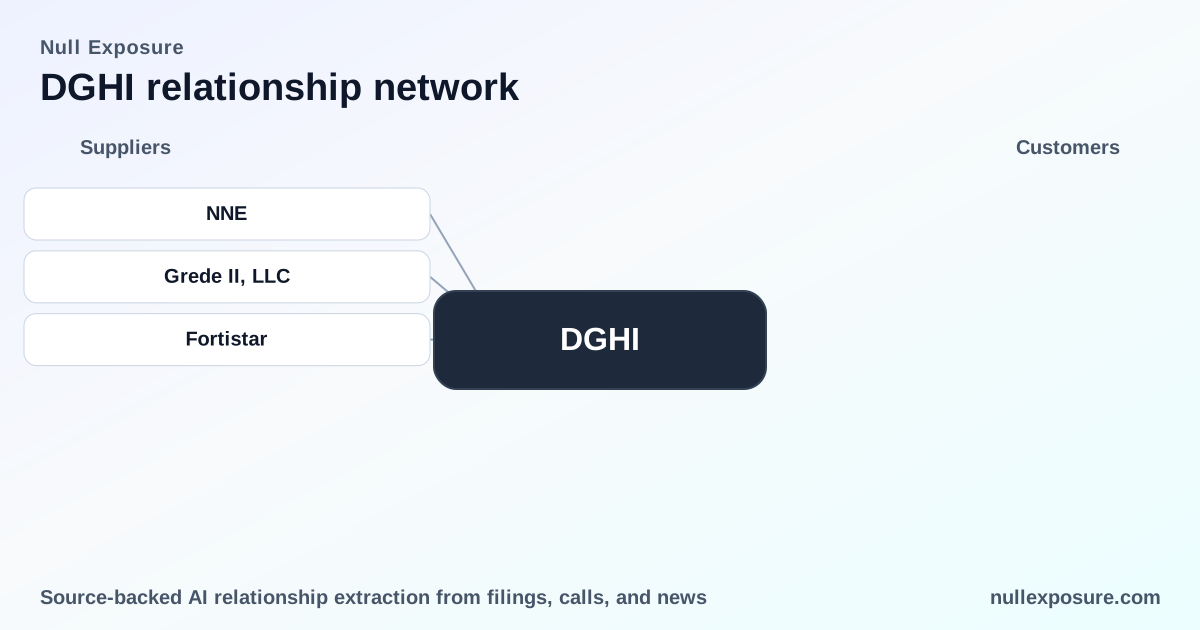
Digihost (DGHI) — supplier relationships that reshape its power stack and strategic exposure
Digihost monetizes by owning and operating power infrastructure and offering crypto-mining and colocation capacity that benefits from captive or contracted generation. The company’s supplier footprint is shifting from commodity fuel and asset acquisitions toward strategic energy partnerships, notably a formalized MOU and consulting collaboration with advanced-microreactor developer NANO Nuclear; these supplier choices directly affect Digihost’s cost curve, regulatory pathway, and capital intensity. For investors and operators, the commercial question is simple: are these supplier ties lowering long-run energy cost and regulatory risk, or increasing technology and execution risk? Learn more and track supplier signals at https://nullexposure.com/.
How Digihost’s operating model shapes supplier importance
Digihost is a vertically oriented operator where energy supply is an operational fulcrum: the economics of mining and hosting depend on power price, availability, and regulatory access. That creates two commercial dynamics:
- Suppliers that affect delivered energy economics (fuel providers, power-plant sellers, advanced-reactor vendors) are first-order strategic partners rather than interchangeable vendors.
- Deal structure matters: short-term spot purchases expose margin volatility, while MOUs, consulting agreements and asset purchases imply longer-duration operational commitments and capital exposure.
Digihost’s public record shows a mixture of asset acquisition (land and plant purchases) and strategic partnership discussions with energy technology providers — a posture consistent with a company aiming to control both energy supply and hosting margins. For an active view of these supplier exposures visit https://nullexposure.com/.
What the public record shows: each supplier relationship
Below are every supplier or counterparty relationship surfaced in the available results and a concise plain-English summary of what that relationship implies.
NANO Nuclear Energy Inc. — microreactor collaboration and MOU
Digihost has a strategic collaboration and a formal Memorandum of Understanding with NANO Nuclear to evaluate and integrate shipping-container-sized microreactors at Digihost’s 60MW New York facility, including planning, regulatory advice, site assessment and stakeholder engagement; NANO describes its microreactors as products “in development,” positioning the work as technology integration rather than immediate commercial generation. Source: GlobeNewswire press release (Dec 13, 2024) and NANO Nuclear’s corporate announcements summarizing the collaboration and submissions to New York State energy authorities.
Nano Nuclear (repeat reporting) — public-facing claims on reactor capability
Multiple trade outlets and Nano Nuclear’s own communications reiterate the partnership and state that NANO’s proprietary microreactors are designed to provide scalable, reliable energy for companies like Digihost, underscoring the technical rationale for the tie-up even as deployment timelines remain linked to regulatory approvals. Source: Nano Nuclear website and DatacenterDynamics reporting (coverage through FY2025).
Grede II, LLC — Alabama site acquisition vendor (past asset seller)
Digihost acquired an Alabama property in June 2022 from Grede II, LLC for $2.75 million, a transaction that reflects Digihost’s continued strategy of securing physical sites for power and data-center expansion. This purchase is an example of Digihost converting supplier/owner relationships into owned assets to support future capacity. Source: DatacenterDynamics reporting on Digihost’s Alabama development (FY2025 coverage).
Fortistar — contested purchase / regulatory filing history
Digihost filed a petition with the New York Public Service Commission in early 2021 to purchase the Fortistar power plant located in North Tonawanda, reflecting an earlier strategic effort to acquire existing generation assets to underpin its New York operations. Source: investigative coverage in Grist summarizing Digihost’s 2021 petition and acquisition attempts (reported FY2023).
Operating constraints and company-level signals (no explicit constraints reported)
The available data does not include explicit constraint excerpts tied to supplier contracts. That absence is itself informative: public filings and press releases prioritize strategic collaborations and asset transactions rather than binding long-term supplier contracts. From a company-level vantage, the following signals are relevant:
- Contracting posture: Digihost’s public activity centers on MOUs, consulting arrangements and asset purchases rather than fixed long-term power purchase agreements disclosed in these results, indicating a preference for strategic, flexible partnerships while it scales capacity.
- Concentration and criticality: Energy-supply partners are highly material to revenue generation — a small number of strategic suppliers or targets can meaningfully affect operating leverage, so supplier concentration is a critical risk vector.
- Technology maturity: Partners such as NANO Nuclear describe technologies “in development,” which signals execution and regulatory risk even as the partnership could reduce future fuel volatility if successfully deployed.
- Capital intensity and optionality: Asset purchases (e.g., the Grede II site) demonstrate a willingness to convert supplier relationships into owned capacity, increasing capital commitment but improving long-run control of costs.
These are company-level assessments derived from the public relationship records; no named supplier constraint excerpts were provided in the underlying results.
Investment implications: upside, execution risk, and what to watch
- Upside: If Digihost successfully integrates lower-cost, low-carbon generation (microreactors or acquired plants), the company will realize structural margin improvements and regulatory positioning advantages, especially in markets with stringent emissions rules. Supplier relationships that secure cheaper electricity are high ROI levers for the business model.
- Execution risk: Partnerships with early-stage technology providers (NANO) shift risk from commodity price exposure to technology and permitting execution. Time-to-deploy and regulatory approvals are the principal gating factors.
- Balance-sheet and concentration risk: Asset acquisitions reduce counterparty dependency but increase capital intensity; continued reliance on few strategic suppliers concentrates operational risk.
Key monitoring items for investors: regulatory filings on microreactor permitting, progress updates from NANO on demonstration units, any announced long-term power contracts, and further asset acquisitions or dispositions.
For a practical tracker of these supplier exposures and signals, visit https://nullexposure.com/ — the supplier map and alerts page provide a consolidated view of public supplier actions.
Bottom line and recommended next steps for analysts
Digihost’s supplier footprint signals a deliberate move to control the power stack through both asset ownership and strategic technology partnerships. The company is transitioning supplier risk from volatile markets toward concentrated, technologically driven counterparties — a tradeoff that increases execution risk while offering material long-run margin upside if partners deliver.
Analysts should prioritize: 1) regulatory milestones on microreactor deployment, 2) any execution timelines or pilot results from NANO, and 3) further asset purchases that convert supplier relationships into owned generation. For continuing coverage and supplier signal alerts, go to https://nullexposure.com/.
Key takeaway: Digihost’s supplier strategy is transformational — it converts energy from an operational cost into a strategic asset class — but that transformation is conditional on successful technology deployment and permitting.