DHCNI: Supplier relationships, operating posture, and what investors need to know
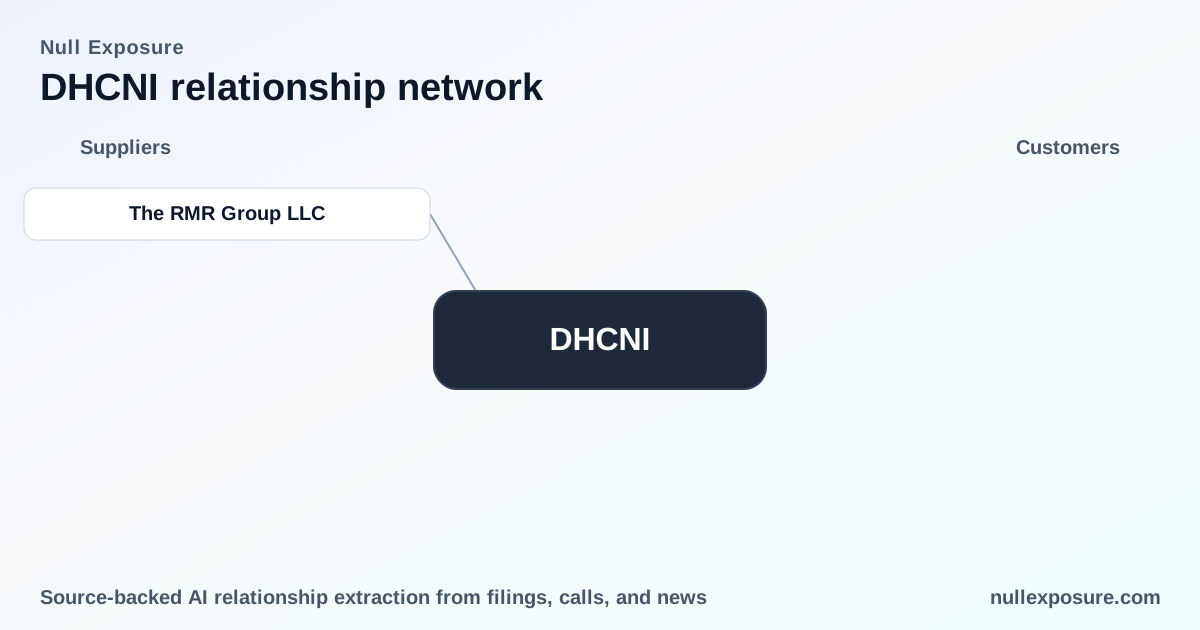
DHCNI is a healthcare real estate investment trust that monetizes ownership of senior living communities by leasing assets to taxable REIT subsidiaries and collecting rental and fee income while outsourcing operations to third‑party managers. The company's cash flow profile depends on the stability and structure of those management and leasing arrangements, as well as the service providers that staff and run its communities. For investors evaluating supplier risk and partner alignment, the most consequential relationship disclosed in filings is with The RMR Group LLC — a provider of personnel and management services — and public filings reveal a broader pattern of long‑dated management contracts alongside short‑term operational leases. Learn more at https://nullexposure.com/.
How DHCNI’s business model translates to supplier risk and value creation
DHCNI’s balance of real estate ownership plus outsourced operations creates distinct supplier dynamics. The REIT captures real estate economics while ceding operational execution to third parties; that makes manager selection and contractual design the primary determinant of operational performance. Key characteristics that drive investor conclusions:
- Contracting posture is mixed but tilt toward long duration for managers. The company discloses multi‑year management agreements with automatic extensions for managers, which creates revenue visibility but also locks DHCNI into counterparty performance over the long term.
- Operational criticality is high. Since DHCNI does not itself operate facilities (to preserve REIT tax status), third‑party managers are mission‑critical: resident services, regulatory compliance and cybersecurity are executed by suppliers.
- Concentration and counterparty diversity matter. While DHCNI uses multiple managers, the filings show a material share of communities managed by a few large providers — an investor should treat those provider relationships as systemically important to earnings and risk management.
- Maturity and predictability favor real‑estate economics but increase governance premium. Long‑term contracts stabilize rents and returns, but demand rigorous oversight and clear termination provisions to protect asset value.
If you want a structured supplier risk view tailored to DHCNI holdings, visit https://nullexposure.com/ for more context and tools.
The RMR Group LLC — what the filing discloses and why it matters
DHCNI’s public filing identifies The RMR Group LLC as a supplier of personnel and administrative services. The company awarded shares to officers and certain employees of RMR (and to employees of AlerisLife) across 2022–2024: 707,000 shares in 2022; 800,000 in 2023; and 881,767 in 2024, which signals an ongoing commercial and compensation linkage between DHCNI and RMR personnel. According to the company’s 2024 Form 10‑K, RMR “provides management and administrative services” and “originates and presents investment and divestment opportunities to our Board of Trustees.” (Source: DHCNI Form 10‑K, FY2024)
Why this matters for investors:
- Compensation links create aligned incentives but also governance considerations — equity awards to RMR personnel indicate integration of interests but require scrutiny of related‑party controls and fee structures.
- RMR is an operational backstop for administrative functions; any operational disruption at RMR would transmit to DHCNI through administration and investment origination channels. (Source: DHCNI Form 10‑K, FY2024)
Other supplier and contract signals disclosed in filings
The 10‑K and related excerpts provide company‑level signals about DHCNI’s supplier relationships and contract structure beyond the explicit RMR disclosure:
- Long‑term management contracts are the dominant posture. Filings show initial management agreements commonly run five years with automatic two‑year renewals; the Master Management Agreement with Five Star extends to 2036 (with extension rights), illustrating multi‑year locked relationships that provide revenue visibility but limit managerial flexibility. (Source: DHCNI filing excerpts, FY2024)
- But there are also short‑term operational leases. Some leases are described as short‑term or cancelable with no fee and therefore are not capitalized on the balance sheet, indicating a mixed maturity structure across different expense lines. (Source: DHCNI filing excerpts, FY2024)
- Service provider role is central. The company expressly states that personnel and various services required to operate the business are provided by RMR and other third‑party managers, and that DHCNI relies on managers to identify risks such as cybersecurity threats. This underscores the operational criticality and third‑party risk concentration inherent to DHCNI’s model. (Source: DHCNI Form 10‑K, FY2024)
- Geographic footprint of key suppliers is U.S.‑centric. Filings identify RMR’s principal place of business in Newton, Massachusetts, which situates administrative exposure and potential legal/regulatory jurisdiction in the U.S. Northeast. (Source: DHCNI Form 10‑K, FY2024)
Place this in your diligence: the combination of long management tenors, active reliance on a small set of managers, and short‑term cancellable leases for some items means operational risk is concentrated in a handful of external providers even as asset cash flows are relatively steady.
If you want a deeper read into how supplier structures affect REIT valuation and stress scenarios, explore the resources at https://nullexposure.com/.
Investment implications — governance, counterparty risk and monitoring priorities
For investors and operators assessing DHCNI, the supplier disclosures drive a focused due diligence checklist:
- Governance and related‑party rigor. Equity awards and administrative arrangements with RMR require transparent fees, board oversight and independent audits to ensure no leakage of returns to management.
- Contract termination and performance triggers. Long‑dated manager agreements offer stability but require clear KPIs and exit mechanics so DHCNI can respond to underperformance without impairing asset value.
- Concentration stress testing. Run scenarios where one large manager underperforms or exits; because DHCNI relies on third parties for day‑to‑day resident services, such shocks can impact occupancy, reimbursements and reputational risk.
- Operational continuity planning. Given the explicit reliance on suppliers for cybersecurity and personnel, confirm redundancy, service‑level commitments and escalation paths in supplier contracts.
Bottom line and next steps
DHCNI’s model is a classic REIT playbook of owning real estate while outsourcing operations, and the filings show that outsourcing is both deep (administration via RMR) and long‑dated (multi‑year manager agreements). That structure creates stable cash flow characteristics but raises concentrated counterparty and governance risks that investors must quantify before allocating capital.
To analyze how these supplier dynamics map to valuation and portfolio risk, start with a focused supplier risk assessment and monitor the company’s 10‑K disclosures for changes in management counts, fee arrangements, and related‑party awards. For tools and reporting on supplier relationships and related financial impact, visit https://nullexposure.com/.
For a tailored supplier risk briefing on DHCNI or peer REITs, contact Null Exposure through our site at https://nullexposure.com/ and request a bespoke analysis.